Chunjang, which comes to mind when you think of Jajangmyeon, is actually a sauce that does not exist in China.
The Chunjang in the Jajangmyeon we eat is actually China's TianmianjiangIt started from.
However, over time, it evolved into a unique Korean flavor, and now it has become a seasoning completely different from mainland China's sweet bean paste.
today CheommyeonjangFrom the origin of Difference from Chunjang, and HwangdujangLet's take a deeper look at recipes using it.
index
- 1. Original Chinese Tianmianjiang: Into Its Deep History
- 2. Cheomyeonjang vs. Chunjang, What's the Difference?
- 3. The Birth of Sajapyo Chunjang Changes the History of Korean Jjajangmyeon
- 4. Cheommyeonjang recipe made with yellow soybean paste
- 5. Cheomyeonjang Jajangmyeon, the taste of the mainland at home
- 6. Here are some ways to use Cheomyeonjang in dishes other than Jajangmyeon.
Chinese-style Jajangmyeon, the original sauce of Jajang: Tianmianjiang

Cheommyeonjang (
If interpreted literally from the Chinese characters, it means moon (
In the North China region, including Beijing CheommyeonjangIt served as an important source of protein and vitamins, going beyond being a simple seasoning.
It is said that in the rural areas of northern China, people ate bing, a type of flatbread, as a staple food and served it with sweet bean paste, and a culture of dipping green onions in it emerged and continues to this day.
Characteristics of Cheommyeonjang
Cheommyeonjang is a soft, sweet paste with a chestnut color. In the traditional recipe, the ratio of wheat flour to soybeans is about 19:1, with wheat flour making up an overwhelmingly large amount.
During the fermentation process, a natural sweetness and umami flavor develop, and the color deepens the longer it is aged. As can be seen from the method of preparation, it is quite similar to doenjang.
The most famous use is... Peking duckThe method of placing duck meat on a wheat pancake and spreading sweet bean paste on it, served with a sauce, is considered the essence of Chinese cuisine.
In China, slightly different types of sweet bean paste are made and used in each region, and the sweet bean paste from Shandong Province is particularly famous.
As people from the Shandong region migrated to the Korean Peninsula in the late 19th century, this Cheommyeonjang The culture was also passed on, and this became the starting point of Korean Jajangmyeon.
Cheomyeonjang vs. Chunjang, What's the Difference?
Many people Cheommyeonjang과 ChunjangAlthough they are thought of as the same thing, they are actually quite different seasonings.
Chunjang is an improved version of Cheommyeonjang adapted to the Korean situation, and it has undergone various changes.
| division | Cheommyeonjang | Chunjang |
|---|---|---|
| color | reddish-brown or yellowish-brown | dark brown, almost black |
| Main ingredients | Wheat flour, beans (high proportion of wheat flour) | Flour, soybeans, caramel coloring, seasoning |
| 맛 | Subtle sweetness, low saltiness | Strong sweet and salty taste |
| texture | Thick and viscous | It is relatively soft. |
| Aging period | Long-term aging for over 3 years | Short-term fermentation is also possible |
| use | Dipping sauce, stir-fry seasoning | Jjajangmyeon only |
The biggest difference is... caramel coloringIt is the presence or absence of.
ChunjangCaramel coloring is added to produce a black color, which creates the iconic black color of Korean-style jajangmyeon.
Why was coloring added?
Korean-style jajangmyeon is made by adding a lot of water to increase the volume, but without caramel coloring, the color becomes very light.
Chinese restaurant owners requested that Chunjang manufacturers add coloring, and this became a characteristic of Korean-style Chunjang.
Another important difference is Fermentation periodam.
Traditional Cheommyeonjang is aged for over three years to develop a deep flavor, but Chunjang is mass-produced in factories, significantly reducing the aging process.
In some high-end Chinese restaurants run by ethnic Chinese, homemade CheommyeonjangUses.
The jajangmyeon at this place is not black but reddish-brown or yellowish-brown, and the savory taste of the sauce is much stronger.
The difference in taste is also distinct. While Chunjang is sweet and oily, Cheomyeonjang is much saltier and has a strong sour and musty aroma. Both Chunjang and Cheomyeonjang must be stir-fried in oil to reduce their bitterness and sourness before use. If not stir-fried, the strong bitterness and astringent taste make them difficult to eat.
The Birth of Sajapyo Chunjang Changes the History of Korean Jjajangmyeon
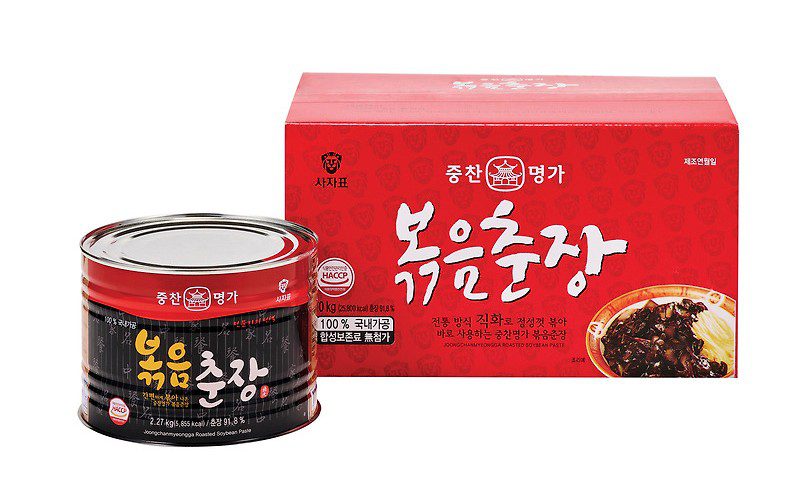
Korean style ChunjangIts history dates back to 1948.
Wang Song-san, a first-generation Chinese immigrant, founded Yonghwajangyu (currently Yeonghwa Foods) and produced the first commercial Chunjang under the name 'Sajapyo Myeonjang'.
At that time, due to the Chinese Civil War and the Korean War, on the Chinese mainland Cheommyeonjang The supply had been completely cut off.
It is said that the Chinese immigrants ran Chinese restaurants to make a living, but they did not have the sauce to make Jajangmyeon.
Background of the Development of Sajapyo Chunjang
Wang Song-san came up with a groundbreaking solution considering the scarcity of resources. He developed a paste that could be made quickly by using wheat flour, which was abundant thanks to U.S. aid, as the main ingredient and adding caramel and MSG.
The Lion Brand Chunjang created in this way could be used immediately without a long aging period, and it was also affordable.
In the mid-1950s, as Sajapyo Chunjang became widely distributed, Korean Jajangmyeon experienced explosive growth.
Until now, at each Chinese restaurant CheommyeonjangBecause they had to make the sauce themselves, the number of places that could make Jajangmyeon was limited.
but Lion Brand ChunjangWith the advent of [it], anyone can easily make Jajangmyeon.
To this day, Sajapyo Chunjang boasts an unrivaled market share of 70 to 801% in the Korean Chunjang market.
President Wang Hak-bo, the grandson of Wang Song-san, has been managing the company since 2004, and Yeonghwa Food remains a company run by an overseas Chinese family.
The origin of the name Chunjang
In the 1960s Jjajang, The terms Myeonjang and Chunjang were used interchangeably.
With the enactment of the Food Sanitation Act in 1967, the official name was established as 'Chunjang'. Cheomjang (
Lion Brand ChunjangThe success of [it] went beyond mere product success and marked a significant milestone in the history of Korean food culture.
Jajangmyeon has become the most easily accessible dining-out menu for ordinary people and has established itself as a dish for special occasions such as entrance ceremonies, graduation ceremonies, and moving days.
Authentic Tianmianjiang in Korea, Mama Handmade Dumplings
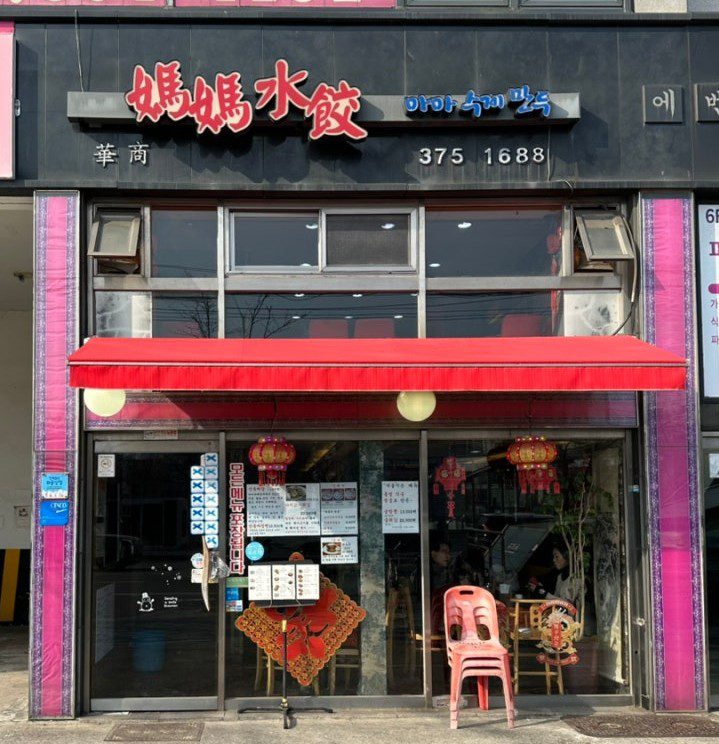
In Korea, for real CheommyeonjangWhere should I go if I want to taste it?
Located near Saejeol Station in Eunpyeong-gu, Seoul Mama Handmade DumplingsIn [location], they are making Jajangmyeon using sweet bean paste under the name Shandong-style Jajangmyeon.
This place is not Chunjang CheommyeonjangIt is one of the few places that makes Korean-style Jajangmyeon using [ingredient].
It can be described as a dish that occupies a unique middle ground, neither Chinese Zhajiangmian nor the Korean-style Jajangmyeon we commonly eat.
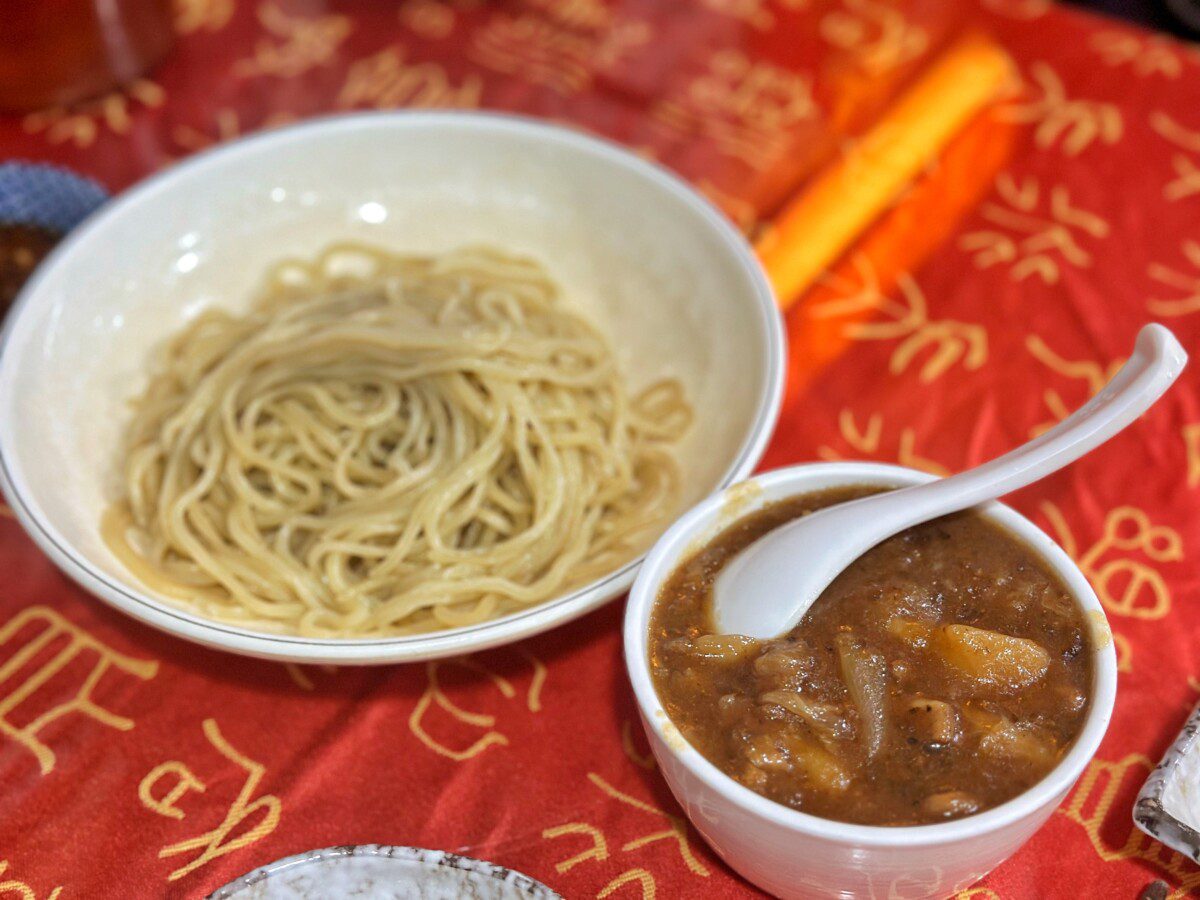
Mama Handmade Dumplings' Shandong-style Jajangmyeon
Mama Handmade Dumplings makes handmade jajang sauce that is fermented directly from soybeans and is free of artificial colors.
It is characterized by a deep flavor because it uses soy sauce aged using a traditional method passed down in Chinese families.
It became famous after being featured on various TV shows, such as *Master of Living* and *Heo Young-man's Baekban Journey*.
The Shandong-style Jajangmyeon at this place is not black. Something that has a brownish tintThis is the first feature.
Since no caramel coloring was added, the natural color of the fermented paste is revealed.
I wonder what it tastes like?
When you take the first bite, it is completely different from regular jajangmyeon The savory aroma of soybean pasteIt's surging up.
The salty taste is stronger than the sweet taste, but there is a very attractive umami flavor hidden within.
I suppose you could say it's like a rich, oily soybean paste. It is similar to soybean paste, yet has a slightly different charm.
A divisive taste
Mama Handmade Dumplings' Shandong-style Jajangmyeon clearly divides opinions. Some people take one bite and cannot eat it, finding it too salty and strange, while others are completely captivated by its unique soybean paste flavor.
I can definitely recommend it. I would tell you to boldly give it a try, because the aroma and flavor unfold completely differently than expected.
The Jajangmyeon here is traditional Chinese CheommyeonjangIt is a unique example of incorporating it into Korean cooking methods.
Unlike the Zhajiangmian eaten in China, where only a small amount of sauce is added, the sauce is stir-fried generously in the Korean style.
However, since homemade fermented soybean paste is used instead of black bean paste, the savory flavor of soybean paste is preserved instead of the sweetness and caramel taste of regular jajangmyeon.
This is exactly Neither Chinese nor Korean style, This is the reason why it can be called the third Jajangmyeon.
Mama Handmade Dumplings Visit Information
| location | 397 Jeungsan-ro, Eunpyeong-gu, Seoul (Saejeol Station Exit 4) |
| Business Hours | 11:00 ~ 22:00 |
| Closed | Every 2nd and 4th Sunday of the month |
| Main Menu/td> | Shandong-style Jajangmyeon, celery dumplings, various dim sum (especially recommend the Shaomai) |
This is a restaurant whose skills have been recognized to the extent that it has been selected for the Blue Ribbon for 11 consecutive years.
It is a place famous for dumplings, but, Cheomyeonjang JjajangmyeonIt is worth visiting at least once just to taste it.
However, since it may be a matter of personal preference, if you are visiting for the first time, I recommend ordering it along with dumplings to taste a little bit of each.
How to Make Cheommyeonjang, The Secret of Traditional Fermentation
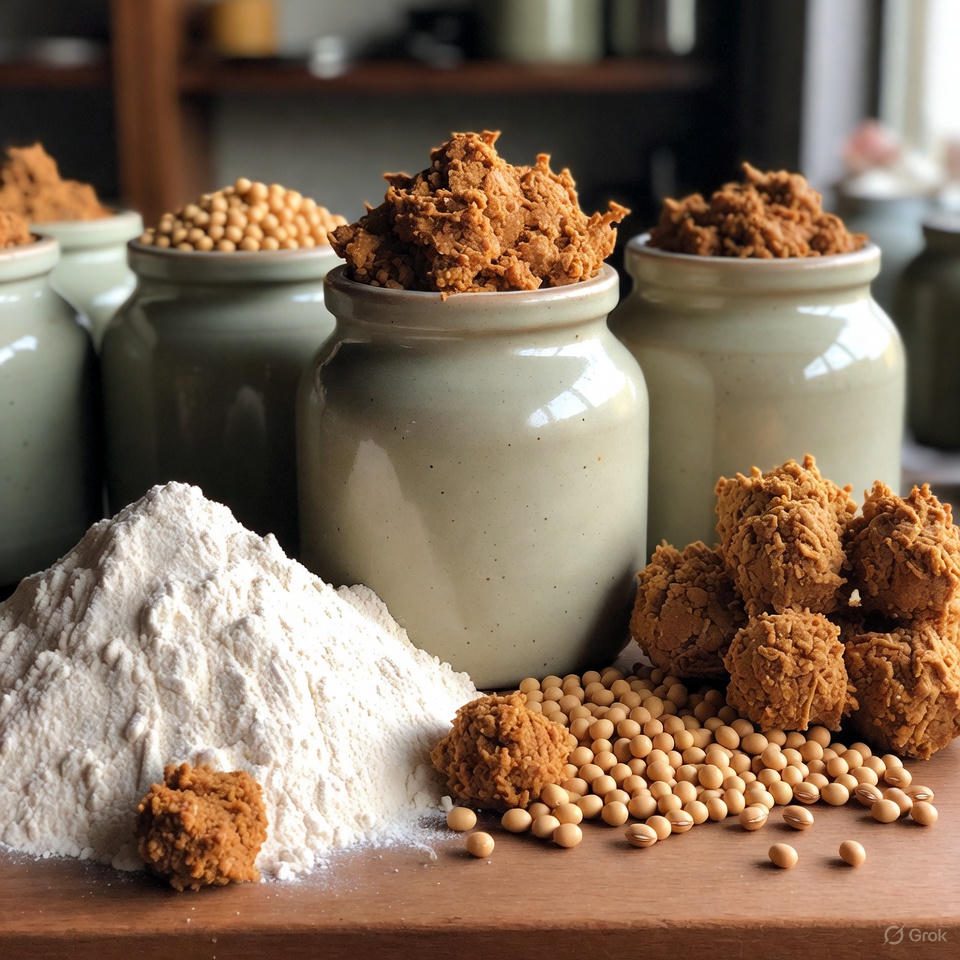
traditional Making CheommyeonjangIt is a task that requires time and effort.
In China, each household uses slightly different methods. Cheommyeonjanghas been making.
The basic principle is to ferment wheat flour and beans to produce sweetness and umami.
In the summer, moldy dry bread is wrapped in cotton, tied with sorghum leaves, and hung to dry in a well-ventilated shade to make a leavening agent.
Traditional Cheommyeonjang Manufacturing Process
Required materials
- 1.9kg of flour
- 100g soybeans (wheat flour to soybean ratio 19:1)
- 100g of salt
- 50g sugar
- Koji mold (fermentation agent)
- Appropriate amount of water
Step 1: Making flour paste
Add water to the flour and mix well to make a flour paste.
It is best to adjust the consistency to the level of thick porridge.
Step 2: Soybean Fermentation
Soybeans are boiled and mashed, then mixed with yeast mold and fermented.
During this process, the protein in the soybeans is broken down to produce umami components.
The essence of fermentation
The fermentation process is what determines the taste of Cheommyeonjang. As koji mold breaks down the starch and protein of wheat flour and soybeans, sweetness and umami are created.
The temperature should be 25 to 30 degrees, and the fermentation period varies from a minimum of 3 months to 3 years.
Step 3: Mix ingredients
Add fermented soybeans, salt, and sugar to the flour paste and mix well.
Adding a small amount of Chinese soy sauce at this stage makes the color and flavor richer.
Step 4: Aging
Place in a jar or container and let it mature in a cool place.
It is reddish-brown initially, but turns black as it is fermented for a longer period.
Simple recipes that are easy to make at home
Since the traditional method takes a long time, there is also a simple way to make it at home.
Simple Sweet Bean Paste Ingredients
- 2 cups of flour
- 1/2 cup Chinese soy sauce
- 2 tablespoons of soybean paste
- 3 tablespoons of sugar
- 1 tablespoon of salt
- 1 cup of water
1. Put flour and water in a pot and cook the paste over low heat while stirring.
2. Add Chinese soy sauce, soybean paste, sugar, and salt, and mix well.
3. Simmer over low heat for 20 to 30 minutes, stirring continuously.
4. Once it reaches a suitable concentration, turn off the heat and let it cool.
Simple made like this CheommyeonjangIt does not have the deep flavor of the traditional method, but it is sufficient for use in stir-fries or as a dipping sauce.
If refrigerated, it can be used for about 2 weeks.
Other dishes using sweet bean paste

CheommyeonjangIt is not a sauce only for Jajangmyeon.
In Chinese cuisine, in various ways CheommyeonjangIt utilizes [it], and each region has its own unique cooking method.
1. Sweet Bean Paste Jajangmyeon: Beijing Style vs. Shandong Style
Jajangmyeon in mainland China is largely Beijing style과 Shandong styleIt is divided into.
The biggest difference between the two methods lies in the field of use.
| division | Beijing style | Shandong style |
|---|---|---|
| Major chapters | Hwangjang + Cheommyeonjang | Cheommyeonjang |
| Taste characteristics | Salty and savory | The sweetness is stronger |
| Sauce concentration | Thickness | Relatively thin |
| garnish | 8 kinds of vegetables | Simple vegetables |
| history | Older | The origin of Korean Jajangmyeon |
HwangjangIt is a Chinese soybean paste made from yellow beans, similar to our soybean paste, but darker in color and salty and savory in taste.
In Beijing, yellow paste is mainly used, or a mixture of yellow paste and sweet bean paste is used.
the other side Shandong styleIt uses only sweet bean paste and is the direct prototype of the Jajangmyeon that came to Korea.
People from the Shandong region brought this recipe with them as they migrated to Incheon, and it developed into Korean-style Jajangmyeon.
Making Sweet Bean Paste Jajangmyeon (Shandong Style)
ingredient: 300g Chinese noodles, 3 tablespoons sweet bean paste, 150g minced pork, 1 cucumber, 1/4 radish, a handful of bean sprouts, 2 stalks green onion, 3 tablespoons cooking oil, 1 tablespoon soy sauce
How to make:
1. Heat oil in a pan and stir-fry the minced pork.
2. Add the sweet bean paste and stir-fry over medium-low heat as if deep-frying in oil. The key point is not to add water.
3. Season with soy sauce, and stir-fry continuously so that the oil seeps between the pieces.
4. Boil the Chinese noodles and rinse them in cold water (summer fruit noodle style).
5. Place the noodles in a bowl, arrange the shredded cucumber, radish, and bean sprouts around them, and then place an appropriate amount of stir-fried sweet bean paste sauce in the center.
6. Mix well right before eating.
eating in Beijing or Shandong Cheomyeonjang JjajangmyeonUnlike Korean Jajangmyeon, the amount of sauce is much less.
It is a method where the moisture from the vegetables blends with the sauce and naturally moistens the noodles.
2. Peking Duck (Beijing Kaoya) Sauce
The most famous Sweet bean paste dishes This is how to use it.
Place duck meat on a wheat pancake, spread sweet bean paste on it, and wrap it with green onions to eat.
The sweetness of the sweet bean paste perfectly harmonizes with the rich flavor of the duck meat.
3. Gyeongjangyuksa (kyung 醬肉絲 )
CheommyeonjangIt is a dish where shredded pork is stir-fried and then wrapped in dried tofu along with green onions.
How to make Gyeongjangyuksa
1. Slice the pork tenderloin into strips and season with starch and soy sauce.
2. Stir-fry the meat in oil, then add 2 tablespoons of sweet bean paste and stir-fry together.
3. Slice green onions lengthwise and serve as a garnish, then wrap in dried tofu or wheat pancakes.
4. Vegetable Dipping Sauce
In northern China CheommyeonjangThere is a culture of dipping green onions in the sauce.
So, he is also called the president.
Eating raw vegetables such as cucumbers, carrots, and celery dipped in sweet bean paste makes for a simple yet delicious snack.
5. Stir-fry seasoning
Adding sweet bean paste to various stir-fried dishes can bring out a deep flavor.
It is good to use in dishes such as stir-fried eggplant, stir-fried tofu, and stir-fried seafood.
Pro tips for using Cheommyeonjang
Adding sweet bean paste along with doubanjiang to mapo tofu improves the balance of sweetness and spiciness.
• Adding sweet bean paste when making eggplant rice bowl gives it a Chinese restaurant taste.
• It can also be used as a barbecue sauce. Mixing sweet bean paste, honey, and soy sauce, brushing it on meat, and grilling makes for an excellent dish.
6. Noodle Dishes and Rice Bowl Sauces
It can be used in various noodle dishes in addition to Jajangmyeon.
When making bibim guksu, instead of gochujang CheommyeonjangYou can enjoy a unique taste by using it.
If you stir-fry pork or chicken in sweet bean paste and place it on top of rice, you can make a simple yet delicious rice bowl.
With just one bottle of sweet bean paste, the range of Chinese cuisine expands significantly.
Unlike Chunjang, it can be eaten as a dipping sauce, and it is highly versatile as it can be applied to various dishes.
China CheommyeonjangStarting from, Korea ChunjangWe looked into the process of how it changed.
It is fascinating that even a single bowl of Jajangmyeon holds such deep history and culture. Knowing this history, I think the Jajangmyeon you eat at a Chinese restaurant would feel different.
Beijing style Hwangjangand Shandong style Cheommyeonjang, and Korean style ChunjangEach has a different charm.
If you get the chance, I recommend trying Jajangmyeon made with Cheomyeonjang. It might feel a bit awkward, you might not get used to it, and you might wonder, "What is this?" but there is definitely fun in discovering its origins.
Experiencing the savory taste of the original will enrich your perspective on Jajangmyeon even further.