Le Labo

233 Elizabeth Street, a narrow alley in Nolita, New York.
In 2006, a small laboratory that overturned the conventions of the perfume industry opened here.
Le LaboIt means 'laboratory' in French. This name was a declaration to deliver the moments of creation taking place in a perfumer's laboratory directly to the customers.
“The future of luxury lies in craftsmanship.”
While the traditional perfume industry relied on mass production and flashy advertising, Le Labo chose the exact opposite path.
Craftsmanship, transparency, and the aesthetics of slowness. This is the secret behind how Le Labo conquered the global niche perfume market in just 20 years.
The Birth of Le Labo – Founders Eddie Rossi and Fabrice Penault
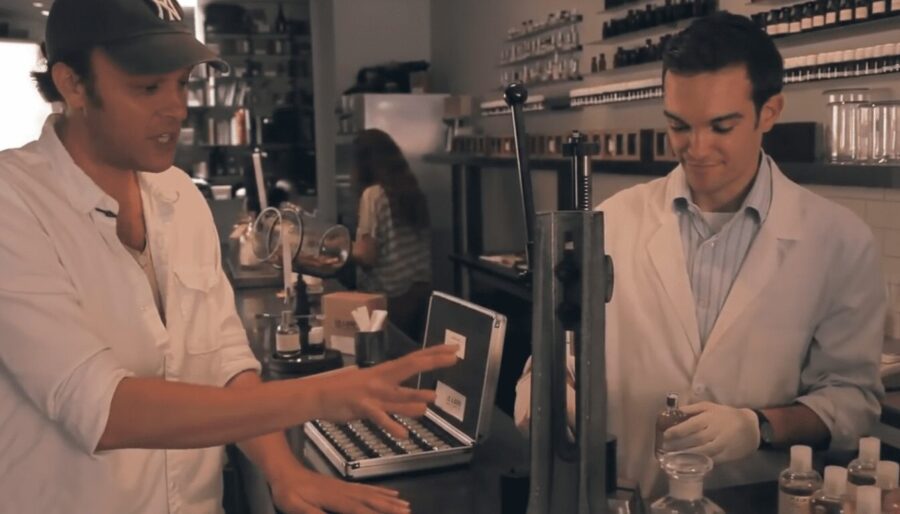
Étienne Giovanni, a subsidiary of Giovanni, and L'Oréal, a subsidiary of Giovanni, have been active for several years.
After majoring in chemical engineering in Switzerland, Eddie Rossi entered the world of perfumery by chance when he visited the fragrance company Firmenich. He was deeply captivated by the sight of the fresh scent of grass wafting from a small brown bottle and the warm scent of hot chocolate from another.
Fabrice Penault was in charge of developing niche brands at Armani, while Hedi took charge of the Emporio Armani brand. They grew closer as they flew together and shared taxis during business trips to Italy. And one day, the two asked the same question.
“Why do perfumes have to be so standardized?”
At that time, marketing dominated the perfume market. Celebrity advertisements, flashy packaging, and mass-produced products. The inherent values of perfume—craftsmanship and the quality of raw materials—were pushed to the background.
In 2005, the two decided to leave Armani. They started a business by raising small amounts from friends, without any investors or advertising budget. It is said that when they opened their first store in Nolita, they didn't even have the money to hire an architect, so they did the interior work themselves.
It is said that when the founders of Le Labo presented their business plan to executives of a major cosmetics company, they scoffed, calling it "ridiculous." A goal to sell four bottles of perfume a day, and at $200 per bottle at that? The executives told them, "Just send us your resume, and we will find you a job.".
The Philosophy of Slow Perfume
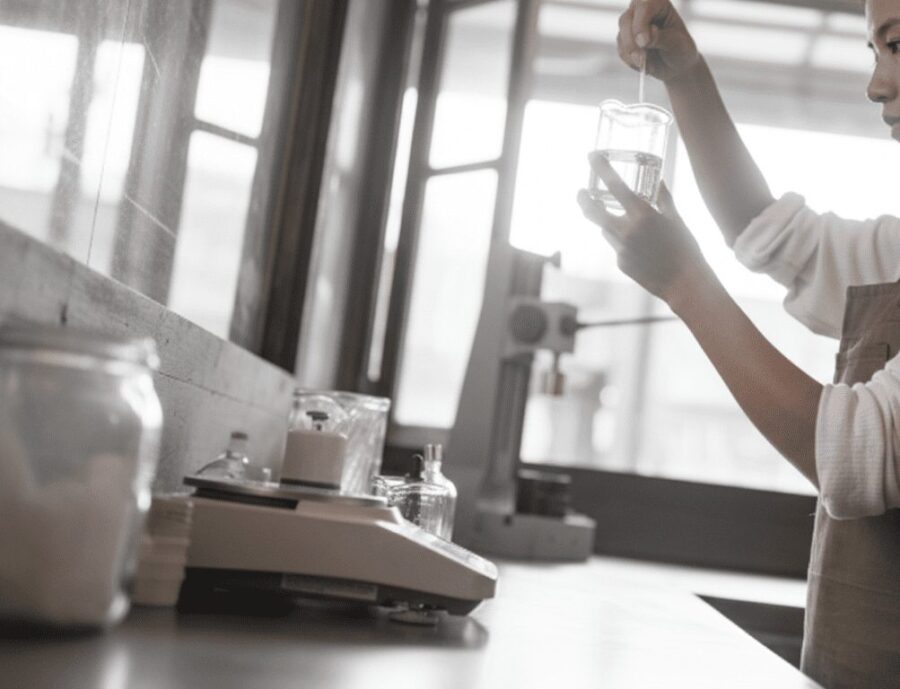
Le Labo calls itself 'Slow Perfumery.' This means that instead of the flood of new products like fast fashion, they intend to focus on a single piece crafted over time.
Jean-Claude Ellena stated, “Niche perfumes compete on the product itself, without advertising or market testing. They must be allowed to speak for themselves, expressing an intense identity and olfactory individuality.” Le Labo is the brand that has most faithfully realized this philosophy.
All Le Labo fragrances are blended fresh in-store. Instead of displaying products pre-made in large factories, a perfumer mixes the essences and bottles the moment a customer makes a selection. The label is printed with the manufacturing date and location, as well as a name or message of the customer's choice.
Fragrance critic Luca Turin commented on Le Labo: “Le Labo is so hip it hurts. Their philosophy is ‘less is more,” but it has to be French.”
Although it is a somewhat sharp criticism, it shows how big of a shock Le Labo has had to the existing perfume industry.
The meaning of Le Labo's numbers and numbering 
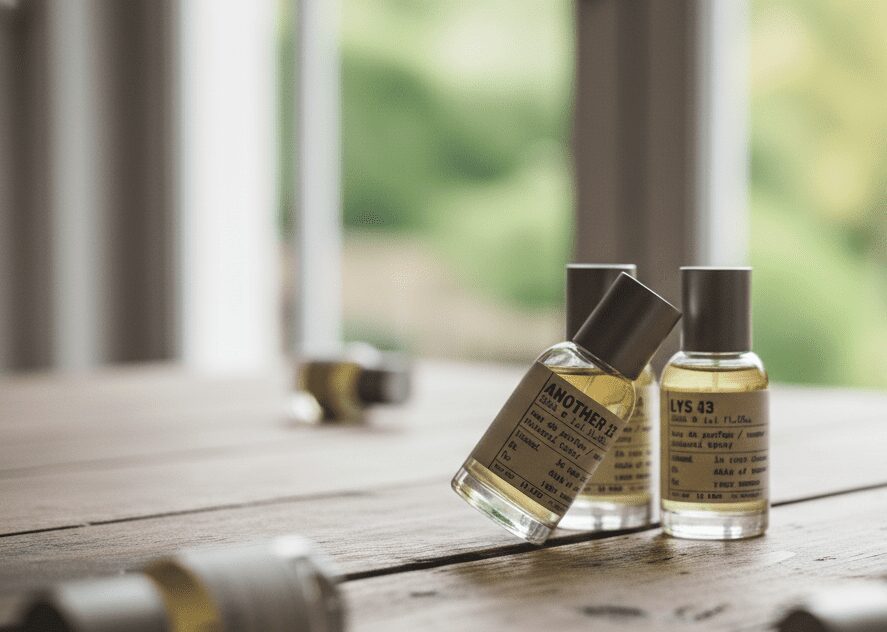
Santal 33, Rose 31, Another 13…
Le Labo perfume names always have numbers attached to them.
What does this number mean?
The answer is the number of ingredients used to make that perfume.
Santal 33 means it is composed of 33 ingredients, and Another 13 means it is composed of 13 ingredients.
This naming system symbolically represents Le Labo's philosophy. It is a declaration to focus on the essence of perfumery—ingredients and blending—rather than flashy marketing terms, and at the same time, this itself has become excellent marketing.
The simplest perfume is Ambrette 9, which uses only 9 ingredients, and the most complex perfume is Ylang 49, which contains 49 ingredients.
It is said that Santal 33 underwent as many as 93 revisions before being completed.
Behind Le Labo's numbers lie dozens of trials and errors that went beyond them.
City Exclusive Collection
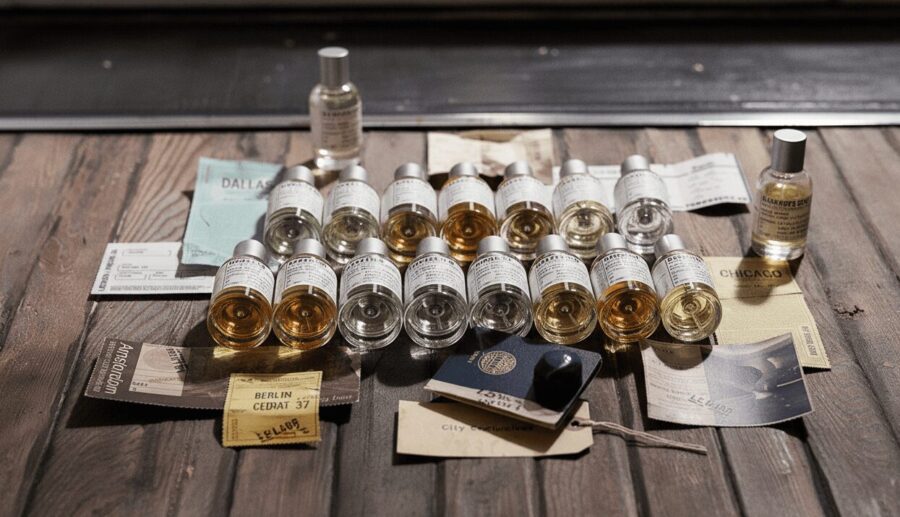
Le Labo's most unique collection is undoubtedly City Exclusive. It is a limited-edition fragrance line available only in specific cities around the world, capturing the identity and atmosphere of each city in its scent.
If you want Vanille 44, you must go to Paris, and if you want Poivre 23, you must go to London. Gaiac 10 can only be purchased in Tokyo, and Citron 28 in Seoul.
Why was such a cumbersome system created? Fabrice Peneau explained it this way.
“Some beautiful things should not be easily obtained. That is true luxury.”
However, an exception is made for just one month every September. During this period, all City Exclusive products are available for purchase at all Le Labo stores worldwide and online. In August, you can purchase a sample (1.5ml) in advance to test the scent beforehand.
Full List of City Exclusives Worldwide (2006-2025)
| Perfume name | city | Release year | Key Notes |
|---|---|---|---|
| Aldehyde 44 | Dallas | 2006 | Narcissus, Jasmine, Tuberose |
| Tubéreuse 40 | New York | 2006 | Tuberose, Citrus, Wood |
| Vanille 44 | fly | 2007 | Vanilla, incense, wood |
| Poivre 23 | London | 2008 | Black pepper, incense |
| Gaiac 10 | Tokyo | 2008 | Gaiac Wood, Musk |
| Musc 25 | Los Angeles | 2008 | Musk, aldehyde, amber |
| Baie Rose 26 | Chicago | 2010 | Pink pepper, rose, musk |
| Cuir 28 | Dubai | 2013 | Leather, Smoke, Wood |
| Limette 37 | San Francisco | 2013 | Lime, jasmine, wood |
| Benjoin 19 | Moscow | 2013 | Benzoin, olibanum, amber |
| Mousse de Chêne 30 | Amsterdam | 2017 | Oakmoss, patchouli, plum |
| Tabac 28 | Miami | 2019 | Tobacco, rum, cedarwood |
| Bigarade 18 | Hong Kong | 2019 | Bergamot, Neroli, Lily |
| Citron 28 | seoul | 2020 | Citrus, ginger, jasmine |
| Cedrat 37 | Berlin | 2021 | Cedra, Ginger, Wood |
| Myrrhe 55 | Shanghai | 2023 | Mir, Amber, Musk |
| Coriandre 39 | Mexico City | 2024 | Lime, coriander leaves, floral |
| Osmanthus 19 | Kyoto | 2025 | Osmanthus, Jasmine, Musk |
How to Purchase and Timing of Le Labo City Exclusive
The purchase of Citi Exclusive proceeds as follows:
- Year-round: Available for purchase only at Le Labo stores in the respective city
- August 1 – September 30: Sample (1.5ml) available in stores worldwide and online.
- September 1 – September 30: Full sizes (50ml, 100ml, 500ml) available in stores worldwide and online.
- Refill: Once purchased, City Exclusive bottles can be refilled at Le Labo stores worldwide for a discounted price of 201TP.
The price is the same for all City Exclusives: 50ml approx. 400,000–500,000 won, 100ml approx. 700,000–800,000 won (official Korean prices as of 2024).
Seoul City Exclusive Citron 28: A fragrance exclusively for Seoul, launched in 2020. It begins with refreshing lemon and ginger, passes through the softness of jasmine, and finishes with a deep base of musk and cedar. It captures the dynamism and sophistication of Seoul.
Le Labo Signature Perfume Recommendation
Le Labo currently has 19 Classic Collections and 18 City Exclusives.
Among them, I will introduce three perfumes that are particularly popular in Korea.
Santal 33

It is the primary contributor to making Le Labo a global brand. It gained explosive popularity, to the point where The New York Times described it as a "scent you can smell anywhere.".
Santal 33 was originally launched as a candle. Gramercy Hotel president Ian Schrager ordered a smoky version for the lobby, and guests raved about it, asking, "What is this scent?" It was later released as a room spray, and reportedly became an official perfume after a customer discovered they were using the room spray like perfume.
Australian sandalwood and cedarwood evoke a smoky campfire, while cardamom, iris, and violet add spicy depth. A musk base with a subtle leather scent leaves a sensual lingering fragrance.
Another 13

This perfume was created in collaboration with the British fashion magazine Another Magazine. The magazine's founder, Jefferson Hack, personally selected Ambrox as the base note.
In reality, rather than ambroxan or ambergris, ambrette seeds, jasmine, and moss produce a soft skin scent, and musk components meet body temperature on the skin to release a fragrance like 'my own body scent'.
The founders of Le Labo described Another 13 as “a fragrance pure as a blank sheet of paper and with a sharp charm like a house on a California cliff.”.
Although made with only 13 ingredients, it is characterized by a unique expression that varies from person to person, and is known as the epitome of a 'skin scent' that does not give the impression of having applied perfume.
Rose 31

Rose 31, created as a challenge to rose perfumes traditionally considered for women, is centered around Centifolia rose and blended with cedar, guaiac wood, musk, and uniquely cumin.
Cumin is an intense spice used in Middle Eastern cuisine, and it imbues the rose with a wild, rugged character. Fabrice Peneau stated that he wanted to create a rose that is “equally attractive to both men and women.” Indeed, it is regarded as the textbook example of a unisex rose loved by both genders.
Le Labo's unique partner
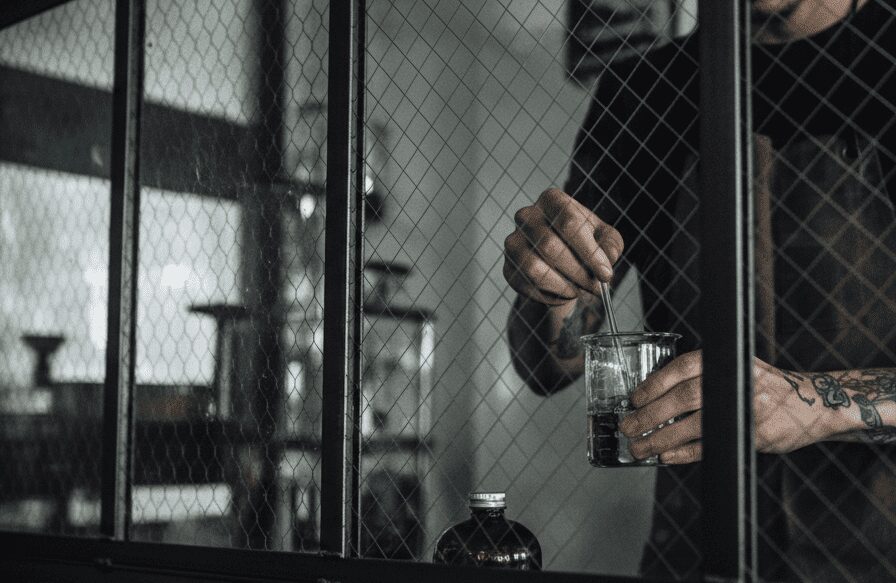
Upon entering a Le Labo store, you sense an atmosphere completely different from that of a typical perfume shop. Exposed brick walls, concrete floors, wooden tables, and staff in white lab coats give the impression of being in a laboratory or a pharmacy.
At Le Labo, the staff responsible for perfume blending are called "Souls." This signifies the soul that conveys the brand's philosophy. These Souls do not rush to recommend perfumes to customers. Instead, they provide a space where customers can sit comfortably, spray on testers, and take their time to savor the scent.
Fabrice Peno said this.
“Empathy and silence are the most important aspects of connecting with customers. We provide them with space to express themselves. Sales are merely a byproduct.”
When a perfume is selected, Soul draws the liquid from a large glass dispenser and fills it into a bottle. Then, a label is printed and attached in front of the customer. The label includes the manufacturing date, location, and a message of the customer's choice.
After Le Labo was acquired by Estée Lauder
In 2014, Estée Lauder Companies acquired Le Labo.
The acquisition price is estimated at approximately $60 million (about 80 billion won).
Many fans were concerned. Wouldn't Le Labo's identity be compromised if it were acquired by a large corporation? However, the acquisition terms included a special promise: complete creative autonomy would be guaranteed.
Eddie Rossi said this.
“We still take full responsibility for product development. We do not test externally or seek feedback. Creation should be a dictatorship, not a democracy. Especially in perfume, asking for others' opinions dilutes the concept and ultimately turns it into a mass-market product.”
When Estée Lauder executives requested the launch of five new products annually, the founders firmly refused. Le Labo continues to adhere to its philosophy of slowness, releasing only one or two products a year.
Since the acquisition, Le Labo has grown rapidly, focusing on the Asian market. While stores have expanded to over 40 countries, the principle of growing solely through word-of-mouth without advertising remains unchanged. It has also demonstrated its commitment to sustainability by obtaining B Corp certification.
Le Labo does not provide free products to celebrities. Celebrities must pay for their purchases just like regular customers. Nevertheless, Beyoncé, Taylor Swift, Justin Bieber, and others are known to be avid users of Le Labo. The Santal 26 candle even appeared in the music video for Beyoncé's album 'Lemonade'.
The revolution of Le Labo, which began in a small laboratory in Nolita, New York, has transformed the landscape of the global perfume industry. Don't rush, take your time. Perhaps this message conveyed by Le Labo is the reason why, despite its current success, it still feels like a small laboratory in New York.