
When standing in front of a craft beer tap IPAThe word '...' is never omitted. It is the first style you encounter when you first become interested in craft beer, but at the same time, it is also a confusing style due to the many branches.
IPA는 India Pale AleIt is an abbreviation. Literally translated, it means 'Indian Pale Ale,' but this beer is not made in India, nor does it use Indian ingredients. The historical context behind the name will be discussed in detail later.
IPA is 홉This is the star beer. Compared to other beer styles, it uses a much larger amount of hops to emphasize bitterness, aroma, or fruity flavors. The alcohol content typically ranges from 5 to 81 ABV, and the color varies depending on the style, ranging from a clear golden hue to a deep orange.
Basic IPA specifications (varies by style)
| item | range | significant |
|---|---|---|
| ABV | 4.5 ~ 10%+ | Generally 6–71 TP3T. Session IPA is in the low 41 TP3T range, and Double IPA is 8–101 TP3T. |
| Bitter taste (IBU) | 40 ~ 100+ | Very high compared to regular lagers, which are 15–25 |
| Color (SRM) | 4 ~ 14 | Golden to deep orange |
| Key ingredients | Pale Malt + Hops | Hop varieties determine the character of the style. |
The biggest reason IPA is distinguished from other ales is the role of hops. When hops are added to the wort and boiled, they produce a bitter taste, whereas in regular ales, hops act as a balancing force to control the sweetness.
However, in an IPA, the hop itself is the protagonist. Explosive citrus or tropical fruit aromas burst forth along with an intense bitterness; if the hop is the first thing you feel when you take a sip amidst this addictive imbalance, then that is an IPA.
index
The Birth of the IPA: From Pale Ale to Beer for India
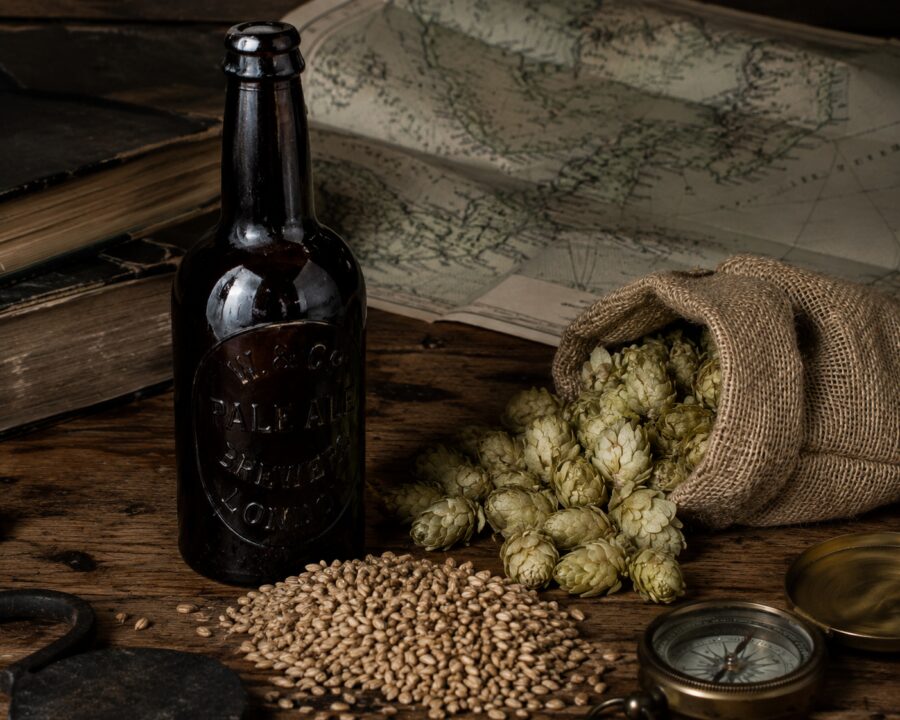
To understand IPA, the starting point is Pale AleYou must first understand this. Pale ale, which literally means "bright beer" in English, emerged in 17th-century England; until then, most beers were dark and cloudy porter-style beers.
What changed the game was the invention of coke fuel. Drying malt with coke allowed for precise temperature control, making it possible to produce 'pale malt' with a much lighter color than before. Pale ale is close to a reddish-orange or amber; while not particularly bright by today's standards, the name reflects the era.
Beer made with this pale malt is called Pale Ale. Because pale malt was more expensive to produce than dark malt, it was initially a premium beer mainly consumed by the wealthy.
Brewed in the autumn and aged for 1 to 2 years‘October beer‘That was the representative form. It produced a deep flavor by adding a lot of hops and aging it for a long time. IPA is the direct descendant of this style. (※ Although the name is similar, the one drunk at German Oktoberfest) Märzen WritingThey are completely different beers. Oktoberfest is a high-alcohol ale of the British Pale Ale style, while Märzen is a Bavarian lager from Germany.
As Pale Ale gained increasing popularity, breweries in London and Burton-on-Trent began producing this style in earnest. In particular Burton upon TrentIt is a region that cannot be left out of the history of IPA.
Why Burton-on-Trent's water is special
Burton's groundwater becomes rich in calcium sulfate as it passes through a layer of gypsum. This mineral-rich water makes the bitterness of the hops sharp and clean, and helped make the beer brighter and clearer.
Here is the reason why the taste of Burton beer cannot be replicated even when using the same recipe with London water. Today, brewers add calcium sulfate to the water to '‘Burtonization‘Doing so also originated from this history.
Late 18th century, a brewer in the Bow region of East London George HodgsonHe placed a brewery right next to Blackwall Pier, where East India Company trading ships departed.
Thanks to his geographical advantage, he supplied beer to ships bound for India by offering captains the exceptional condition of 18 months of credit. He did not send only Pale Ale; he also sent Porter, Small Beer, and October Beer.
British soldiers stationed in India at the time preferred Porter, while officers and the upper class preferred Pale Ale. In fact, Porter was also sold in India for decades. However, the results of the voyage differed for each beer.
As there are records showing that small ales with little hops and low alcohol content reached India, the idea that “only strong and hoppy beers survive” was not an absolute rule.
However, Hodgson's October beer was different. The October beer, which arrived after a long voyage passing through Madeira, Rio de Janeiro, and Cape Town and crossing the equator twice, was — Orcs Shaking inside the barrel and undergoing slow temperature changes — it developed a deep flavor as if it had been aged for years in a cellar.
Hops played a decisive role in this process. October Beer was originally a beer with a large amount of hops intended for long-term aging, and those hops prevented spoilage even during long voyages. There are also records indicating that more hops were added to the export version than to the domestic version.
However, there is no evidence that Hodgson specially developed a new recipe for export to India. It is more likely that he simply shipped the beer he was already producing for long-term preservation, and it received a positive reception locally.
However, in the 1820s, the market opened as Hodgson severed ties with the East India Company. An inland city located about 200 km north of London. Button-on-TrentThe breweries seized the opportunity.
At the suggestion of an East India Company executive, Burton's Allsopp visited Hodgson's beer to analyze it, and even conducted a test brew in a teacup, successfully making the first export to India in 1823.
The pale ale made with Burton's hard water was clearer, drier, and had a cleaner bitterness than the London one. A year later, merchants in Calcutta replied to Alsop in a letter — “It is overwhelmingly better than Hodgson’s.”
‘When and who gave the name 'India Pale Ale'?
| period | Expressions used | context |
|---|---|---|
| ~early 1830s | “pale ale” / “Indian beer” | Local Indian advertisement, no specific name |
| Early 1830s | “Pale Ale as prepared for India” | Advertising expressions by London wine merchants |
| 1835 | “India Pale Ale” first appearance | Liverpool Mercury ad — Hodgson beer retailer, not a brewery |
| 1837 | “Hodgson's India pale ale” | London The Times First appearance |
| 1841~ | “East India Pale Ale” | Burton’s Bass & Allsopp, Advertising Campaign Targeting the London Market |
Ironically, by 1835, when the name 'India Pale Ale' first appeared in print, Hodgson had already been pushed out of the Indian market by Burton Brewery. And the first person to use this name was not Hodgson himself or Burton Brewery, but a beer merchant in London.
In 1841, Bass placed a massive advertisement in The London Times. It featured slogans such as “a health drink consumed by Europeans even in the climate of India” and “a beer recommended to patients by renowned doctors.” The next day, Allsopp placed a counter-advertisement, and thereafter, The London Times was flooded with advertisements for India Pale Ale every day.
It was a paradoxical moment where a beer created for export to India conversely dominated the UK domestic market. The core of the marketing was the image of a "special beer that worked in India," which solidified the name of that style. Interestingly, the volume actually exported to India was said to be only one-sixth of the volume exported to North America during the same period.
Decline and Revival: From Britain to America

IPA, which flourished in Britain until the late 19th century, declined rapidly in the 20th century. There were complex reasons for this. During the two World Wars, the British government forcibly lowered the alcohol content of beer to conserve grain. As this measure was not reversed even after the war, IPA gradually became an ordinary beer that was difficult to distinguish from Pale Ale.
The situation was more serious in the United States. It lasted for 13 years starting in 1920. ProhibitionIt devastated the entire ale culture. After the repeal of Prohibition, the ones that survived were mainly large lager breweries. IPA virtually disappeared from the American beer market.
The seeds of revival sprouted on the U.S. West Coast in the 1970s. In 1975, Anchor Brewing's Liberty AleThis American hop, Cascade, was put front and center.
Cascade, which produces grapefruit and pine needle aromas, was a hop that no one had taken seriously in beer until then. In 1980, Sierra Nevada's Pale AleThis took over and set the standard for American craft beer.
And in 1983, of Yakima, Washington Bert GrantHe finally engraved the name 'IPA' on the bottle again. With an aggressive bitterness of 60 IBU and a label featuring the image of the Taj Mahal, his Yakima IPA is recorded as the beer that officially revived the lost style name.
Timeline of the IPA Revival
| year | case | meaning |
|---|---|---|
| 1975 | Anchor Liberty Ale released | Cascade Hop's first leading role debut |
| 1980 | Sierra Nevada Pale Ale Launch | Establishing the standard for American craft beer |
| 1983 | Bert Grant's Yakima IPA Launch | First U.S. 'IPA' title revived |
| 1994 | Blind Pig Inaugural Ale (Double IPA Round) | The start of the hop maximization race |
| 1996 | BridgePort IPA, Stone IPA (1997) | Establishing the West Coast IPA style |
| 2010s | NEIPA spread including Tree House, The Alchemist, etc. | The dawn of the Hazy IPA era |
In the 1990s, the U.S. craft beer market overheated and numerous breweries closed down, but the ones that survived were the breweries that were serious about hops.
Since the 2000s, IPA has firmly established itself as the representative style of the American craft beer scene. Even British breweries influenced by the US began importing American hops to produce their own domestic IPAs.
West Coast IPA, New England IPA? Various IPA Types and Style Lineages

The IPAs found on tap lists today are not a single style. Starting from English IPA, they constantly branched out through the American craft scene. It is interesting to understand the context and order in which each style was derived.
English IPA — Original
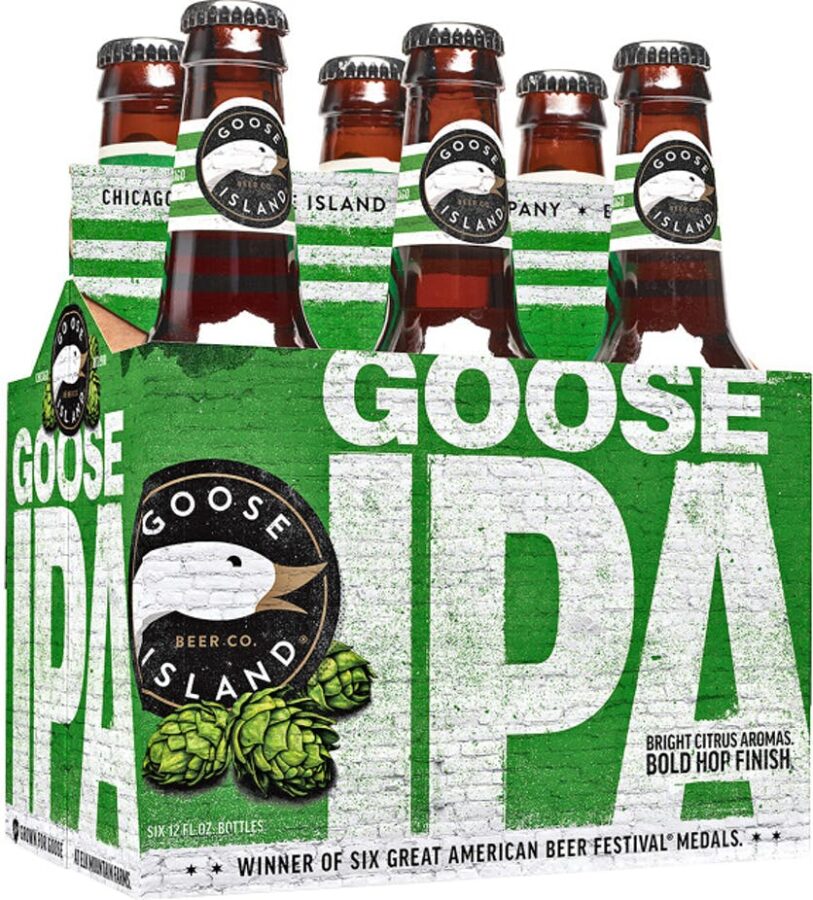
It is the starting point for all IPAs. Perfected in 19th-century Burton-on-Trent, it features a solid foundation of malts with caramel and toast flavors, while British hops (Fuggle, East Kent Golding) provide earthy and herbal notes. The malt character is more pronounced than in American IPAs, and the bitterness is restrained. The alcohol content is relatively low, typically around 51 TP3 T.
American IPA — The Revolution Created by C-Hops
It was born in the 1980s as American craft breweries reinterpreted English IPA in their own way. The decisive difference is the hops.
Cascade, Centennial, Columbus, Chinook — the so-called '‘C-hop‘American hop varieties called '...' unleash an explosive burst of grapefruit, pine needle, and citrus aromas. It was a flavor that did not come from British hops.
The malt is based on pale malt, but a small amount of crystal malt is added to slightly support the caramel sweetness. Compared to English IPA, it has a higher alcohol content (5.5–71 IBU) and a stronger bitter taste (40–70 IBU). This is the style that comes to mind first when we say 'IPA' today.
West Coast IPA — The Extreme of Bitterness
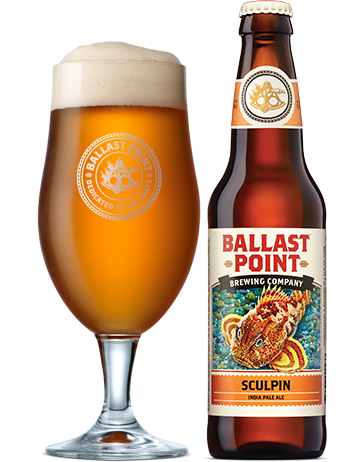
This style was created by breweries in California and the Pacific Northwest in the 1990s, with Stone, Lagunitas, Russian River, and Bear Republic being representative examples.
At the time, it was simply called 'American IPA,' but with the emergence of New England IPA (NEIPA) in the 2010s, a name was needed to distinguish the two styles, and retrospectively referring to the classic style of West Coast origin ‘The name 'West Coast IPA' was given later.
The characteristics of the style are dryness and bitterness. Crystal malt is minimized or completely omitted, and the base is made solely of pale malt. Beer as a canvas of hop aromaIt was used as.
It is clear, transparent, and dry, with resinous flavors of pine needles and grapefruit peel that linger to the finish. The standard IBU is 60 to 80. In the 2020s, a 'Neo-West Coast' style also emerged, featuring increased dry hopping and slightly lower bitterness.
Double/Imperial IPA — Harder, More

As IPAs reached their limits, the direction American breweries chose was 'bigger'. In 1994, California's Blind Pig Brewery's Vinnie CilurzoGa made a commemorative beer by doubling the hop usage and increasing the malt ratio to 30%.
This is known as the origin of the Double IPA. He later moved to Russian River and the legendary Pliny the ElderIt gave birth to.
The standard for a Double IPA is an ABV of 7.5–101 TP3T and an IBU of 65–100+. As the alcohol content increases, more hop oils can be dissolved, so not only is the bitterness stronger, but the density of the aroma itself increases.
However, given the high alcohol content, there are also many recipes that add a small amount of simple sugar to lighten the body and maintain dryness. This is where the difference lies between easy-to-drink Double IPAs and those that are not.
New England IPA (Hazy IPA) — Non-bitter IPA

In the early 2010s, a completely different type of IPA emerged in the northeastern United States. Vermont's The Alchemist와 Hill FarmsteadThe style introduced by maximizes the juicy flavor instead of bitterness.
Use large amounts of oats and wheat to create a thick and smooth texture, and use hops not at the beginning of boiling. Second half or dry hoppingAdd only [the ingredient] so that the aroma comes out much stronger than the bitter taste.
The result is hazy like orange juice, full of tropical fruit aromas such as mango, peach, and pineapple, and has almost no bitterness.
New generation hop varieties such as Citra and Mosaic made this style possible. The official name is New England IPA (NEIPA), but it is also called Hazy IPA, Juicy IPA, etc.
It is currently the most popular IPA substyle in the global craft beer scene. It is also the most commonly seen style in Korean craft breweries.
Other variations: Results of material tests
Various variation styles also emerged by adding other ingredients to the IPA base or adjusting the alcohol level.
| style | characteristic | Derivative background |
|---|---|---|
| Red IPA | Crystal/Caramel Malt with red color and sweet malt flavor | Malt-centered interpretation of early American IPA |
| Rye IPA | Peppery, spicy dryness from the addition of rye | The materials experimentation boom of the early 2010s |
| White/Wheat IPA | Increased wheat ratio for witbier texture + hop aroma | Trend of integration along with the hazy IPA craze |
| Session IPA | ABV 4%, low alcohol content while preserving hop aroma | The Double IPA Rebound, Demand for Light Drinks |
| Milkshake/Smoothie IPA | Sweet and creamy with added lactose and fruit puree | Dessert beer trends since 2015 |
| Cold IPA | Fermented with lager yeast, drier than West Coast. | Created by Wayfinder Beer in 2018 |
Variations in style continue to increase. Some appear and disappear like trends (Brut IPA), while others have solidified their own unique position. The important thing is that all these variations ultimately stem from a single question — “How far can hops go?”
The essence of IPA: The flavor and aroma created by hops
[Image replacement: Close-up macro photo of a fresh hop cone on a hop vine, vivid green with lupulin powder visible]
Hops are at the heart of why the style classification of IPAs is so complex. Hops are not merely an ingredient that produces bitterness. Depending on the variety, they produce completely different characters, ranging from citrus, pine needles, tropical fruits, grassy notes, and earthy scents to floral aromas.
The biggest driving force behind the change in IPA styles was the emergence of new hop varieties. 'C-hops' like Cascade, which dominated the 1970s and 80s, gave rise to American IPAs and West Coast IPAs.
Varieties such as Citra and Mosaic, which emerged after the 2000s, ushered in the era of Hazy IPA. New Zealand hops (Nelson Sauvin, Motueka) added another lineage of tropical fruit flavors.
A brief summary of characteristics by hop type
American C-hop (Cascade, Centennial, Columbus, Chinook): Grapefruit, pine needles, resin, strong bitter taste
English hops (Fuggle, East Kent Golding): Earthy notes, herbs, restrained bitterness
New Generation American Hop (Citra, Mosaic, Amarillo): Mango, peach, tropical fruit, low bitterness
New Zealand hops (Nelson Sauvin, Motueka): White wine, passion fruit, unique exotic aroma
The complete explanation of each hop variety is Complete Guide to IPA Hop VarietiesIt will be covered in... (To be written later)
Even within the same IPA, the beer becomes completely different depending on which hops are used. Getting into the habit of checking the hop variety name on the IPA label will greatly enhance the enjoyment of drinking.
How to Choose and Drink IPA

When you first taste an IPA, it is not easy to acquire a taste for it from the start due to the excessive bitterness compared to the sweet and rich fruit aroma. This is a sense of aversion stemming from the cognitive dissonance between the aroma and taste you expect in your mind. However, once you acquire a taste for this stimulating and diverse aroma, you cannot easily escape it.
People trying it for the first time often say, “IPAs are too bitter and astringent.” However, the style spectrum of IPAs is wider than you might think. If you find the bitterness burdensome, there is no reason to necessarily drink a bitter IPA.
How should I get started with IPA?
If you dislike bitterness: Hazy/New England IPA → Sweet and centered on tropical fruit flavors, with low bitterness. Best for trying an IPA for the first time.
Once you have adapted to some extent: West Coast IPA → If you have gotten used to the bitterness of the hops, try the classic West Coast, which is a bit drier and has a strong resin flavor.
If you want something stronger: Double/Imperial IPA → High hop density and alcohol content. If you want a kick, give it a try.
The most important thing when drinking IPA is FreshnessC. The aromatic components of hops (especially hop oil) oxidize rapidly over time. The aroma of a freshly brewed IPA is completely different from that of two months later.
It reads directly on the can of Russian River's Pliny the Elder — “It doesn't get better with age! Hop beer is not meant to be aged!”
Check the manufacturing date on the bottle or can, and choose a refrigerated product if possible. The best IPA is freshly poured at the brewery taproom, and if it is in a can, it is best to drink it as soon as possible from the packaging.
What is the best way to drink IPA?
Temperature: Drink chilled, but not too cold. 6–10°C is ideal. If it is too cold, the aroma is drowned out.
Glass: Tulip-shaped glasses or glasses specifically designed for IPAs concentrate the aroma. A standard pint glass is acceptable, but the rate at which the aroma spreads is different.
Freshness: The sooner from the date of manufacture, the better (especially, within 3 months is said to be best, but that is not easy to achieve in Korea for imported beers… for Hazy IPAs, the period should be even shorter, 1 to 2 months is ideal.)
Pairing: Greasy burgers, strong cheeses, and fried foods. The bitterness of the hops cuts through the greasiness, leaving a refreshing sensation in the mouth. It pairs well with fiery foods, but be careful when eating it with spicy food! The bitterness of the hops amplifies the heat sensation of capsaicin, making it feel even spicier.
IPA is not a style, but a direction. Based on the principle of putting hops front and center, the resulting beer is completely different depending on which hops are used and how. Although it is a style with a history spanning over two centuries, new variations continue to emerge every year, bringing us joy.


