
index
1. Why is the alcohol content of Makgeolli so different?
Basic alcohol content range of Makgeolli
2. History of Makgeolli Alcohol Content: Alcohol content set by the state
3. How is high-alcohol Makgeolli made?
Why is the alcohol content of Makgeolli so different?
Basic alcohol content range of Makgeolli
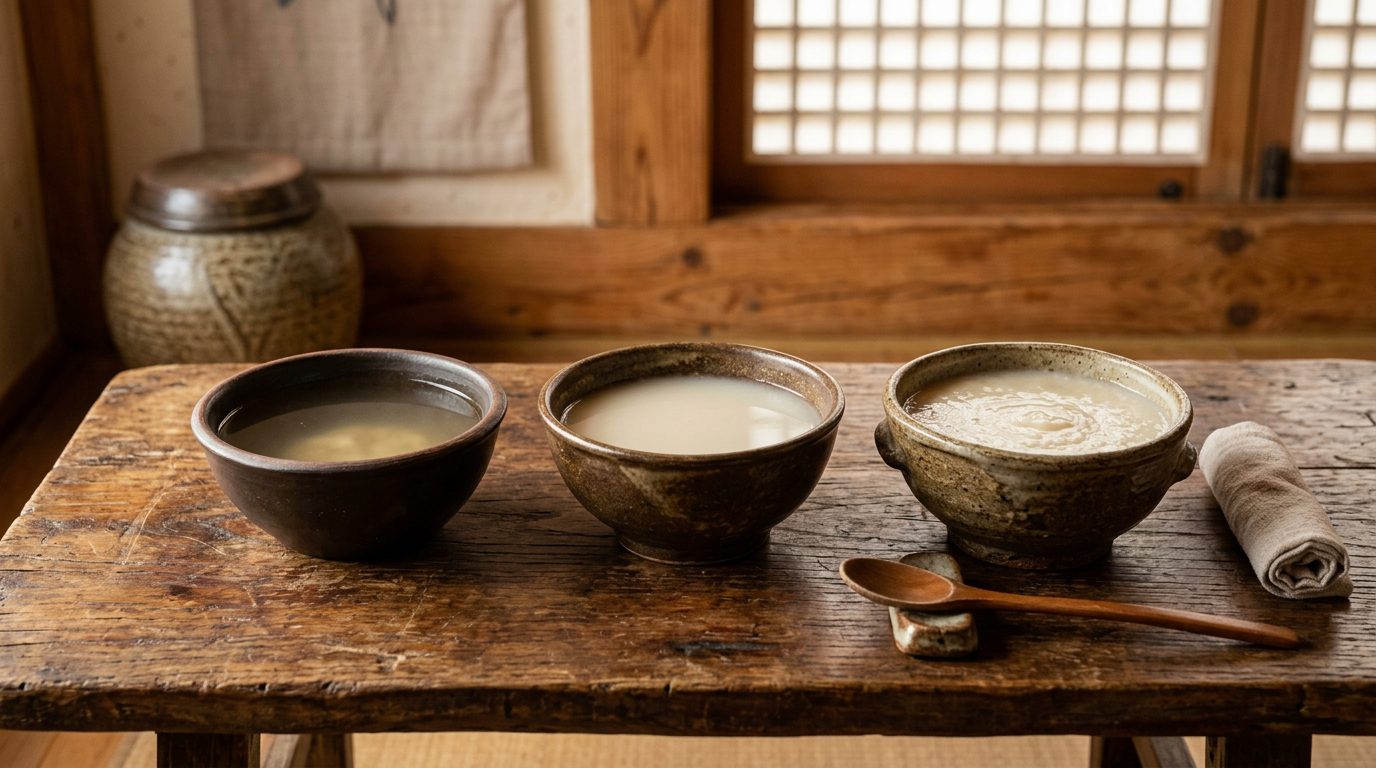
Makgeolli's Alcohol contentOfficially, it varies from 4% to 18%. However, the makgeolli most commonly found in convenience stores or supermarkets is mostly around 5 to 6%.
Why has this range become the established default? Makgeolli undergoes a process of diluting the fermented base liquor with water.
Since this method adjusts the final alcohol content by controlling the amount of water, it is possible to create products with completely different alcohol percentages using the same original circumference.
Cheap makgeolli commonly seen in supermarkets maintain a price range of 1,000 to 2,000 won by maximizing this dilution ratio.
- Low water — 51 TP3 T or less (Jipyeong Saeng Makgeolli 51 TP3 T, Jeonju Moju less than 11 TP3 T)
- Standard degree — 6~7% (Most commercially available makgeolli, such as Seoul Jangsu Makgeolli and Kooksoondang Saeng Makgeolli)
- moderate — 8~10% (Geumjeongsanseong Makgeolli 8%, Boksoondoga Takju, etc.)
- High alcohol content — 111 TP3T or more (Slow Village Once More 121 TP3T, Haechang Makgeolli 121 TP3T, Hard Potion 14.31 TP3T)
- High alcohol content — 171 TP3T or more (Independent Army Makgeolli Black 18.61 TP3T, Lee Sang-heon Takju 191 TP3T)
Generally, the alcohol content of makgeolli is around 61%, and it is characterized by a subtly savory and sweet taste with a slightly fizzy, refreshing sensation.
The average alcohol content of makgeolli is 6 to 8 degrees, but recently, high-alcohol products of 10 degrees or more are gaining attention.
In the case of the Makgeolli category of the alcoholic beverage tasting competition, the evaluation subjects were divided into low-alcohol Takju (alcohol content less than 8%) and high-alcohol Takju (8%) for the first time in 2024.
Makgeolli is typically around 6% alcohol, but in the last five years, many strong makgeolli varieties with an alcohol content of around 10% have been released on the market.
History of Makgeolli Alcohol Content: Alcohol content set by the state
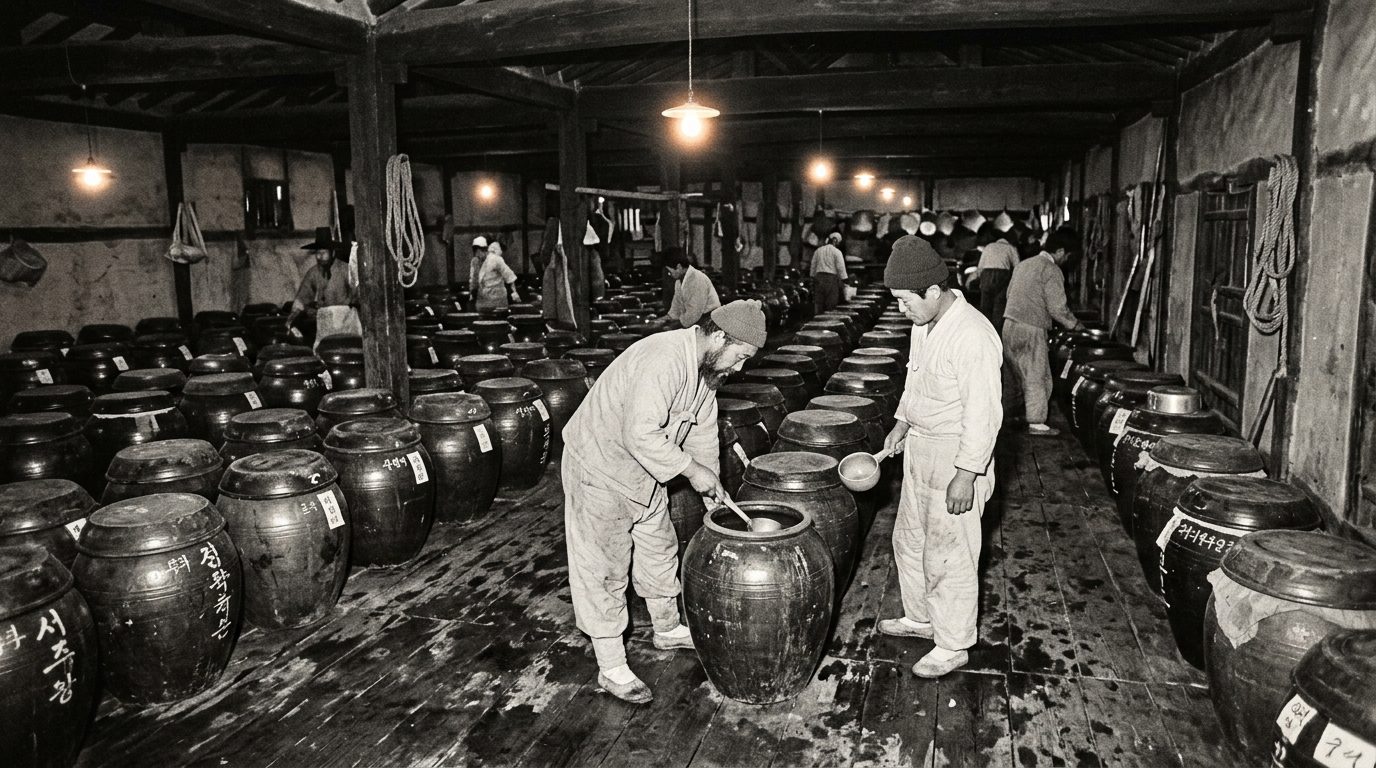
While it feels natural that the alcohol content of Makgeolli is 61%, in fact, this figure was determined by the state, not the market. The history of Makgeolli's alcohol content has evolved alongside modern and contemporary Korean history.
Before 1949, the alcohol content varied from 6 to 12 degrees, and there was even undiluted 16-degree makgeolli. In 1949, the government limited the alcohol content of makgeolli to 8 degrees.
It was lowered to 6 degrees in 1962, changed back to 8 degrees in 1982, and the alcohol limit was removed entirely in 1991.
In 1982, the alcohol content of Makgeolli was raised from 61 TP3T to 81 TP3T. At that time, alcohol content was a national policy, not a creative idea of brewers.
Under government directives, all makgeolli breweries were required to produce only 8% alcohol makgeolli. As the alcohol level rose to 2%, accidents began to occur.
If you fall while drinking rice wine on a paddy ridge, you can laugh it off because it is horizontal movement, but since a construction site involves vertical movement, falling leads to a fatal fall.
At the time, the Seoul subway construction site, which was in full swing, removed makgeolli from the mid-morning snacks, marking the beginning of the separation between construction sites and makgeolli.
It was only after the alcohol limit was completely abolished in 1991 that breweries were finally able to produce makgeolli with the alcohol content they wanted.
And as interest in traditional alcoholic beverages grew since the 2000s, various high-alcohol makgeolli varieties began to emerge today.
This is also the reason why many high-alcohol products on the market today use the name 'Takju'. It is common for alcoholic beverages boasting an ABV of 91 TP3T or higher to be called Takju rather than Makgeolli.
This is the case with alcoholic beverages that are not called makgeolli in the first place, such as 12%'s Gyeongtakju and 19%'s Lee Sang-heon Takju.
How is high-alcohol makgeolli made?
Fermentation and Yeast
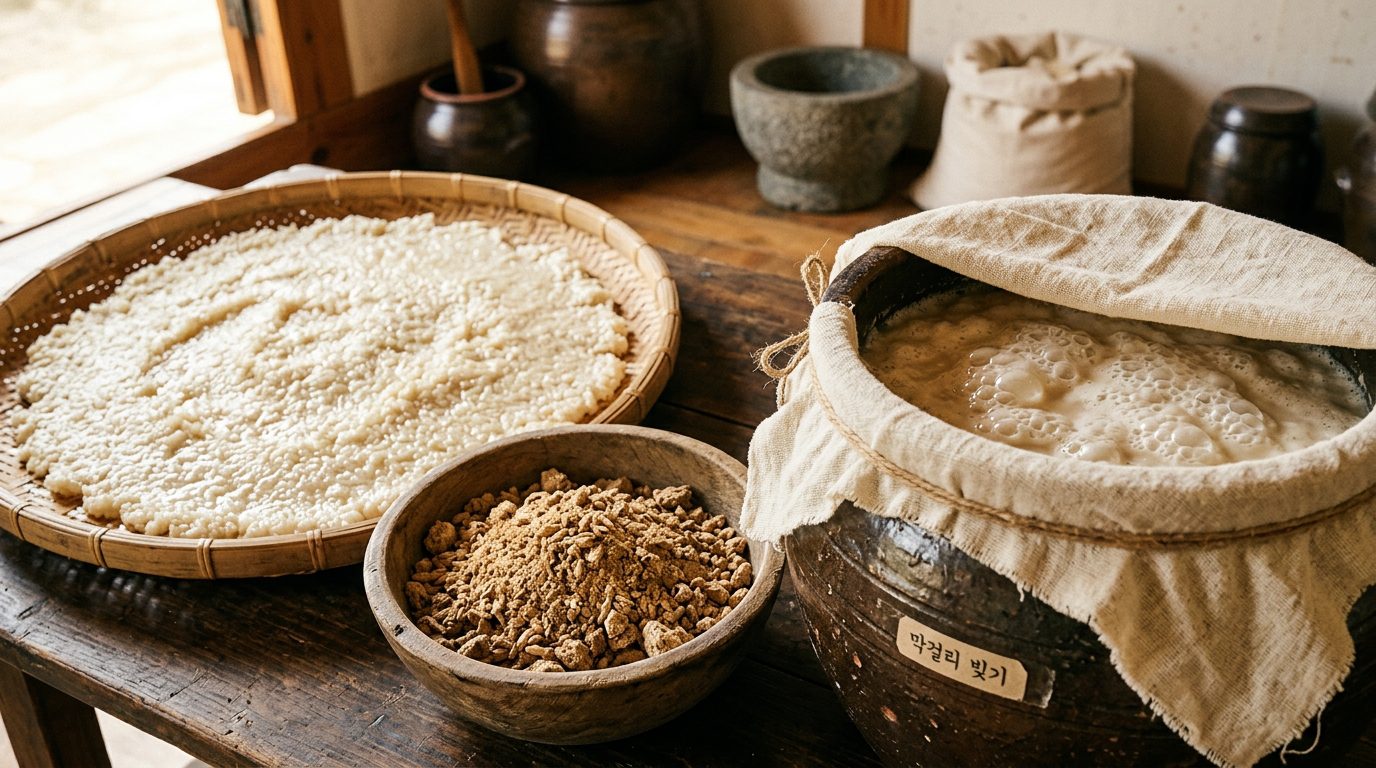
fermentationThe key ingredient is yeast. When the starch in rice is broken down into glucose by saccharifying enzymes, yeast consumes this sugar to produce ethanol (alcohol) and carbon dioxide.
The amount of sugar converted into alcohol during this process determines the final alcohol content.
Then, can yeast produce alcohol indefinitely? No. Yeast also has a limit to its alcohol tolerance. Generally Beer Based on yeast, fermentation activity usually slows down significantly at around 12 to 141 TP3 T ABV.
The yeast used in makgeolli also has a similar limit, and various technical strategies are required to overcome this limit.
The alcohol content does not increase simply because it is fermented for a long time; rather, the type of yeast and its growth conditions determine the alcohol content.
How to increase alcohol content by adding more alcohol
The key technique for making high-alcohol makgeolli is precisely Multi-brewing liquor It is a method. Simply put, instead of adding a large amount of rice at once for fermentation, it is a method of adding it in stages.
In traditional alcoholic beverages, depending on the number of times the liquor is brewed, there is Danyangju, which is brewed once (單釀酒), double-brewed Iyangju (二釀酒), Samyangju brewed three times (三釀酒It is classified by ). The flavor and aroma become richer depending on the number of times it is brewed.
Why is this method effective for increasing alcohol content? If the sugar content of the rice saccharification liquid, which serves as food for the yeast, is too high from the start, the yeast experiences osmotic stress, which actually lowers fermentation activity.
On the other hand, if additional fermentation ingredients are added when fermentation has progressed to a certain point, the already formed yeast community can convert more sugar into alcohol.
Neurinmaeul Makgeolli is a well-known representative Samyangju. It is brewed as a Iyangju using nuruk, yeast, and rice flour, and then sweetened by adding a second fermentation (Samyangju) just before bottling. In this process, sweeteners commonly found in makgeolli, such as aspartame, are not used at all.
- Repeated fermentation (Iyangju, Samyangju, Sayangju) — Rice is added in stages to exceed the yeast's alcohol tolerance limit. Neurinmaeul 'Hanbeonda' achieves 12% alcohol content using the sayangju method.
- Minimize water dilution While regular makgeolli is diluted with a significant amount of water, high-alcohol makgeolli is bottled with little to no water added, or contains the original liquor as is. There are even products like 'Hard Potion' that bottle the original liquor as is.
- Selecting a fermenting agent with high saccharification power Using koji or rice starter with strong saccharification power can generate more sugar, which is then converted into more alcohol.
The fermented original liquor usually contains alcohol at a level of 16 to 201 TP3T. Since the alcohol content of the filtered makgeolli is high at about 16 to 20 degrees, a step is performed to adjust the alcohol content by diluting it with water.
High-alcohol makgeolli products minimize this dilution ratio or are released in their original, undigested state.
Comparison of High-Alcohol Makgeolli Products
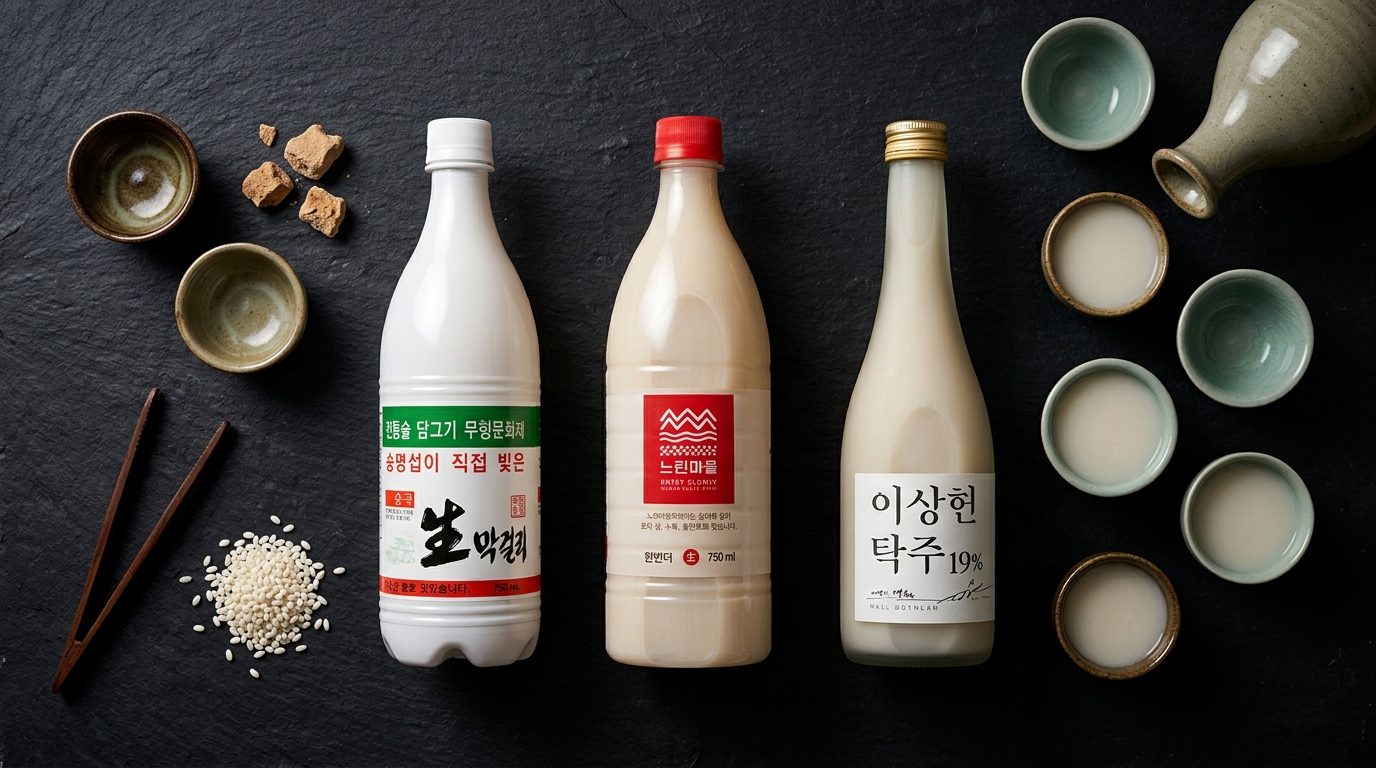
The major high-alcohol makgeolli currently available on the market are summarized as follows.
| Product Name | Alcohol content | Manufacturing method | characteristic |
|---|---|---|---|
| Slow Village once more | 12% | Sayangju | Adding a second fermentation to Samyangju. Thick with a deep sweetness of rice. Recommended on the rocks. |
| Haechang Makgeolli | 12% | Traditional fermentation | Complex fruit aroma of banana and pineapple. Natural sweetness made solely from rice without additives. |
| Gyeongtakju | 12% | High-prescription premium | Sung Si-kyung Makgeolli sold out every day immediately after launch |
| Hard Potion | 14.3% | Bottled exactly as is from Wonju | A product that captures the original spirit without dilution. Rich body, high alcohol content. |
| Independence Army Makgeolli Black | 18.6% | High fermentation | A dry, not-too-sweet flavor. The highest alcohol content group within the Makgeolli category. |
| Lee Sang-heon Takju | 19% | High-fermentation original liquor | The highest alcohol content makgeolli known in Korea to date. Sold in its original state without dilution. |
As the alcohol content increases, there is a distinct change in taste as well.
Compared to regular makgeolli, high-alcohol makgeolli has a much heavier body, and the natural sweetness of the rice and the fermented aroma linger more intensely. On the other hand, the carbonation tends to be relatively lower.
These makgeolli have a very strong flavor and an alcohol content of over 12%, so you will be in big trouble if you gulp them down like regular makgeolli.


