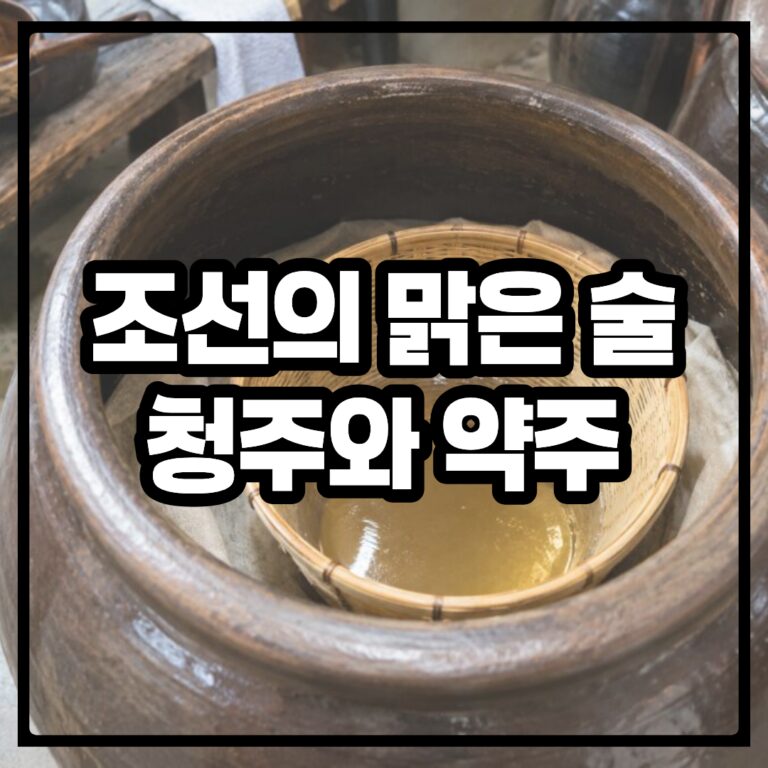
Traditional Makgeolli is Korea's representative traditional fermented alcoholic beverage brewed with rice, yeast, and water. It is characterized by its cloudy appearance, smooth umami flavor, mild acidity, and subtle sweetness; it is a low-alcohol drink also known as "Takju." While the alcohol content of Makgeolli typically ranges from 6 to 81 TP3T, it can be produced up to 201 TP3T depending on the brewing method. The white sediment at the bottom of the bottle is called "Jubak" or "Jigemi," consisting of unfermented rice particles, yeast residue, dead yeast cells, and proteins that have settled. Before drinking, the bottle should be shaken to mix the contents evenly, as this Jubak contributes to Makgeolli's unique flavor. If only the clear liquid at the top is consumed without mixing, it can be considered similar to Cheongju or Yakju.

It is a type of alcohol passed down since the ancient Three Kingdoms period and is known as a drink enjoyed by farmers and commoners. There is also a theory that it originated from drinking water mixed with the lees left over after brewing cheongju. While makgeolli is evaluated as a drink beneficial for gut health due to the lactic acid bacteria and dietary fiber produced during the fermentation process, personally, I think it is unreasonable to expect health benefits from alcohol.
How to Make Makgeolli (Brewing Process)
Makgeolli is produced in the following order: washing rice → steaming → cooling → adding nuruk → first fermentation → second fermentation (additional fermentation) → Nth fermentation → (…) → filtration and bottling. In this process, the mixture of steamed rice and nuruk that undergoes first fermentation is called Jumo or Mitsul. If the mixture is filtered and bottled after this first fermentation, it is called Danyangju. If steamed rice is cooked for the second fermentation and added as additional fermentation, it is called Iyangju. If additional fermentation is continuously added to undergo nth fermentation, it is called nyangju.1
Washing and soaking rice

First, wash the rice thoroughly and soak it sufficiently in water. Washing removes impurities from the rice husks and excess protein. If the rice is not washed properly and excess protein remains, an excessive amount of fusel oil may be produced during fermentation, resulting in an unpleasant odor. The reason for soaking the rice is to allow the grains to absorb sufficient moisture so that the starch gelatinizes evenly during steaming. Sufficiently soaked rice ferments well, and the texture of the makgeolli becomes smooth and uniform.
For non-glutinous rice, which absorbs moisture quickly at room temperature, it is appropriate to soak it for 4 to 6 hours, and for glutinous rice, which absorbs moisture relatively slowly, for 6 to 8 hours.2 In addition, it is recommended to soak for more than 12 hours in winter when soaking at low temperatures of 15℃ or lower, and for a shorter period of about 3 to 4 hours when soaking at high temperatures of 30℃ or higher. If the soaking time is too short, the steamed rice will be undercooked and uneven starch gelatinization may occur, leading to saccharification failure and poor fermentation; if the soaking time is too long, excessive absorption will cause the rice to become soft and viscous, resulting in excessive turbidity and viscosity, and increasing the risk of contamination by bacteria.
Steaming (steaming cooked rice)

Soaked rice is steamed in a steamer or steamer to make *godubap* (cooked rice). The core purpose of the steaming process is the gelatinization (α-gelatinization) of starch. Starch particles in raw rice form a crystalline structure that is difficult for enzymes to access; however, when rice is steamed, the rigid micelle structure of the starch particles breaks down and combines with water to form gelatinized starch. Simply put, water molecules intervene between starch molecules, transforming them into a starch-water-starch structure. This softens the starch, making it easier for enzymatic action to occur. In simpler terms, it can be understood as a stage that breaks down lumps that are difficult for yeast or koji mold to consume into smaller pieces. This process is also called starch gelation and is an essential step for yeast or mold to break down starch into sugar. After steaming *godubap* for about 40 to 60 minutes, the rice grains should be split in half to ensure they are thoroughly cooked through and become transparent; if any undercooked or dry parts remain, saccharification will not occur properly, potentially leading to fermentation failure. It is recommended to let the rice rest for about 10 to 20 minutes after steaming.
Starch gelatinization methods utilize not only steamed rice but also techniques such as Seolgi-tteok, Beombeok, and Juk. As one moves toward Seolgi-tteok, Beombeok, and Juk, starch gelatinization becomes easier, and yeast proliferation accelerates, facilitating alcoholic fermentation. While starch that is too thoroughly dissolved, as in Juk or Beombeok, saccharifies and ferments rapidly to prevent failure, it is difficult to retain residual sugar. Furthermore, the fine lees make filtration difficult, resulting in a thick, heavy-bodied Makgeolli.
On the other hand, when gelatinized with steamed rice, only the outer layer cooks while the interior undergoes gradual saccharification. This allows the saccharifying enzymes of the nuruk to act slowly over several days. Given the characteristics of Makgeolli, where parallel saccharification and fermentation—combining nuruk mold saccharification, yeast fermentation, and lactic acid fermentation—occur simultaneously, gradual saccharification is ideal rather than the sugar being released all at once. Steamed rice acts as this "delayed-release starch." During this process, fermentation does not proceed rapidly; instead, aroma and flavor develop gradually, serving as the driving force behind producing high-quality Makgeolli.
Due to these characteristics, when making makgeolli that involves adding a secondary mash, such as Iyangju or Samyangju, it is best to use a base mash made of rice porridge or gruel to rapidly multiply and stabilize the yeast, and then gradually make a secondary mash using steamed rice cake or cooked rice, which has a slower saccharification rate, to enhance flavor and completeness.
Mixing yeast

Steamed glutinous rice (or gelatinized starch) must be cooled sufficiently before mixing with koji. If koji or yeast is added while hot, the microorganisms will all die, preventing fermentation. It is important to lower the temperature to below 30°C. At home, it is recommended to spread the glutinous rice in a wide container and use a fan to blow cool air on it.
Finely crushed nuruk is added to properly cooled steamed rice. Nuruk is made by cultivating molds containing enzymes for alcohol production on grains such as wheat, barley, and rice. Various molds, yeasts, and lactic acid bacteria inhabit the naturally fermented nuruk; the molds in the nuruk secrete saccharifying enzymes, such as amylase, to break down starch into sugar, while the wild yeasts present in the nuruk ferment the sugar into alcohol and carbon dioxide.
Furthermore, lactic acid bacteria ferment a portion of the sugar into lactic acid, imparting the characteristic acidity of Makgeolli and lowering the pH of the fermentation environment to inhibit the proliferation of harmful bacteria. Due to these characteristics of Nuruk, complex fermentation is possible without the need for separate additions of koji or yeast. However, to compensate for the drawbacks of Nuruk—which contains a mixture of wild yeast and various fungi, leading to reduced fermentation consistency or increased Nuruk odor or bitterness when used in large quantities—a small amount of dried brewing yeast is sometimes mixed in with the Nuruk. At this stage, the ingredients must be thoroughly mixed and kneaded to ensure good contact between the Nuruk mycelia and the steamed rice particles. Proper kneading is essential for the Nuruk and rice to mix, allowing starch decomposition to proceed, sugars to be produced, and the wild yeasts to begin multiplying.
The ratio of koji to grain varies by brewer; while some use anywhere from a minimum of 101 TP3T relative to the grain amount to over 501 TP3T, using too little koji often results in insufficient yeast and frequent fermentation failures, whereas adding too much leads to a strong koji odor and bitter taste, which is undesirable. It is best to adjust the koji ratio according to the desired flavor profile, but generally, around 201 TP3T is the commonly used ratio. Since I prefer to be able to control both the brewing process and the microorganisms, I use about 101 TP3T of koji and Beer I prefer brewing by using additional dry yeast, such as yeast or wine yeast.
Making Jumo (Base mash – 1st fermentation)
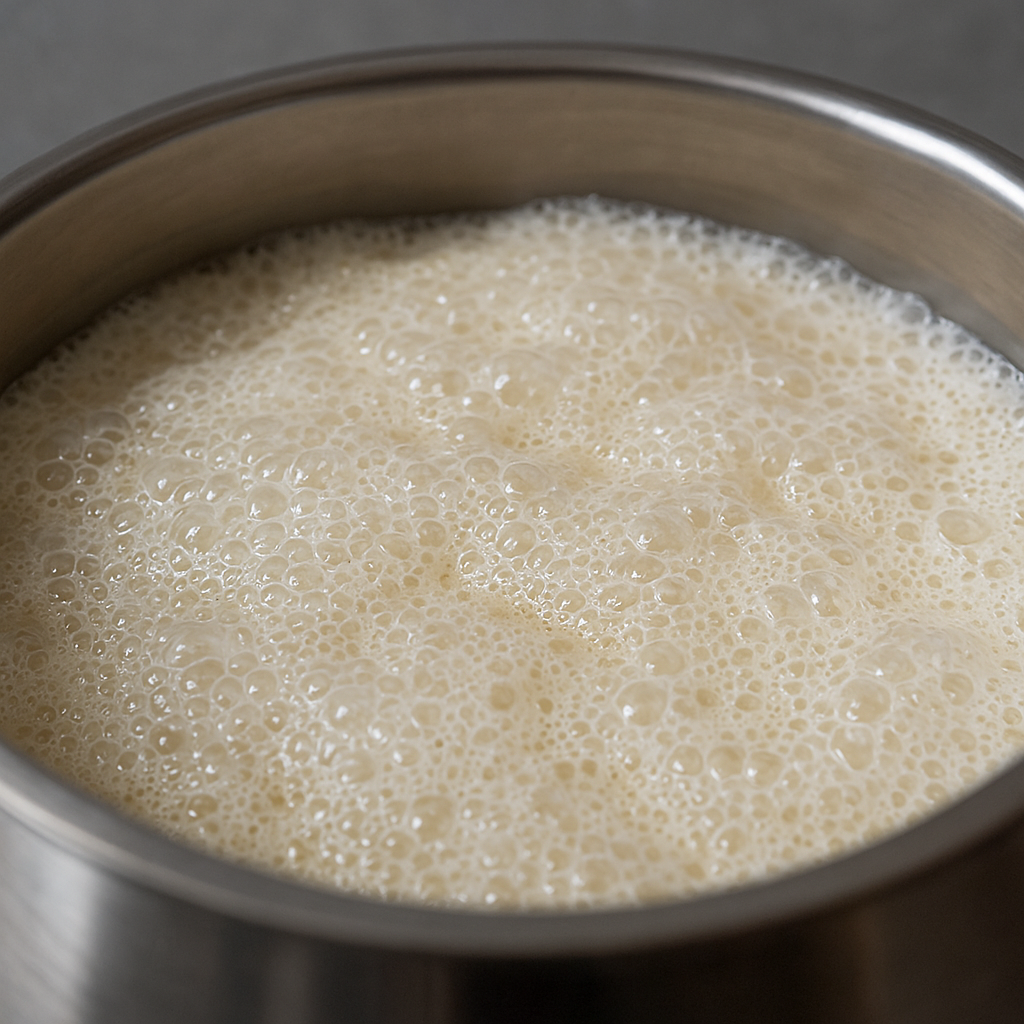
After mixing the yeast starter and rice, pour in an appropriate amount of water, place the mixture in a fermentation container, and let it ferment. It is advisable to determine the size of the container considering that it will swell by approximately 20–301 TP3T during fermentation. A container five times the weight of the rice is sufficient. (For example, a 10L container for 2kg of rice).
It is recommended to use a general ratio of rice to water of about 1:0.8 to 1:1.5 (e.g., 0.8 to 1.5 L of water per 1 kg of rice), but for hygiene reasons, you must use water that has been boiled and cooled, or purified water.3 With these ratios, the resulting liquor has an alcohol content of approximately 12–161 TP3T upon completion of fermentation. A fermentation temperature of around 20–28℃ is suitable. Generally, primary fermentation is carried out for 1–2 days; during this period, yeast multiplies by feeding on sugars, and additional fermentation is added to the active yeast starter to complete the liquor. In the case of Danyangju, where the entire process is finished during the primary fermentation, almost all fermentation is completed within about 5–7 days.
During fermentation, enzymes in the nuruk convert large starch lumps into small sugar lumps, and yeast feeds on these smaller sugars to produce alcohol and carbon dioxide, a dual process occurring simultaneously. This is called simultaneous saccharification and fermentation, and it is a key characteristic of makgeolli fermentation in which the saccharification reaction of mold enzymes and the alcohol fermentation of yeast occur simultaneously within a single container.
In the early stages of fermentation, yeast primarily proliferates and leads the alcohol fermentation. As time passes and environmental acidity decreases while alcohol concentration rises, the activity of lactic acid bacteria becomes more prominent. Lactic acid bacteria produce lactic acid to lower the pH and add a sour taste to the alcohol, while suppressing other unwanted bacteria to stabilize the fermentation. During fermentation, foam forms on the surface of the container, and the savory aroma characteristic of makgeolli begins to emerge. During the first fermentation period, it is recommended to stir from the bottom once or twice a day using a sterilized spatula. Stirring during fermentation ensures that rice particles and microorganisms are evenly mixed, promotes uniform fermentation, and supplies oxygen to aid in yeast proliferation.
Adding more yeast (second fermentation)
As explained earlier, to achieve the deep flavor of traditional makgeolli, brewing is often carried out in two stages using the Iyangju method. When the first fermentation has progressed to a certain point, the yeast in the base liquor has significantly increased, and vigorous foam rises on the surface, it signals that the secondary liquor is ready to be added. The secondary liquor is made from steamed rice, and in some cases, water and auxiliary nuruk are added to proceed with the second fermentation. This is a traditional method that stably multiplies the yeast through the base liquor and enhances the flavor of the liquor through the secondary liquor.
Although it may seem more cumbersome to add rice in multiple stages, such as in two-stage or three-stage fermentation, if you make a small amount of starter liquor in the first stage to activate the yeast and then ferment the main amount in the second stage, the fermentation proceeds more smoothly and quickly, and the risk of contamination is reduced, so it is actually more stable and less likely to fail than single-stage fermentation.
Samyangju, a traditional Korean liquor, is brewed by adding rice in three separate stages; as the number of fermentation cycles increases, the flavor tends to become richer and sweeter. In fact, the third stage involves a larger amount of rice input compared to the second stage, and since fermentation proceeds close to the yeast's alcohol tolerance limit, sweet residual sugars remain, resulting in a heavy and sweet taste, whereas the second stage produces a relatively lighter and cleaner flavor. The second fermentation takes place for one to two weeks, during which the temperature is maintained at around 20°C—the same as the first stage—and the fermentation status is monitored by stirring gently occasionally. Fermentation is considered nearly complete when the rice clumps settle to the bottom, the top of the liquor becomes relatively clear, and the foaming subsides. When tasting the liquor at this stage, the sweetness has almost disappeared, and a harmonious balance of sharp acidity and alcohol is felt.
Filtration and aging

Once fermentation is complete, the mash is filtered through a cloth or sieve to separate the thick liquid from the rice lees. The filtered liquid is the takju (makgeolli) we drink, while the remaining sediment is used to make drinks like sikhye or discarded. Because traditionally made makgeolli is filtered without separate sterilization, yeast and lactic acid bacteria remain alive in the alcohol even after filtration. Commercially, takju that has not undergone such separate sterilization is also referred to as "saeng makgeolli" (fresh makgeolli). While filtered makgeolli can be consumed immediately, refrigerating it for 2 to 3 days makes the taste much smoother and improves the balance of sweetness and sourness.
Freshly filtered makgeolli has a strong, slightly sweet taste but weak carbonation; however, as it is bottled, post-bottling fermentation occurs, causing the sweetness to decrease and the carbonation to increase over time. Therefore, the aging period can be adjusted according to preference; for example, freshly made makgeolli is called "Haet-sul" (new liquor) to enjoy its sweetness, while makgeolli aged for a few days is called "Ik-deun-sul" (aged liquor) to enjoy its refreshing quality and acidity. After filtration, water is sometimes diluted as needed to adjust the alcohol content; traditionally, however, after scooping out the finished takju, the water4Pour in the liquid and stir to adjust the desired alcohol content and taste. However, be careful, as adding too much water can naturally make the alcohol taste bland.
Bottling and Storage

Once finished, transfer the makgeolli to a bottle or container and store it in the refrigerator. If you wish to make highly carbonated makgeolli, add corn sugar before bottling and allow it to ferment at room temperature for another 1–2 days. When bottling, be sure to use a clean container, and it is recommended to fill it only about 85–901 tbsp to allow for some overflow. If left at room temperature for too long, the added sugar may over-ferment, causing the bottle to burst or overflow. Therefore, check the bottle by pressing on it; once it feels sufficiently firm, it is fully carbonated, so transfer it to the refrigerator immediately for refrigerated storage.
Since traditional makgeolli is an unpasteurized raw beverage, yeast remains active in the bottle, allowing for some post-bottling fermentation to occur. However, maintaining the bottle at refrigerated temperatures slows down yeast activity, which can delay further fermentation. Nevertheless, fermentation continues slowly even in refrigerated conditions, causing the taste to become sour after 1 to 2 weeks; therefore, it is generally recommended to consume it within 7 to 10 days of production. As the old saying goes, "If you leave makgeolli for too long, it turns into vinegar." If left for a sufficient period, post-bottling fermentation and oxidation can lead to acetic acid fermentation, resulting in a strong sour taste. Thus, while letting it sit for an extended period is beneficial, allowing acetic acid fermentation to occur to control acidity can be considered a valid strategy, depending on one's intention.
Although the brewing method for Makgeolli is simple enough to produce a delicious taste at home without special equipment, it is a profound drink that allows for detailed control over various aspects. Below, I plan to post additional recipes for Danyangju or Iyangju that are easy to follow at home whenever you have some free time.
- If you add more yeast twice and go through the third fermentation, it becomes Samyangju, and if you add more yeast four times and go through the fifth fermentation, it becomes Oyangju, and so on. ↩︎
- Compared to non-glutinous rice, which consists of amylose (approx. 20-251 TP3T) and amylopectin, glutinous rice, which consists of nearly 1001 TP3T of amylopectin, absorbs water much more slowly and is stickier. Due to these differences in composition, alcohol made from glutinous rice is much more viscous and sweeter than alcohol made from non-glutinous rice. ↩︎
- The higher the ratio of water to rice, the greater the enzyme mobility, leading to efficient saccharification; however, this dilutes the yeast, slowing down the fermentation speed and increasing the risk of acid fermentation. If less water is used and the mixture is thick, saccharification becomes uneven, increasing the likelihood of residual sugar, but it can also bring out stronger fermentation power. ↩︎
- Water that has been boiled and cooled for brewing. It is also called *sulgoru*. ↩︎