index
Criteria for classifying sake grades, specific designation sake (特定琍称酒)

When you first look into a sake bottle, words like Junmai, Ginjo, and Daiginjo are the first to catch your eye. This is exactly Sake gradesam.
The official name is Specific Name (特定琍称酒, It is Tokutei Meishoshu. Only alcohol that meets the raw material and production method requirements set by the Japanese National Tax Agency can use this name on the label.
The basis is the "Standards for Quality Labeling of Cheongju," which was enacted in November 1989 and applied from April 1990. Before that, there was a completely different grading system based on taxes rather than quality, which will be discussed separately later.
There are three main axes that determine sake grades.
- raw material : Whether only rice, koji, and water were used (Junmai series), or whether a small amount of brewing alcohol was added (Bijunmai series)
- Rice balance : How much rice was milled away
- quite : Was the Ginjo brewing method, which involves slow fermentation at low temperatures, applied?
Combining these three axes yields a total of 8 types. In addition, there are conditions that all specific designation holders must observe in common.
Brown rice judged to be Grade 3 or higher under the Agricultural Products Inspection Act must be used, and the ratio of rice used to make koji (koji rice) to the total white rice must be 151 TP3 T or higher. There are also conditions that the flavor and color must be good.
| rating | raw material | Rice balance | Additional requirements |
|---|---|---|---|
| Junmai Daiginjo 純米大吟醸 | Rice, koji, water | 50% or less | Ginjo brew, flavor and color are particularly good |
| Junmai Ginjo 純米吟醸 | Rice, koji, water | 60% or less | Ginjo brewing |
| Tokubetsu Junmai Separate rice | Rice, koji, water | 60% or lower or special manufacturing method | Explain the special reason on the label |
| Junmai 純米 | Rice, koji, water | No regulations | Abolition of the rice polishing balance requirement in 2004 |
| Daiginjo 大吟醸 | Rice, koji, water, brewing alcohol | 50% or less | Ginjo brew, flavor and color are particularly good |
| Ginjo 吟醸 | Rice, koji, water, brewing alcohol | 60% or less | Ginjo brewing |
| Tokubetsu Honjozo Food and beverage | Rice, koji, water, brewing alcohol | 60% or lower or special manufacturing method | Explain the special reason on the label |
| Honjozo original food | Rice, koji, water, brewing alcohol | 70% or lower | – |
Sake Grades by Kanji
Sake grade names are easy to understand if you break down the Chinese characters one by one.
| terminology | chinese character | Meaning of the characters |
|---|---|---|
| Junmai | 純米 | Sunmi. Sun (pure) and Mi (rice). Literally, it means it is made purely from rice. |
| Honjozo | original food | Bonyangjo. It means brewed properly and on a serious basis. It is a name given to distinguish it from the poorly made, bulk-brewed sake of the post-war era. |
| Ginjo | 吟醸 | Yin and Yang. Yin, meaning to recite, and Yang, meaning to craft. It signifies crafting with the same care and contemplation as reciting a poem. |
| Daiginjo | 大吟醸 | Daigumyang. The character 'Dae' (meaning 'great') is placed before 'Ginjo.' It signifies that it was crafted with even greater devotion. |
| Tokubetsu | 特別 | Special. In Korea, it is also called Special Junmai or Special Honjozo. |
| Rice balance | Together with rice | Jeongmi is the process of milling and refining rice, and bohap refers to the ratio; it indicates the proportion remaining after milling. |
To summarize: If the name includes "Junmi," it is sake brewed exclusively from rice, and if it includes "Yin and Yang," it is sake meticulously brewed at low temperatures. Knowing just these two characters allows you to understand half of the sake grading chart.
What does Jungmibohap 60% mean?
Rice polishing balance (Together with rice, Seimaibuai is the ratio of the remaining white rice weight to the weight of brown rice. 60% means that 40% of the outer layer of the rice grain has been milled away. The rice we eat is around 92%.
Protein, fat, ash, and vitamins are concentrated in the outer layer and germ of the rice. While these are essential components for fermentation, too much of them results in off-flavors and a rough aroma. Therefore, you can remember that the lower the number, the more the rice has been polished.
Two criteria for determining sake grades
Although the table may look complicated, sake is actually classified into grades based on two main criteria. The first is whether it is Junmai or not, and the second is Ginjo, Daiginjo, Honjozo, and Futsushu, which are distinguished by the polishing ratio.
Junmai — A grade of sake made from pure rice

First, let's look at the first criterion. The name is Junmai (純米, All sakes containing 'Junmi' (pure rice) use only three ingredients: rice, koji, and water. This means that no spirit is added separately in addition to the alcohol produced by yeast fermentation.
Conversely, for specific designation liquors that do not contain the word "Junmai," a small amount of brewing alcohol is added to the mash (moromi) at the final stage of fermentation. Brewing alcohol is produced by fermenting or distilling starchy or sugary raw materials, and synthetic alcohol cannot be used.
The allowable amount is 101 TP3 T or less of white rice weightC. You can consider it to be about 120 liters per ton of rice.
Junmai — The only grade without polishing ratio regulations
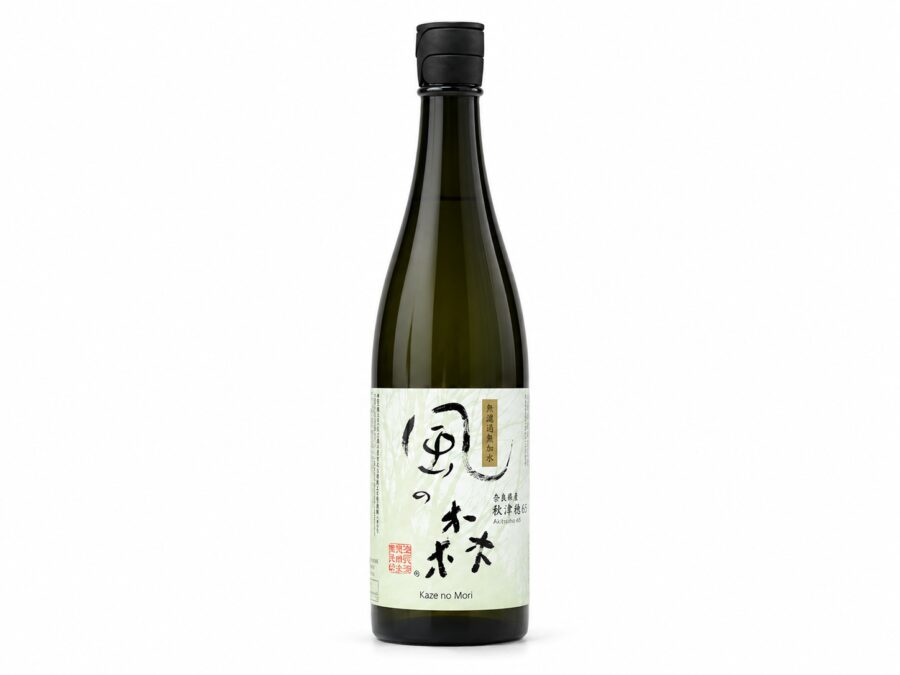
Originally, Junmai had a condition of a polishing ratio of 701 TP3T or less. With the revision in January 2004, this condition was removed, and instead, a new requirement of a polishing ratio of 151 TP3T or more was attached to all specific designation stocks.
The reason lies in the advancement of technology. As brewing technology advanced, it became possible to produce high-quality sake even when using rice with a high polishing ratio; however, if only 251 TP3 T of rice was polished using only rice, koji, and water, it could not be sold as Junmai-shu.
From the brewery's perspective, it is unfair. That is why the label says 'Alcohol made entirely of rice (米だけの酒I wrote down )' separately. It wasn't a legal class name, but since I was stating the facts, there was no problem.
The problem lay with the consumers. Junmai and 'sake made entirely of rice' were displayed side by side on the shelf, and since both were said to be brewed solely from rice, there was no way to tell the difference.
With the advancement of rice milling technology, it has become possible to produce sake without off-flavors even with rice that is polished less than 70%. This has weakened the justification for maintaining the 70% standard.
So now, Junmai with a polishing ratio of 801 TP3T and 901 TP3T proudly exist. Junmai generally has slightly higher acidity and distinct umami and grain flavors. Since the flavor does not deteriorate even when heated, it is often used for atsukan.
Tokubetsu Junmai — The most ambiguous yet most interesting grade
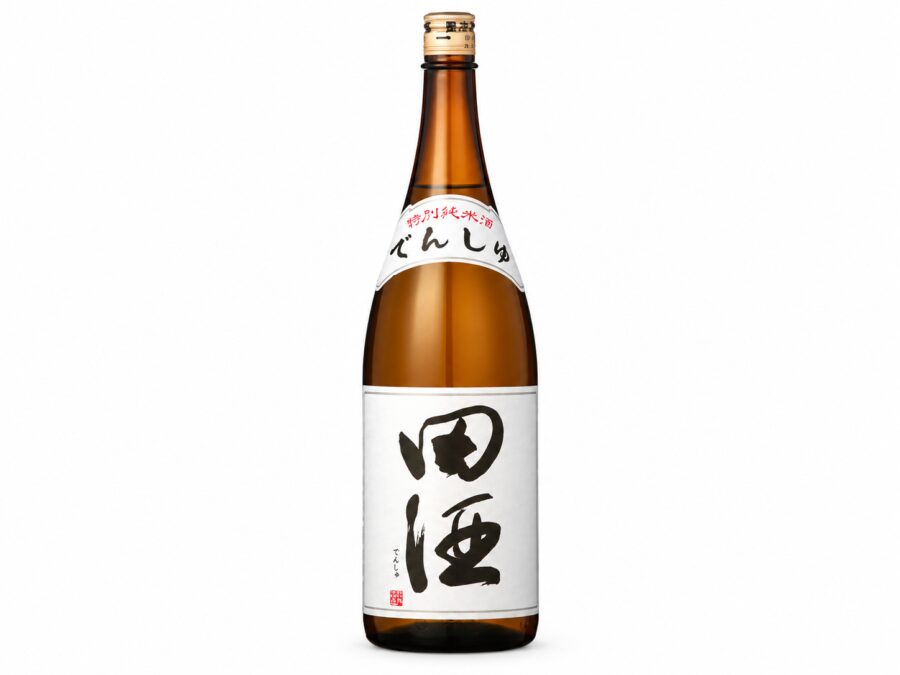
Tokubetsu JunmaiSeparate rice, Special Junmai is a type of Junmai that has something 'special' to it. It must satisfy either a polishing ratio of 601 TP3 T or less, or use a special manufacturing method.
If a special method is used as the basis, it must be explained on the label using objective facts such as raw materials or manufacturing methods. In reality, most cases involve milling the rice to a Ginjo grade of 601 TP3T or lower, or using brewing-grade rice (sakamai).
Marketing factors also played a role in the creation of this grade. When breweries with already best-selling Junmai and Junmai Ginjo wanted to launch a new product, they needed a name that would not encroach on the market share of their existing products.
Therefore, sake labeled "Tokubetsu" clearly reveals the brewery's judgment and individuality. This is because, as the regulations are loose, the brewery must decide for itself what constitutes something special.
Many sakes are gathered here that use Ginjo-grade rice yet are designed to be enjoyed with food, rather than relying on flamboyant aromas. A significant portion of the brilliant aromas found in Ginjo-style sakes is produced by yeast. If the same type of yeast is used, sakes from any brewery will produce similar scents, which then overpower the rest of their characteristics.
Conversely, if you do not rely on aroma, nothing is hidden. The selection of rice, the method of making koji, the starter culture, the fermentation temperature, the timing of pressing, and the aging period all remain intact in the flavor. This is the reason why sakes designed to be enjoyed with food are often gathered at Tokubetsu, and why this is recommended before Daiginjo when one is curious about the character of a brewery.
Why add brewing alcohol?
Alcohol addition is often misunderstood as a cheap way to increase volume. However, the purpose of adding brewing alcohol in specific-designation alcoholic beverages is entirely different.
- Fragrance extraction A significant number of aromatic compounds in the mash dissolve in alcohol. Increasing the alcohol concentration just before pressing allows for the extraction of more of these compounds.
- light taste It leaves a clean finish. This is one of the reasons why Honjozo is good to drink warm.
- stability : Hiochi bacteria, a lactic acid bacterium that spoils the flavor of sake (firePrevents the proliferation of ).
After adding alcohol, water is added to lower the alcohol content again. Since the final alcohol content is similar to other sakes, having only increased once in the middle, it is not a fortified liquor.
There are purists who claim that only Junmai is real sake. However, records show that distilled spirits were added to enhance the alcohol as early as the 17th century, and there is no definitive answer as to which is unconditionally better.
Are Japanese brewing alcohol and Korean distilled spirit the same thing?
The standards are virtually the same. Under the Korean Liquor Tax Act, ethanol refers to a product distilled from the fermentation of starchy or sugary raw materials. Synthetic ethanol derived from petroleum-based ethylene can only be used for industrial purposes and is not included in alcoholic beverages. Since the raw materials are similar, both rely heavily on imported molasses and tapioca.
The difference lies in their uses. Japanese brewing alcohol is an auxiliary ingredient added in small quantities to the finished mash, and for specific designation liquor, it cannot exceed 101 TP3 T in weight of white rice. On the other hand, Korean spirit is the alcohol itself in diluted soju. The distribution structure is also different, so all domestic spirit is traded exclusively through Daehan Spirit Sales.
Ginjo, Daiginjo, Honjozo—Sake grades based on rice polishing ratio

The second criterion is the milling ratio. Depending on how much the rice is milled, three lines are drawn: 70%, 60%, and 50%, and each line has a different name.
The Honjozo, Ginjo, and Daiginjo mentioned here are names based on whether brewing alcohol is added. If the same criteria are crossed and the beer is brewed solely from rice, "Junmai" is added to the front. It is a method of reading by overlapping the two standards.
Honjozo and Tokubetsu Honjozo
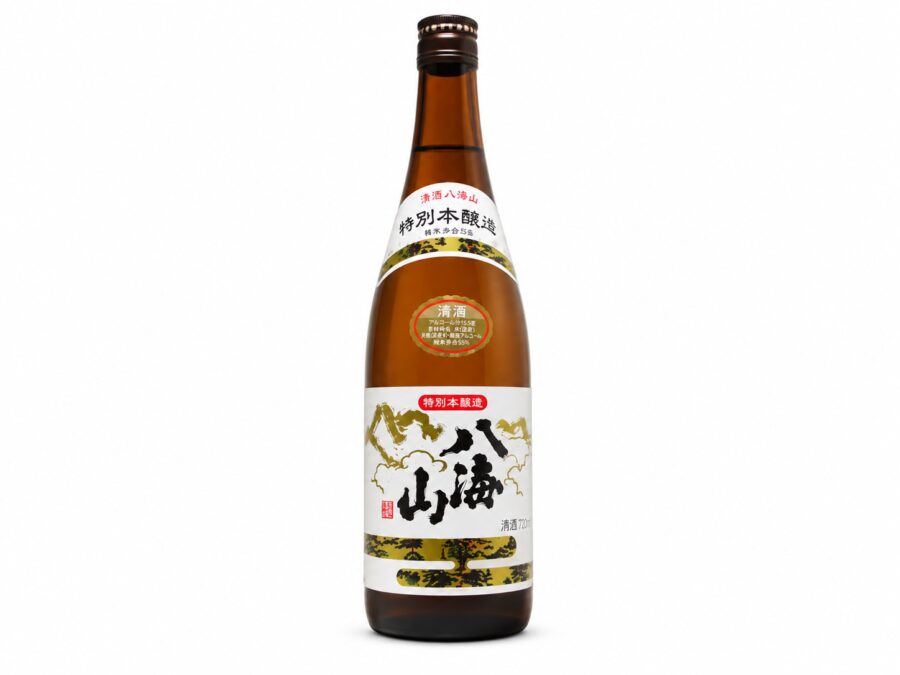
Honjozooriginal food, Honjozo is a sake made by adding brewing alcohol to rice with a polishing ratio of 701 TP3 T or less. Tokubetsu Honjozo is a case where the rice is polished to 601 TP3 T or less, or a special brewing method is used, just like Junmai.
It is a grade with high satisfaction for the price. Its refreshing and light taste makes it strong as a daily accompaniment to meals or as a warmed drink.
Ginjo and Daiginjo

Ginjo(吟醸) is 60% or less, Daiginjo(大吟醸) is a sake made by grinding rice to 501 TP3T or less using the Ginjo brewing method and adding brewing alcohol.
The alcohol content limit is the same as for Honjozo, but it is not called 'Honjozo Ginjo.' It is simply Ginjo or Daiginjo. Daiginjo, which contains added alcohol, has a more distinct aroma and a lighter taste, and for a long time, it was the mainstream entry for tasting competitions.
Junmai Ginjo and Junmai Daiginjo

If the two criteria overlap, the name becomes long. If it is Junmai and 60% or lower Junmai Ginjo, if it is Junmai and 50% or lower Junmai DaiginjoC. The condition that it must be brewed using the Ginjo method is the same for both, but the Daiginjo version has an additional condition that its unique flavor and color must be 'particularly' excellent.
Since the standard for Daiginjo is '501 TP3T or lower,' sake polished to 501 TP3T and sake polished to 231 TP3T are released under the same sake grade name. This applies to Dassai 23, Asahi Shuzo's top-tier Junmai Daiginjo sake, which is famous in Korea as a gift sake.
There are also places where the rice polishing ratio regulation does not apply at all. All sake that does not meet the requirements for a specific designation is classified as futsushu (ordinary sake), and this will be discussed separately later.
What is Ginjo brewing?

Junmai Ginjo, Ginjo, Junmai Daiginjo, and Daiginjo are collectively called Ginjo-shu. However, the name Ginjo is not determined solely by the polishing ratio of the rice.
The labeling standard itself includes 'Ginjo brewing (吟醸造りIt contains ingredients to be made. It is a method of polishing the rice thoroughly and fermenting it slowly for a long period at a low temperature.
Lowering the temperature slows down yeast activity, but leaves behind a large amount of esters, which are fruit-like fragrance components. There are two main components that create the aroma of Ginjo.
- ethyl caproate(ethyl caproate): Apple and pear scents
- isoamyl acetate(isoamyl acetate): Banana and melon scents
This scent is Ginjo scent (吟醸香, It is called Ginjoka. Recently, with the development of mutant yeast resistant to cerulenin, a substance that inhibits aroma production, the number of alcoholic beverages that produce an explosive amount of ethyl caproate has increased.
Representative examples include the Japan Brewing Association's No. 1801 yeast and the CEL series yeast from Kochi Prefecture. Since No. 1801 has a strong aroma but a weak taste, many breweries mix it with the Association's No. 9 yeast, which produces a balanced flavor and acidity.
However, there are also voices of caution within the brewing industry. Critics point out that if aroma is boosted solely by yeast without supporting low-temperature fermentation technology, the resulting liquor may be colorful but structurally weak, easily spoiling after bottling. This suggests that quality differences can arise even among sakes bearing the same grade name.
The ideal temperature for drinking Ginjo-style sake
Since the aroma is the essence of Ginjo wines, the standard way to enjoy them is to drink them slightly chilled, at the temperature of white wine. Using a wide-mouthed wine glass allows the Ginjo aroma to rise much better.
Unclassified Sake — The History of Common Sake and the Classification System

All sakes that do not meet the requirements for specific designation sake ordinary(通酒, Futsushu). There are no regulations on the ratio of polished rice, and brewing alcohol can be added in amounts exceeding 101 TP3 T of the weight of white rice.
According to data from the Japanese National Tax Agency, the proportion of sake with a specific designation in the 2023 brewing year is approximately 381 TP3T. This means that more than half of the sake is still outside the classification.
Just because it is ordinary liquor doesn't mean it is necessarily bad. Since it is the drink consumed daily by locals, it can be the most honest reflection of the region's palate.
The era of Special Class, Class 1, and Class 2
Before the current sake grading system, there was a grade system (Separate laws and regulationsThere was. It was introduced in 1943 to secure wartime revenue, but the standards were not quality but rather component values such as alcohol content and extract content.
Ultimately, it was a system where paying more tax resulted in a higher grade. The tax on a Special Grade rating was five times that of Grade 2, so there were quite a few breweries that deliberately sold their high-quality liquor as Grade 2.
From the consumer's perspective, Special Grade did not necessarily mean the sake was better. Furthermore, there was a practice where Special Grade and Grade 1 sake were concentrated in traditional production areas like Nada and Fushimi, while sake from other regions was automatically classified as Grade 2. This system was phased out by 1992 following the establishment of new labeling standards in 1989.
Sambaejeungyangju — The Dark Ages of Sake
During the late stages of the war and the post-war period of rice shortages, three-fold rice wine (Three kinds of alcoholic beverages, Sanbai Jojoshu) appeared. It is a type of alcohol in which alcohol, water, glucose, acidity regulators, and additives such as glutamic acid are added to the mash to increase the volume of the alcohol up to three times using the same rice.
In 1953, 59.31% of all sake was produced using this method. From the mid-1950s to the mid-1970s, alcohol-free Junmai almost completely disappeared from the market.
This period had a significant impact on sake gaining the image of being a "headache-causing, cheap drink" and the younger generation switching to beer. In 1959, beer surpassed sake in sales volume. Currently, alcohol made using this method cannot be labeled as Cheongju.
Are triple-steamed liquor and diluted soju the same story?
They share a similar starting point. Both are alcoholic beverages produced during times of grain scarcity, where the volume was increased using spirits and the lack of flavor was compensated for with additives. Consequently, they even share a similar outcome: the image of these respective types of liquor suffered for a long time.
However, the structure is different. Sambaejeungyangju is a liquor in which a normally fermented mash serves as the base, to which alcohol and sugars are added to increase the volume. This implies the existence of the original liquor.
On the other hand, diluted soju does not contain any fermented alcohol itself. It is made by diluting 95-degree alcohol, obtained by fermenting and continuously distilling tapioca or molasses, with water and adding sweeteners. It is a liquor that replaced distilled soju made from rice after the Grain Management Act of 1965 blocked it.
To summarize, Sambaejeungyangju is an expansion of brewed liquor, while diluted soju is a replacement for distilled liquor. In sake, the position corresponding to Sambaejeungyangju is actually closer to today's ordinary liquor.
The specific designation system was created to organize this history and allow consumers to choose sake based on ingredients and production methods. This is why legal requirements have been attached to the labeling of sake grades.
‘It's 'sake made entirely of rice,' but it's not Junmai?
The label says 'Alcohol made only from rice (米だけの酒There are cases where it is labeled as )’ but does not have the Junmai designation. The ingredients consist only of rice, koji, and water, but it is a sake that does not meet one of the requirements for a specific designation sake, such as koji rice of 151 TP3T or higher, or grade 3 or higher inspected rice.
A disclaimer stating that such sake does not meet Junmai standards must also be included. This is why it is necessary to develop the habit of checking even the small print when looking at labels.
Does the higher the grade of sake, the tastier it is?
To start with the conclusion, that is not the case. Sake grades are based on standards of ingredients and processing, not on a ranking of taste. Since there is significant overlap between grades, it is difficult even for experts to accurately determine the grade based solely on taste.
There are also limitations to the system itself. Whether you grind it to 50% or 1%, it is the same Junmai Daiginjo. Nowadays, Aramasa (new government) or Senkin(仙禽There is also a growing number of breweries that intentionally do not display specific names, such as ). This reflects an attitude of wanting to be evaluated on the quality of the liquor itself, rather than by its grade name.
While the flamboyant aroma of Ginjo-style sake is impressive in the first sip, many people find it quickly tiresome if they drink several glasses in a row. If you are looking for a sake to enjoy over a long period with food, Junmai or Honjozo might be a more comfortable choice.
The criteria for selecting sake grades based on the situation are summarized as follows.
- When you want to enjoy the scent : Junmai Daiginjo, Daiginjo chilled
- When drinking for a long time with food Junmai, Tokubetsu Junmai, Honjozo
- When you want to warm up and drink Junmai, Honjozo. Especially sake made using the Yamahai or Kimoto methods.
- When looking for good value for money Tokubetsu Junmai, Tokubetsu Honjozo
The polishing ratio number can also be used to determine the direction. A high number indicates a grainy texture and umami flavor, while a low number indicates a delicate flavor with fruity notes.
Ultimately, sake rankings are akin to a map. They merely indicate the approximate locations, but the only way to find the sake that suits your palate is to try them out yourself.