There are key ingredients used to make alcohol in Korea and Japan: nuruk and koji. In Japanese, they are called 'koji'.
If you turn over a Makgeolli label, you will find products listed as 'Ipguk' in the ingredients, and products listed as 'Nuruk'. Both are written with the same Chinese character, 'guk' (麴Why is the character ) written differently?.
Although both are ingredients for the fermentation of alcohol, depending on whether koji or nuruk is used, there are debates regarding the acidity, aroma, umami of the alcohol, and even whether the alcohol can be called traditional alcohol.
It is an essential ingredient to know if you want to understand sake, or our makgeolli and distilled soju.
index
What is Entry? — Koji, Barakoji, and Entry
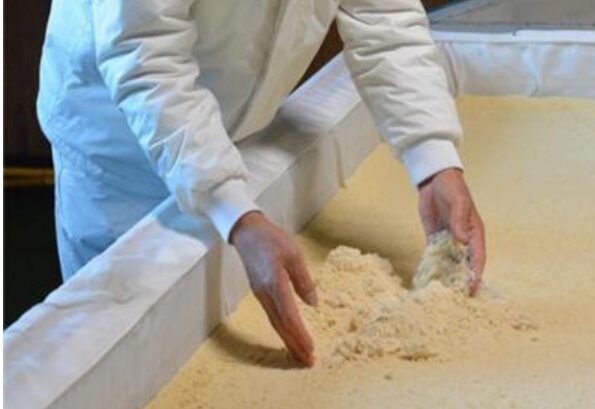
Entry(粒麴)It is literally 'grain soup'. It refers to a fermentation agent in which pure cultured mold spores are sprinkled onto each individual steamed and cooled grain to allow the mold to proliferate in a scattered state.
In our language Scattered yeast, in Chinese characters, it is mountain chrysanthemum(散麴), in Japanese, Barakoji(散麴, ばら麴)It is called that. It means that 'Bara' has scattered.
Are Koji and entry the same thing?
profusely EntryWe just call it Koji, but strictly speaking, Inclusion relationshipall.
Koji(麴)Koji is a broad concept referring to all grains in which mold has been cultivated. It encompasses not only alcohol but also miso, soy sauce, mirin, and amazake. Depending on the raw material, there is komekoji made from rice.(米麴), barley-made Mugikoji(麦麴)It is divided into.
Among them, the form in which the grains are scattered is Barakoji, that is, what we call EntryIt is. Since virtually all koji used in Japanese brewing is of this form, it is simply not referred to by a separate name.
Why is mold needed?
Alcohol is produced when yeast consumes sugar and releases alcohol, but rice contains no sugar and only starch linked in long chains.
Beer sprouts barley, causing the grain to produce enzymes on its own. However, rice cannot be germinated because it is in its white rice state with the outer husk removed. Therefore, enzymes must be brought in from outside And the source of that is mold.
The three key enzymes produced by koji
- α-amylase — Cut long starch chains into intermediate products such as dextrin.
- Glucoamylase — It converts that dextrin into glucose that yeast can consume. Ginjo-style sake maintains the activity of this enzyme at a particularly high level to provide sufficient food for the yeast.
- acidic protease and peptidase — It creates umami by breaking down proteins into amino acids. However, since an excessive increase in amino acids leads to off-flavors, the key is to control the amount to produce only the minimum necessary.
This is where the unique structure of East Asian grain liquor comes from. Mold converts starch into sugar. Saccharificationand yeast convert sugar into alcohol fermentationIt proceeds simultaneously within the same container.
This is parallel double fermentation(竝行複醱酵)It is called that. In beer, yeast is added after saccharification is finished, but in sake and makgeolli, the two reactions run together in one tank.
Thanks to this, it reaches around 201 TP3 T, the highest level among non-distilled spirits. In sake EntryThe rice used to make this is about 20 to 251 TP3 T of the total rice used, and the rest is just steamed rice.
Under the Korean Liquor Tax Act, 'national(麴)‘'Nuruk' is broadly defined as starchy raw materials in which molds have been cultivated, or enzymes capable of saccharifying starch. Although the legal provisions do not distinguish between nuruk and koji, in practice, the two are fundamentally different substances.
How are Nuruk and Ipguk different?
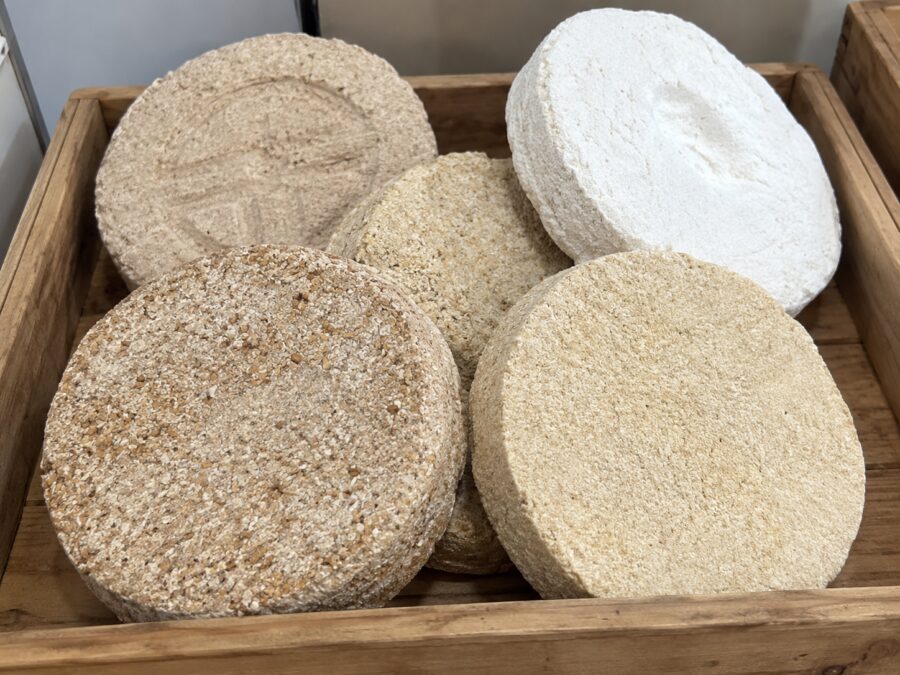
The biggest difference is shapenot this Who comes in and lives here?all.
Our traditional nuruk is Byeongguk(餠麴), that is, rice cake nuruk. Wheat is coarsely ground, mixed with water to form a dough, placed in a mold to shape into a lump, and left exposed to the air. natural inoculationI wait for it.
In this process, it is not just koji mold that enters. Various types of mold, wild yeast, lactic acid bacteria, and other bacteria also settle together. The ideal condition is for acetic acid bacteria and others to multiply first and clear out unwanted bacteria, after which the koji mold takes root.
On the other hand, modern EntrySilver is a pure culture of the starter culture in the laboratory.(種麴)Sprinkle on steamed rice Single strain only Raises. There is only one actor going on stage.
This difference completely changes the character of the alcohol. Nuruk alcohol, produced by the intermingling of various microorganisms, yields a complex umami and savory flavor, but exhibits significant variation from batch to batch. Conversely, alcohol fermented with a single strain produces consistent results with less koji aroma and a clean finish, but it is more prone to becoming thin in layers.
| division | Traditional Nuruk (Byeongguk) | Entry (Sanguk) |
|---|---|---|
| Main ingredients | Roughly ground whole wheat (rice, mung beans, and barley are also used) | Mainly non-glutinous rice, some wheat and barley |
| form | Knead and shape into a ball | The grains exactly as they are scattered |
| Heating raw materials | Raw grain that has not been deluxed | Grain that has been enlarged and made luxurious |
| Vaccination method | Natural inoculation of airborne microorganisms | Pure culture end artificial inoculation |
| Microorganisms involved | Many types of mold, yeast, lactic acid bacteria, etc. | Single koji mold (yeast added separately) |
| Taste trends | Umami, savory flavor, and yeast aroma | Clean and distinct acidity |
| Reproducibility | Large variation between batches | Very stable |
Is it okay to call the entry 'Japanese yeast'?
It is correct in broad terms, but it creates a misunderstanding when used in everyday language. The hierarchy can be summarized as follows.
- 국(麴) — The entire saccharifying agent that caused mold to grow on grains
- Byeongguk(餠麴) — Molded into a lump. What we commonly call yeast.
- wild chrysanthemum(散麴) — Scattered grains. EntryThis belongs here
The problem is that in Korean, the word 'nuruk' conventionally refers only to Byeongguk. Therefore, if one simply refers to Ipguk as Japanese nuruk, it carries the implication of being 'made into a lump and naturally inoculated.'.
To write accurately Japanese-style scattered koji or Rice kojiThis is better. In fact, it is common to list it alongside the ingredient name, such as 'rice koji (koji).'.
There is one more point to note. It is easy to misunderstand that scattered koji is unique to Japan, but that is not the case. The mountain koji method has existed from the beginning within the lineage of koji that originated in China and spread throughout East Asia, and similar records remain in Korea, Taiwan, Indonesia, and Nepal.
However, our region's saccharification power was relatively weak, so it could not become the mainstream. What made the Japanese method special was not the method itself, but the pure isolation and standardization of the bacteria Industrially reproducible It lies in the fact that it was made.
The birth of the end
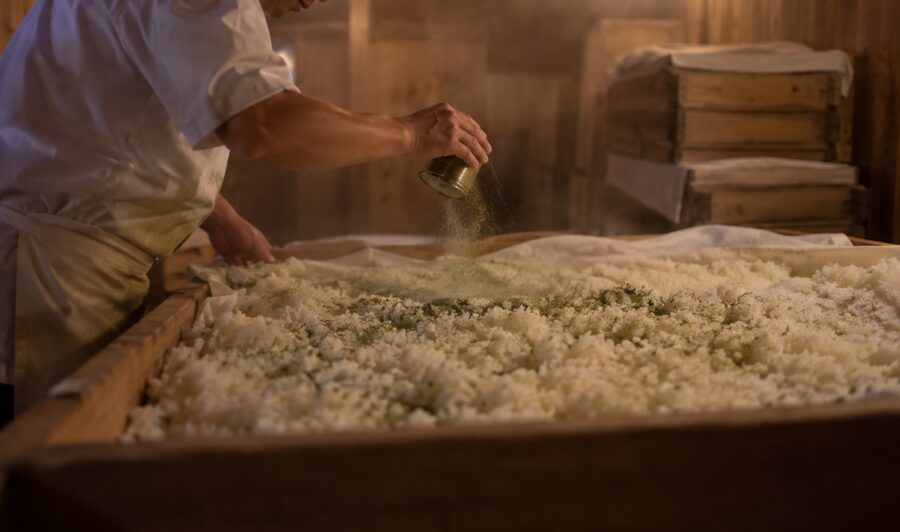
It is unlikely that pure cultured spores were sown from the beginning. How was it possible to select and cultivate only a single species of fungus in an era without microscopes? In modern times, this is generally viewed in three main stages.
Stage 1 — Natural occurrence
8th century *Harima Fudoki*(播磨國風土記)There is a record in 』 that mold grew on rice offered to the gods, and alcohol was brewed from it. This was a time when the very concept of inoculation did not exist. It is the same thing that became very famous after appearing in 'Your Name'.
In fact, steamed rice naturally develops koji mold without the need for spores to be sprinkled separately. A similar method of spreading leftover rice in a basket to keep it warm has also been observed in Taiwan.
Step 2 — The decisive invention called wood ash
A well-done Koji wood ash(wood fire)When mixed, the culture medium becomes alkaline. Most of the harmful bacteria that are sensitive to alkali die off.
However, Aspergillus actually uses the potassium and phosphate in the ash as nutrients to produce spores in large quantities. Trace elements such as copper and zinc contained in the ash improve the spore attachment rate and even the color.
In an era when neither antibiotics nor the concept of culture media existed The technology that established selective cultureIt is. It is the condition found through experience to kill unwanted bacteria while keeping only the target bacteria alive.
Thanks to this discovery, a business model was established to 'collect large quantities of spores from well-grown fungi and sell them in the next batch.'(種麴)This is the moment it became a product. In a sense, commercial koji mold can be considered the oldest biotech product in Japan.
Stage 3 — Guild Monopoly and Modern Pure Cultivation
At the end of the Heian period, the government was Kojiza(麴座)They established a final manufacturing guild called [Name] and granted exclusive manufacturing rights. This was to manage alcohol taxation. Kyoto Kitano Tenmangu(北野天滿宮)It was the main base.
However, as sake transitioned from a drink of the aristocracy to a drink of the masses, the system was shaken. Breweries began producing their own starter cultures, and the government initially sided with the guilds, destroying the breweries' incubation rooms.
Eventually, in 1444, enraged brewers clashed with the guild at Tenmangu. An army stormed the shrine, resulting in a fire and dozens of deaths. Following this incident, the production of cocoa was released from the guild's monopoly and became known as 'Moyashiya'.(もやし屋)‘It became the profession of a professional merchant called '.
With the introduction of modern microbiology during the Meiji era, the pure culture of original strains using flasks began. The production of starter cultures, which had been quite primitive until then, thus entered the realm of science.
Even now, the starter culture is carried out over approximately two weeks using rice with a polishing ratio of 961 TP3 T—that is, rice with only 41 TP3 T of the bran removed—mixed with a small amount of camellia ash. The purpose is not enzymes. spore productionFor this reason, nutrient-rich rice is used.
Currently, there are about seven licensed vendors in Japan that sell refined and preserved starter cultures. Among them, Hishiroku in Kyoto has a history of over 350 years.
They improve strains to suit their purpose. Hygi, which boosted glucoamylase production(High G) In fact, strains developed to counteract the bitterness produced by the recently popular native yeast are being used.
Types of Koji Mold — Yellow Koji, White Koji, Black Koji
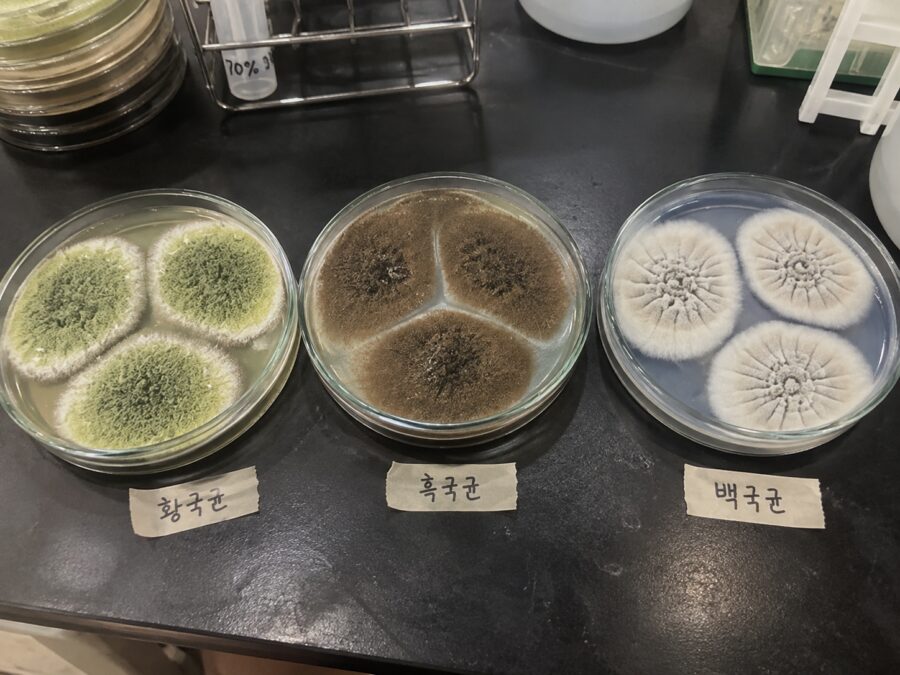
EntryThe type of mold used determines the direction of the sake. In practice, there are three main types of koji molds.
Aspergillus oryzae
It is the standard strain most commonly used in sake. Its scientific name is Aspergillus oryzae. The species name oryzae comes from the scientific name of rice, as a German named Arburg, who was working at the University of Tokyo, first isolated this mold from sake rice koji and named it.
Imperial(黃麴)It is called [name], but in actual culture media, it grows as a yellowish-green color. It is a bacterium that supports the entire range of Japanese fermented foods, including not only sake but also miso, soy sauce, mirin, and amazake.
The Italian priest and biologist who first classified this mold in the late 18th century described its appearance under a microscope as a holy water sprinkler used by Catholic priests to sprinkle holy water.(aspergillum)It was seen as resembling... The genus name Aspergillus came from there.
Aspergillus niger
Black koji used to brew Okinawa Awamori(黑麴)It is a bacterium isolated in 1901. Its current scientific name is Aspergillus luchuensisIt is, and in the past, it was commonly known as A. awamori.
Its distinguishing feature is that it produces a large amount of citric acid. It drastically lowers the pH of the mash, preventing the proliferation of unwanted bacteria. In the warm climate of Southern Kyushu, shochu brewed with yellow koji often resulted in spoilage, but black koji solved this problem.
Its excellent saccharification power, particularly glucoamylase production, is also a strength. However, it had the disadvantage that the spores were black, causing the entire workplace to turn black.
Baek Guk-gyun
Kenichiro Kawachi, who was researching black koji mold(河內源一郞)Aspergillus niger is a mutant in which the spore color changed from black to white that was discovered and commercialized.(白麴菌)Its scientific name is Aspergillus luchuensis mut. kawachii.
This is the most commonly used type of innard in Korean brewing sites.
It retains the advantage of black koji, its ability to produce citric acid, while significantly improving workability. In 2013, genetic analysis by the Rural Development Administration confirmed that this strain, used in domestic makgeolli and Japanese shochu, is identical to the previously reported A. luchuensis, and its scientific name was finalized.
| division | Aspergillus oryzae | Baek Guk-gyun | Aspergillus niger |
|---|---|---|---|
| scientific name | A. oryzae | A. luchuensis mut. kawachii | A. luchuensis |
| Spore color | yellowish green | white | black |
| Citric acid | almost none | Generate a lot | Generate a lot |
| The taste of alcohol | Softness and gentleness | Clean and refreshing acidity | Rich and heavy |
| Main use | Sake, miso, soy sauce | Makgeolli, distilled soju | Awamori, Soju |
Used here exclusively for soy sauce Aspergillus sojae...is added. Since the 2000s, the Japan Brewing Society has referred to these koji molds as koji molds(國菌)It was designated as such, and subsequently included Black Country, White Country, and even A. sojae in that category.
Then what do Korean breweries use? Of mass-produced makgeolli. Entry은 Aspergillus oryzae is virtually the standardam.
The reason is clear. Citric acid lowers the acidity of the mash, allowing fermentation to proceed stably without contamination by unwanted bacteria even in the summer, and accelerates glucose conversion, ensuring a faster fermentation speed. The reduced yeast aroma is also advantageous for younger consumers and export markets.
Instead, as the acidity increases, the taste of the alcohol becomes sour. Due to the distinctive sourness of commercially available makgeolli, there is a perception that "makgeolli is originally a sour drink," but makgeolli brewed with traditional nuruk involves various bacteria and actually leans toward umami.
Distilled soju also frequently uses white or black koji varieties. On the other hand, medicinal liquor and clear liquor varieties use yellow koji. EntryIt is also used.
Making an entry, empire

In sake brewing Ichikoji, Nimoto, Sanzukuri(一麴, 2酛, 3造)There is an old saying that goes like this: the first is making the infusion, the second is the tavern keeper, and the third is soaking.
Order is importance. That is how much the empire(製麴) The process determines the character of the final drink.
It starts with gaining weight. The goal is... Hard on the outside and soft on the inside It is a state. This moisture distribution determines the direction in which the hyphae extend from behind.
Process sequence
- Hikikomori(引込) — Cooled steamed rice, soup(麴室)It is moved to the facility. The fermentation room is maintained at a temperature of approximately 30°C and a humidity of around 601 TP3 T; this is because if the temperature is too low, Aspergillus oryzae cannot be cultured, and if the humidity is too high, other contaminants proliferate first. It is isolated from the outside by double doors, airtight windows, and insulated walls.
- Docomomi(床揉)·Tanekiri(種切) — Spread the rice to ensure a uniform temperature, then scatter the starter culture spores through a sieve and mix them evenly with your hands. Typically, about 30g is used per 100kg of steamed rice, but as the amount of enzyme required decreases during subsequent fermentation stages, the amount used is also reduced.
- Kirikaeshi(切返) After 10 to 12 hours, separate the rice grains that have stuck together by hand, supply oxygen, and equalize the temperature and moisture.
- Mori(盛) — Since heating begins, use a wooden lid in fixed amounts to make temperature control easier.(麴蓋)Divide into boxes.
- Nakashigoto(仲仕事) — When the product temperature reaches around 35℃, it is broken apart again to remove heat and moisture and increase the surface area in contact with oxygen.
- Shimaishigoto(仕舞仕事) — Maintain a uniform overall temperature around 38.5℃ to remove excess moisture. Since amylase-family enzymes become active above 40℃, the temperature curve in this range is particularly important.
- Decoji(出麴) — After spending 8 to 12 hours maintaining 40 to 43℃, take it out of the breeding room and stop breeding.
- Karashi(枯) — Cool in a cool place to remove moisture. The finished product has an aroma like roasted chestnuts.
The entire process usually takes two to three days, or 40 to 48 hours. During this time, monitoring and control are carried out while staying up all night.
A brewery site in Shizuoka(杜氏)He says he spends 70 hours here and checks the temperature and humidity every 90 minutes. In other words, he says that during the brewing season from October to April, he never sleeps for more than 90 minutes at a time.
How is the production of koji in Korean breweries different?
The basic framework is the same, but the temperature range and time differ slightly. A common method involves steaming the rice at 90–110°C for 40–60 minutes, cooling it to 20–30°C, inoculating it with 0.1–0.31 TP3T of starter culture relative to the weight of the rice, and culturing it at 30–40°C for 25–48 hours.
Most large breweries use automated aging machines that automatically control temperature and humidity. While machine-made aging is also widely used in the sake industry, handmade sake is still considered the highest quality.
Haze — Souhaze, Tsukihaze
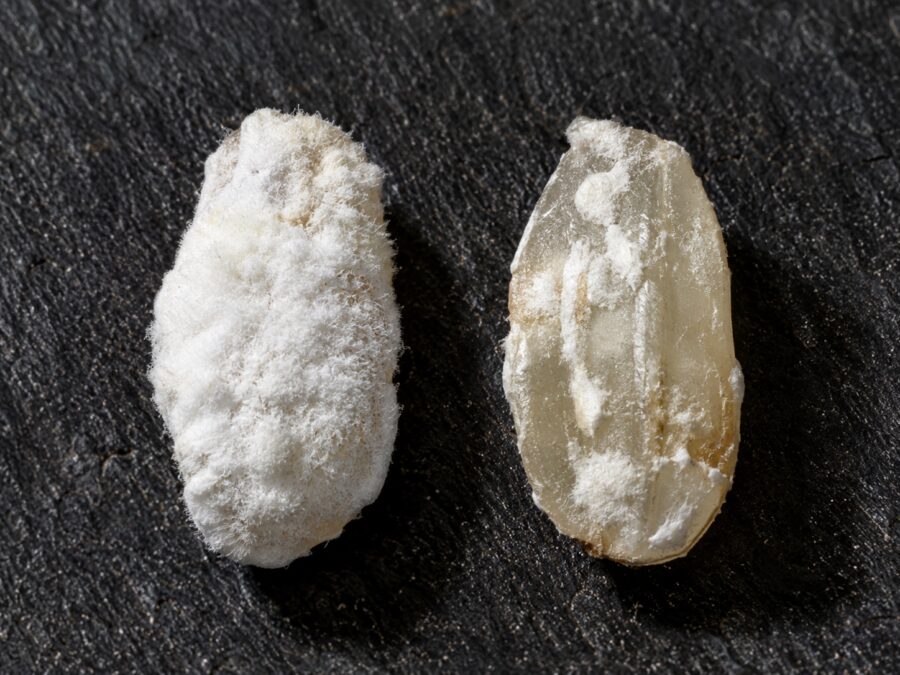
The concept most keenly observed in the imperial process is laxative(破精)c. It refers to the traces where mycelia have taken root and burrowed into the rice, that is, the white spots that appear on the surface of the rice.
The rate at which the rice dissolves during fermentation varies depending on whether these spots have spread across the entire grain or appeared only on parts of it. It is broadly divided into two types.
Souhajehyeong(總破精)It is a state where the mycelium covers the entire surface and penetrates deep into the interior. Its saccharification power is very strong, bringing out the sweetness and umami of the rice. It is used for rich and heavy sake, especially as a starter culture.
Tsukihaze type(突破精)The surface proliferation is sparse, while the mycelium extends deeply from the center of the egg. The saccharification power remains at an appropriate level, making it suitable for producing delicate and clean sake. This type is mainly used for the Ginjo series.
There are also cases of failure. If there is too much moisture on the surface of the steamed rice, the mold does not feel the need to penetrate inward and only forms a thin layer on the surface; such rice lacks enzymatic activity and cannot be used for alcohol. Conversely, if the rice is too soft, it proliferates excessively to the point where it crumbles when pressed with a finger.
Types of Aspergillus and sesame seeds
Types of Aspergillus What kind of bacteria is it?It refers to, and the Paje type is How did you cultivate that bacteria?It refers to.
However, in practice, they are not referred to by a single word like 'Heukguk Souhajehyeong'. Haje is an evaluation standard that originally developed in the Cheongju industry, and Baekguk is used for Soju and Makgeolli. EntryThis is because the goal is to maximize saccharification power, so it is effectively unified toward full-scale propagation, and there is little practical benefit in distinguishing between them.
In the field, the key factors distinguishing koji are rather the raw material (rice koji or barley koji), intended use (for starter culture or fermentation), and moisture content (dry or wet). If the moisture content is high, it dissolves quickly in the mash, allowing the sugar to be absorbed all at once, whereas if it is dry, it dissolves slowly.
Entry into the Korean liquor industry
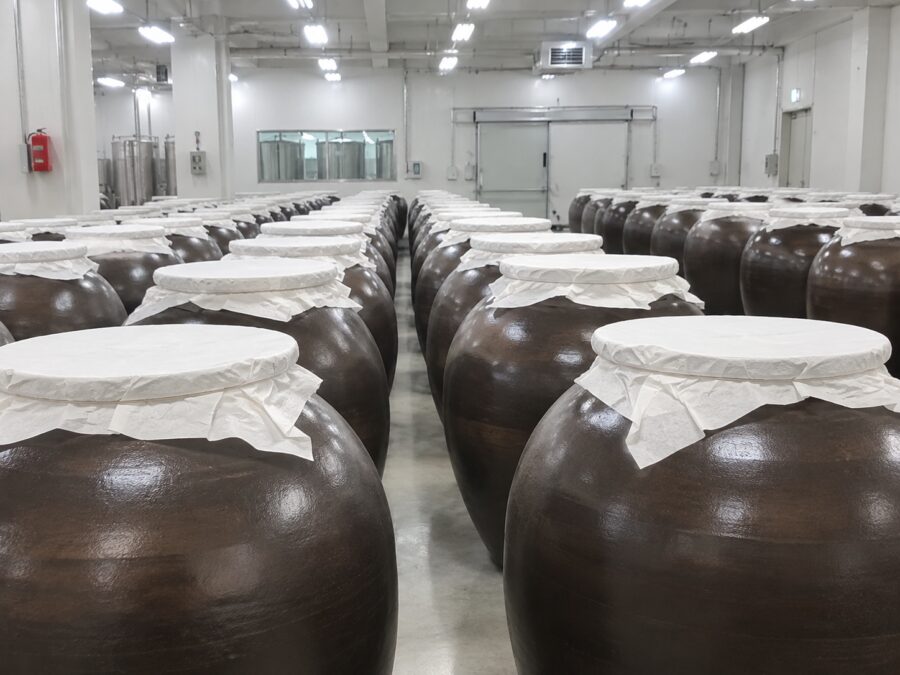
As Japan introduced science into brewing in the modern era Separation of saccharification and alcohol fermentationThey established a method in which koji is responsible for saccharification, and cultured yeast is added separately to carry out fermentation.
This system was introduced to the Korean Peninsula during the Japanese colonial period. Around 1920, made with Aspergillus niger EntryIt began to be used in the production of soju instead of traditional nuruk, and initially it was mixed half and half with nuruk, but gradually EntryIt has solidified into using only one.
The trend continued even after liberation. As the use of rice was restricted due to grain policies in the 1960s, wheat flour and sweet potatoes were introduced as ingredients for makgeolli, moving one step further away from traditional brewing methods.
Most of the makgeolli currently mass-produced is made from white rice. EntryIt is made by combining cultured yeast. This is because the fermentation is stable and the quality variation is small, making it advantageous for distribution and export.
Of course, controversy follows. The question is whether alcohol brewed with koji can be called traditional liquor. It is pointed out that the difference between cheongju, which is made by fermenting the base and secondary mashes with koji and skimming off the clear liquid, and nihonshu, which is made with koji, ultimately lies in the fermentation agent and the degree of polishing.
According to the fermentation agent The difference between Cheongju and Yakju, The controversy regarding the classification under the Liquor Tax Act also stems from this.
In 2010, led by the Ministry of Agriculture, Food and Rural Affairs and the Korea Food Research Institute, 17 types of improved nuruk were developed using 8 types of Aspergillus molds found in traditional nuruk. However, in the field, the existing EntryBecause the feel of the product was different, distribution proceeded slowly.
The Role of Koji in Japanese Brewing
That is the case based on the brewing site standards. Sake, soju, awamori, soy sauce, miso, and mirin are all made from wild chrysanthemums.(散麴), that is, uses entry. Byeongguk(餠麴), In other words, koji is virtually not used in Japanese brewing.
The reason lies in the materials. Ancient Japan also had continental-style military and military states.(草麴)It appears that the Kusakoji method (a type of koji made by mixing plant materials with grain flour and fermenting them) was attempted, but it was not used for long.
In ancient Japan, wheat was a difficult grain to process. Since millstones did not become widespread among farming households until the late 17th century, there was no suitable method to finely grind wheat into flour before then.
On the other hand, rice could be milled using a wooden mortar, and the technique of steaming it in a steamer already existed. However, once the base is determined, the form is determined accordingly. Flour dough forms a lump when kneaded (wheat), but steamed grains scatter individually and have no way to clump together (rice).
Due to these circumstances, in Japan, steamed rice is left scattered and floated. Wild chrysanthemum is the standardIt was established as such. However, at that time, it was not a single type of bacteria like it is now. Mold, yeast, and bacteria from the air settled together on the steamed rice spread out, and the method involved taking a well-perfected batch and mixing it into the next batch to continue.
Nevertheless, the dispersed steaming environment itself filtered out the bacteria to some extent. Under conditions with a large surface area and relatively dry conditions, compared to Rhizopus or Mucor, which prefer humid and oxygen-poor environments like inside a lump, Aspergilluswas dominant.
To summarize, it is called San-guk. The form is the result determined by the materialwas, Single strains are the choice for management and reproducibility.It was. There is a time difference of over a thousand years between the two.
However, recently, there have also been experiments in the opposite direction. Small-scale breweries have emerged that directly harvest wild koji from rice ears or produce their own starter cultures. These are not mainstream because they are less stable and more labor-intensive than commercial starters.
What is interesting is that attempts to change bacteria are also increasing in Japan.
Breweries are emerging that use white koji mold, originally intended for shochu, in sake. This is because the citrus-based acidity produced by the citric acid of the mold provides a flavor profile not found in conventional sake. One brewery in Aomori achieves both acidity and a clean finish by using white koji for the starter culture and yellow koji for the main fermentation.
at last Whether it is koji or yeast is not a matter of superiority or inferiority, but a matter of the type of alcohol being produced.all.
How to distinguish between koji liquor and nuruk liquor by the cup
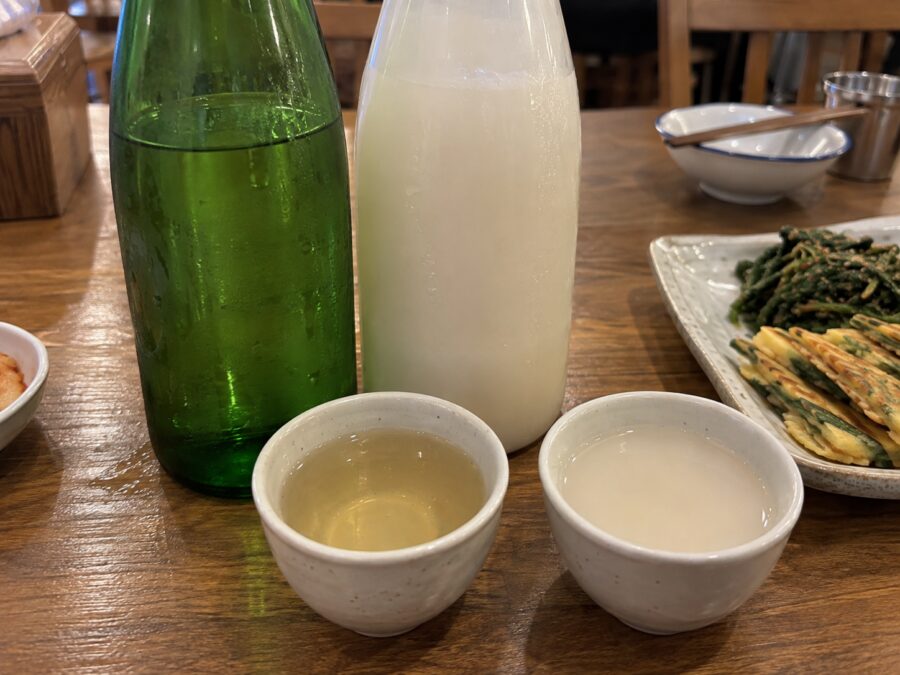
Checking the label first is the quickest way. Under the ingredients list, 'entry', 'USA'(米麴)‘If ', 'rice koji', or 'purified enzyme' is written, it is alcohol saccharified with a single strain. 'Koji', 'koji(麯子)‘If it is marked as ', it means a traditional fermentation agent was used.
There are also many products that use both together. As for stability... EntryIt is a compromise where the flavor is derived from the yeast.
- Characteristics of acidity — In Baekguk-style sake, the sourness hits distinctly in the first sip. The acidity of the yeast sake blends with umami in the background and rises gently.
- 향 In nuruk liquor, a savory and grain-like aroma serves as the background. Since quite a few people find this scent off-putting, it is also the reason why the industry has gravitated toward koji liquor.
- aftertaste — Single-strain fermentation has a clean finish, while complex fermentation has a long finish and many layers.
For reference, if the koji process in sake goes wrong, a faint, dark, slightly musty smell remains in the background of the finished drink. This is called the "koji smell," and if such an aroma is detected, the sake is Entry The direction had already been altered at that stage.
Ultimately, a single invisible mold determines the character of the alcohol. The next time you drink makgeolli or sake, if you take a look at the ingredients list, you will be able to guess a little bit about what happened inside that glass.