
American whisky, a distilled spirit that began to be produced from the abundant corn of settlers in Kentucky and Tennessee in the late 18th century, has now established itself as a premium spirit loved by the world. Produced under the strict standards specified in Federal Regulation 27 CFR 5.22, American whisky is divided into Bourbon, Tennessee, Rye, and Corn whisky, each boasting a unique flavor profile and production method.
As of 2023, the American whisky market reached $5.1 billion, and the global whisky market is projected to grow to $127 billion by 2028. At the heart of this growth lie strict legal standards, craftsmanship, and continuous innovation.
index
- Legal Definition and Four Major Classifications of American Whisky
- Bourbon Whiskey – A Symbol of America Made by Kentucky
- The unique identity of Tennessee whiskey
- Rye Whisky – The Appeal of Spicy Spices
- Corn Whisky – The Legitimate Successor to Moonshine
- The Craft Distillery Revolution and Modern American Whisky
Legal Definition and Four Major Classifications of American Whisky
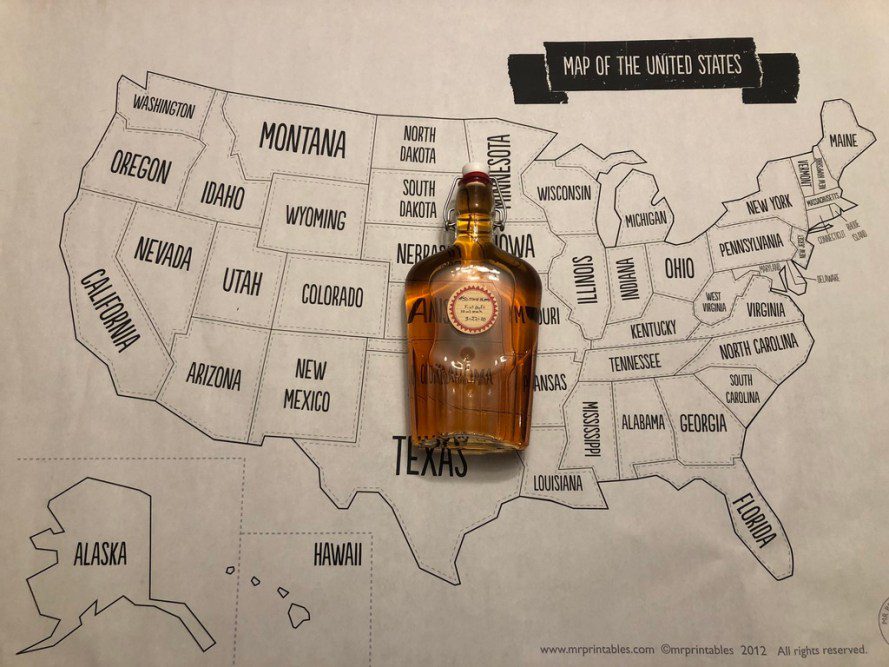
To understand American whisky, one must first know the strict definition specified in federal law. U.S. federal regulation Title 27, Part 5.22 defines every detail of whisky production, and this legal standard is the key to guaranteeing the quality of American whisky.
All American whisky must be fermented from grain mash and must not exceed 801 ABV (160 proof) during distillation. This regulation is intended to ensure that the flavor of the raw grains is fully reflected in the final product. Additionally, the addition of coloring agents, caramel, or flavorings is prohibited in principle, and it must be bottled at a minimum of 401 ABV (80 proof).
Bourbon Whiskey
Bourbon whiskey is the flagship of American whiskey. According to federal regulations, the mash bill must contain at least 511 TP3T of corn, although in practice, it is common to use corn in the 60–801 TP3T range. The remainder consists of rye or wheat and malted barley.
The most significant characteristic of bourbon is that it must be aged exclusively in new charred oak barrels. This rule is a key factor in imparting the unique vanilla, caramel, and toffee flavors to bourbon. During the charring process, in which the inside of the oak barrel is burned, lignin undergoes thermal decomposition, producing aromatic compounds such as vanillin, syringaldehyde, and coniferaldehyde.
Conditions for Straight Bourbon
Bourbon aged for at least two years and free of additives may be labeled 'Straight Bourbon'. If aged for less than four years, the aging period must be specified on the label. If distilled in Kentucky and aged for at least one year, the name 'Kentucky Straight Bourbon' may be used.
Tennessee Whiskey
Tennessee whisky meets all legal requirements for bourbon while undergoing additional processes. Tennessee House Bill 1084 of 2013 stipulated that Tennessee whisky must be produced in Tennessee, contain at least 511 TP3T of corn, and be aged in new charring oak barrels.
However, what truly distinguishes Tennessee whisky is the Lincoln County Process. This process, in which the pre-aging distillate is filtered through a column about 3 meters high made of sugar maple charcoal, creates the smooth and clean flavor of Tennessee whiskies such as Jack Daniel's and George Dickel.
Rye Whiskey
Rye whisky must contain at least 511 TP3 T of rye in the mash bill. Rye provides a much spicier and drier character than corn and produces characteristic flavors such as pepper, clove, and mint.
Rye whisky, which began to be produced in the 18th century when rye was abundant in the eastern United States, particularly in Pennsylvania and Maryland, was a very popular style until the pre-Prohibition era. With the resurgence of craft cocktail culture in the 21st century, rye whisky is once again gaining attention and has established itself as an essential ingredient in classic cocktails such as the Manhattan and the Old Fashioned.
Corn Whiskey
Corn whisky is the sweetest and smoothest American whisky, made from at least 801 TP3T of corn. Unlike other whiskies, aging is not mandatory for corn whisky, and even if aged, second-hand oak barrels or new, uncharred oak barrels may be used.
Corn whisky is virtually the same product as the moonshine of the Prohibition era. Moonshine, which was produced illegally in rural southern regions, carried on the tradition of corn whisky, and recently, legal craft distilleries have revived this tradition to produce more refined corn whisky.
| Types of whiskey | Based on grain ratio | Distilled alcohol content | aging container | Flavor characteristics |
|---|---|---|---|---|
| bourbon | Corn minimum 51% | Max 80% ABV | New Charing Oak Barrel Essential | Vanilla, caramel, sweetness |
| Tennessee whiskey | Corn minimum 51% | Max 80% ABV | New Charing Oak Barrel + Maple Charcoal Filter | Soft and clean, subtle sweetness |
| rye | Rye minimum 51% | Max 80% ABV | New Charing Oak Barrel Essential | Spicy, peppery, dry |
| Corn whiskey | Corn minimum 80% | Max 80% ABV | Used or uncharting oak barrels | Very sweet, soft |
Bourbon Whiskey – A Symbol of America Made by Kentucky

The name Bourbon whiskey originated from the French Bourbon Dynasty. In gratitude for French support during the American Revolutionary War, a county in Kentucky was named Bourbon County, and the corn-based whiskey produced in this region came to be known as 'Bourbon'. Ironically, Bourbon County is currently prohibited from producing alcohol due to Prohibition, and the actual centers of Bourbon production are other regions of Kentucky.
Bourbon whiskey's Mashville
The flavor of bourbon is determined by the mash bill, or the grain composition. Federal regulations require only a minimum of 511 TP3 T of corn, but actual production uses a much higher proportion.
Corn provides a sweet and buttery richness. The higher the corn content (70-801 TP3T), the smoother and sweeter the bourbon produced, which is characteristic of wheated bourbon such as Maker's Mark. Using rye as a second grain adds spicy and complex flavors. A typical bourbon recipe uses a ratio of approximately 701 TP3T of corn, 151 TP3T of rye, and 151 TP3T of malted barley.
Malted barley plays an essential role, even though its proportion is small. This is because the amylase enzyme contained in malt is responsible for the saccharification process, which converts the starch in corn and rye into fermentable sugars.
Sour mash technique
The sour mash technique is a unique manufacturing method that defines American whisky, particularly Bourbon and Tennessee whisky. There are historical and environmental reasons why this technique, which is rarely used in the production of Scottish or Irish whisky, has become the standard in the United States.
Distilleries in 19th-century Kentucky and Tennessee faced the problem of inconsistent quality from batch to batch. While Scotland had a relatively low risk of contamination by wild yeasts and bacteria thanks to its cool, humid climate, the hot and humid environment of the American South was ideal for the proliferation of unwanted microorganisms. As the temperature of the fermentation tanks increased, so did the risk of contamination by unwanted microorganisms, resulting in significant variations in flavor from batch to batch.
The sour mash technique was an American solution to this problem. An acidic liquid called backset, remaining from previous distillation, is added to the new mash at a ratio of approximately 25-301 TP3T. The key is to intentionally inoculate it with lactic acid bacteria before fermentation begins.
Lactic acid bacteria convert sugar into lactic acid and lower the pH to approximately 3.5–4.5. While this acidified environment creates conditions where most harmful bacteria cannot survive, distillation yeast operates normally even within this pH range. Consequently, the fermentation process is stably controlled, and clean fermentation proceeds without unwanted flavor contamination.
Furthermore, the lactic acid and other organic acids produced by lactic acid bacteria subtly contribute to the complex flavor profile of bourbon. Rather than adding acidity, they enhance the depth and balance of the overall flavor. The minerals and residual flavor components contained in the backset also help maintain consistency between batches.
Sour mash is misleading due to its name, but it actually has nothing to do with sourness. 'Sour' is merely a technical term referring to intentional acidification prior to fermentation. Conversely, sweet mash refers to a method of starting fermentation with only fresh water and new yeast, without backset, and is used by some small distilleries to seek greater variation with each batch.
Today, sour mash has become the standard for American whiskey, and Jack Daniel's has made this technique part of its identity to the extent that it explicitly labels its product as 'Tennessee Sour Mash Whiskey'.
Oak barrel aging of bourbon whiskey
The rule that bourbon whiskey must use newly charred oak barrels is not merely a tradition but is central to flavor development. The charring process, which involves burning the inside of the barrel, is divided into three grades.
Light char provides subtle oak flavors through light heat treatment, while medium char is the most commonly used level, producing balanced vanilla and caramel notes. Alligator char is the strongest char, burning the inside of the barrel until it appears cracked like alligator skin. This allows the distillate to penetrate deeper into the oak, enabling the extraction of intense flavors.
Kentucky's Climate and the Angel's Share
Kentucky's hot and humid climate has a unique effect on bourbon maturation. Extreme temperature fluctuations, with summer highs exceeding 35°C and winters dropping below freezing, accelerate the expansion and contraction of oak barrels. This causes the whisky to penetrate deep into the oak and then flow back out, extracting flavor compounds.
However, the high evaporation rate is also a disadvantage. 2 to 41 TP3 T of whisky evaporates annually, which is referred to as the "angel's share." This is about twice as high as Scotland's annual evaporation rate of 21 TP3 T, making it difficult to age bourbon for more than 10 years. 12-year-old bourbon is rare and precious, and most premium bourbons are typically aged for 4 to 8 years.
Alcohol content regulations for distillation and aging
Bourbon must not exceed 801 TP3T ABV (160 proof) at the time of distillation and 62.51 TP3T ABV (125 proof) or less when aged in oak barrels. This regulation ensures that the flavor of the raw grains is sufficiently preserved in the final product.
Due to Kentucky's low humidity and high temperatures, water and alcohol evaporate at similar rates, and in some cases, the alcohol content actually increases during aging. This contrasts with Scotland, where the alcohol content gradually decreases over time. Therefore, the bourbon industry uses a low cask ABV of 50-601 TP3T to maintain proper aging and quality.
At the time of final bottling, it must be at least 401 TP3T ABV (80 proof), but premium bourbons boast even higher alcohol content. Bourbons with 100 proof (501 TP3T ABV) or higher are evaluated as having less dilution, which preserves the strong flavor of the original liquid, and enjoy high popularity among bourbon enthusiasts.
Bourbon whiskey recommendations
Buffalo Trace With a smooth ABV of 40-45% and balanced flavors of vanilla, caramel, and brown sugar, it is ideal for beginners. It offers excellent quality for the price and can be enjoyed in various ways, from cocktails to straight.
Evan Williams Bottled-in-Bond: Despite the high alcohol content of 100 proof (ABV 50%), it offers a balanced blend of complex flavors, oak notes, and a slight tobacco note. Its strengths include quality assurance that meets bottle bonding regulations and a reasonable price.
Woodford Reserve It features a smooth texture and complex layers of vanilla, caramel, and spice. The delicate flavor, created through double copper port distillation, is impressive.
Four Roses Single Barrel Each barrel possesses a unique character, with a harmonious blend of floral, spice, and fruit notes. It is recommended for those who wish to experience the diversity of bourbon.
George T. Stagg As part of the Buffalo Trace Antique Collection, it features an intense 136 proof made using an uncut and unfiltered method. The deep flavors of dark fruit, molasses, and spice represent the pinnacle of bourbon.
Pappy Van Winkle Series : Known as the Holy Grail of bourbon enthusiasts, this product is said to be unrivaled in its smoothness and complexity. It is difficult to find and quite expensive, but if you get the chance, it is worth experiencing.
The unique identity of Tennessee whiskey

Tennessee whiskey meets all process requirements for bourbon. Minimum 51% corn, new charring Oak barrel aging, It follows all bourbon regulations, including distillation and aging limits. In fact, many international trade agreements recognize Tennessee whiskey as a subcategory of 'straight bourbon'.
However, Tennessee distillers decided to establish their own unique identity. In 2013, Tennessee House Bill 1084 specified seven legal requirements for Tennessee whisky, thereby establishing Tennessee whisky as an independent category distinct from bourbon.
Lincoln County Process – The Science of Maple Charcoal
What truly sets Tennessee whisky apart is the Lincoln County Process. Immediately after distillation and before maturation, the freshly produced distillate is filtered by passing it through a column about 3 meters (10 feet) high filled with sugar maple charcoal.
This process brings about chemical changes beyond simple filtration. Charcoal made by burning maple wood has a highly porous structure and a large surface area, giving it excellent adsorption capabilities. As the distillate slowly passes through the charcoal layer, unwanted sulfur compounds and harsh flavor components are removed.
At the same time, minute amounts of volatile phenolic compounds and light toast character from the charcoal infuse into the distillate. This process can take from a few days to a week, and the flow rate of the distillate affects the final flavor. As a result, Tennessee whiskey is smoother and cleaner than bourbon, and has a flavor profile that emphasizes sweetness and delicacy.
Jack Daniel's – The Icon of Tennessee Whiskey
Jack Daniel's is the leading Tennessee whiskey brand and the largest single whiskey producer in the United States. Although 951 TP3T bourbon is produced in Kentucky, Tennessee whiskey has secured an independent market position solely through Jack Daniel's.
Jack Daniel's features a high corn mash bill using approximately 801 TP3T of corn. The low rye content of around 81 TP3T is a choice made to minimize spiciness and maximize smoothness. The cold natural water springing from Cave Spring in Lynchburg is iron-free and rich in minerals, providing ideal conditions for distillation and aging.
Jack Daniel's uses its own proprietary yeast and maintains consistent quality through the sour mash technique. After the Lincoln County process, it is aged in new charring oak barrels; the aging period varies by product but is generally around 4 to 7 years.
The difference between Tennessee whiskey and Bourbon whiskey
The most distinct difference between Tennessee whisky and bourbon is the presence or absence of the Lincoln County process. This additional filtration step gives Tennessee whisky a smoother and cleaner character.
The composition of the mash bill also makes a difference. Tennessee whisky uses a high corn ratio close to 80%, whereas bourbon allows for a more diverse range of mash bills. This is one of the reasons why Tennessee whisky tends to be sweeter and smoother than bourbon.
There are also geographical differences. Tennessee whiskey must be produced in the state of Tennessee, and a 2013 state law requires aging in Tennessee as well. On the other hand, bourbon can be produced anywhere in the United States, and in fact, bourbon is produced in several states, including Indiana, Illinois, and Georgia.
Benjamin Pritchard's Exception
Tennessee state law recognizes one exception. Benjamin Prichard's Distillery in Kelso is permitted to use the Tennessee Whisky label without using the Lincoln County Process. The distillery operated prior to the enactment of the 2013 law and was granted the right to maintain traditional manufacturing methods.
Tennessee whiskey recommendations
Jack Daniel's Old No. 7: 40% ABV is the most iconic Tennessee whisky, characterized by a balanced sweetness of vanilla, caramel, and oak, and the smoothness created by the Lincoln County Process. It is the perfect choice for those new to Tennessee whisky.
George Dickel No. 12: With an ABV of 451 TP3T, it is slightly stronger than Jack Daniel's, featuring a bold flavor and a unique, subtle smoky finish. The sweet and smooth character created by the high corn content of 841 TP3T is appealing.
Uncle Nearest 1856: Named after Nearest Green, the Black master distiller who taught Jack Daniel's, this brand is notable for its flavors of brown sugar, vanilla, and dry cherry. It is known as a product that possesses both historical significance and high quality.
Rye Whisky – The Appeal of Spicy Spices

While Bourbon and Tennessee whiskey dominate the American whiskey market, Rye and Corn whiskey have formed their own niche communities due to their distinct personalities. These two styles offer extremely contrasting flavor profiles, serving as evidence of the diversity of American whiskey.
Rye whisky must contain at least 511 TP3 T of rye in its mash bill, and some products use over 951 TP3 T of rye. Rye provides a much more complex and intense flavor than corn.
The chemical composition of rye creates a unique flavor profile. While corn primarily provides sweetness and buttery richness, rye produces peppery and herbal notes. During the fermentation process, rye generates more esters and higher alcohols, which contribute to the complexity of rye whisky.
Historically, rye whisky was highly popular in the late 18th century in the Eastern regions, including Pennsylvania, Maryland, and New York. Rye was abundant in these areas, and Scots-Irish immigrants applied their distillation traditions to it. Until the Prohibition era, rye whisky was as popular a style as bourbon.
The rye whisky industry nearly collapsed after Prohibition, but it made a dramatic comeback in the early 21st century with the resurgence of craft cocktail culture. Original recipes for classic cocktails such as the Manhattan, Old Fashioned, and Sazerac call for rye whisky, and demand for rye whisky surged as bartenders pursued historical accuracy.
Flavor characteristics of rye whiskey
Rye whisky offers a completely different sensory experience from bourbon. On the nose, intense spice notes are detected first, appearing in a complex blend of spices such as black pepper, cinnamon, cloves, and nutmeg. Herbal notes like mint and eucalyptus are also commonly found.
On the palate, an intense spiciness fills the mouth initially, followed by grain characteristics such as rye bread and caraway seeds. Vanilla and caramel notes from oak aging are present, but they are less dominant than in bourbon. The finish is long and dry, with a lingering spicy aftertaste.
Interestingly, a high rye content does not necessarily mean the drink is rough or difficult to drink. Products like Bulleit Rye, which use 95% rye, also achieve a balanced flavor through proper aging and blending. The 'rough' sensation often associated with rye actually stems from a short aging period.
Rye whiskey recommendations
Rittenhouse Rye Bottled-in-Bond: A traditional Pennsylvania rye whisky that boasts an approachable flavor despite its 100-proof strength. It is the perfect base for classic cocktails like the Manhattan and Sazerac, offering excellent value for money.
Knob Creek Rye: A rye characterized by coconut notes, it harmonizes the smooth spice created by 53% rye mash bills with the sweetness of banana and chocolate chips. It is a game changer that will change the way you taste rye whisky.
Corn Whisky – The Legitimate Successor to Moonshine
Corn whisky is the purest and sweetest American whisky, made from at least 801 TP3T of corn. Unlike all other whisky styles, aging is not a legal requirement for Corn whisky, and even if aged, second-hand oak barrels or new, uncharred oak barrels may be used.
This unique regulation is related to the historical background of corn whisky. Corn whisky is essentially the same as the moonshine of the Prohibition era. Its origins lie in the tradition of Southern farmers distilling surplus corn to process it, and they often consumed it immediately without aging.
Following the Civil War, the imposition of federal taxes on corn whisky production led most corn whisky production to shift to illegal moonshine. Throughout the 20th century, moonshine was a symbol of the Southern countryside and an expression of resistance against Prohibition. In modern times, as legal distilleries revive this tradition, corn whisky is being reborn as a premium spirit category.
The Flavors and Modern Applications of Corn Whiskey
Corn whisky is dominated by the pure and sweet flavor of corn. Because oak aging is minimal or non-existent, the characteristics of the grain itself are strongly evident. It features notes of fresh corn, popcorn, and cream, with butterscotch and a slight vegetal sweetness also detectable.
The texture is very smooth and oily, with almost no tannins or dryness from the oak. This makes corn whisky suitable for use as a cocktail base or mixer. Some craft distilleries market corn whisky as an alternative to vodka, emphasizing its flavorful yet not overpowering characteristics.
Modern craft distilleries are attempting new approaches to corn whisky. Experimental products are being released, such as those involving short-term oak aging or finishing in various types of barrels (wine barrels, rum casks, etc.). These innovations are attempts to combine the traditional purity of corn whisky with modern complexity.
| characteristic | rye | Corn whiskey |
|---|---|---|
| major grains | Rye minimum 51% | Corn minimum 80% |
| Flavor profile | Spicy, peppery, herbs | Sweet, creamy, popcorn |
| Aging requirements | New Charing Oak Barrel Essential | Optional, used/ringless containers available |
| historical center | Pennsylvania, Maryland | Southern rural areas |
| Cocktail Usage | Manhattan, Old Fashioned | Mixer, Vodka Substitute |
| Modern trends | Revived as a craft cocktail culture | Premium Moonshine, Experimental Aging |
Corn whiskey recommendation
Corn whisky is mostly produced by small distilleries in the United States, but it is not very popular in Korea, so it is difficult to find other than Mellow Corn.
Balcones Baby Blue: A Texas whisky made from roasted blue corn, it features cornbread, vanilla, roasted nuts, and a slight smokiness. As a landmark product of the hairy loom corn whisky movement, it has demonstrated the potential of craft whisky since its launch in 2008.
Wood Hat Bloody Butcher Red: This is a cask-strength corn whisky made from revived Hareum red corn and aged in toasted barrels. It is a highly acclaimed craft product that demonstrates the innovative potential of corn whisky.
The Craft Distillery Revolution and Modern American Whisky
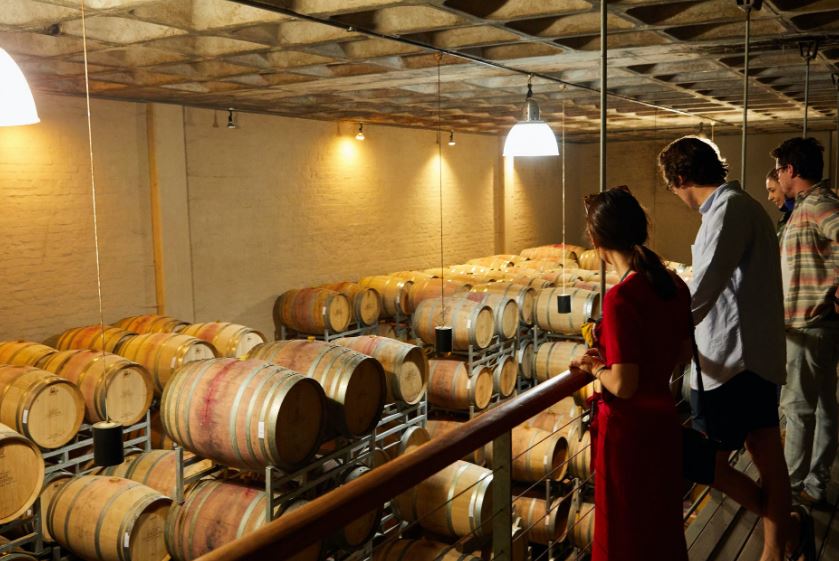
The most interesting change in 21st-century American whisky is the explosive growth of craft distilleries. The number of craft distilleries, which stood at merely a few dozen in 2007, increased to over 1,000 by 2017, and this figure continues to rise. This phenomenon follows the craft beer revolution that began with the UK's CAMRA (Campaign for Real Ale) movement in the 1980s.
Craft distilleries are challenging the practices established by large distilleries over decades and meeting the demands of consumers seeking unique flavors, local identity, and transparent production processes.
The Global Journey of Used Bourbon Barrels
The regulation requiring the bourbon industry to use only new oak barrels has created an interesting byproduct. Every year, more than one million bourbon barrels are recycled for other uses after being used once. These second-hand barrels have become an important resource for the global whiskey industry.
The Scottish whisky industry is the largest importer of bourbon barrels. Scottish distilleries prefer second-hand barrels that retain the sweet vanilla and caramel notes of bourbon, obtaining the strongest bourbon character in the first fill. The second and third fills become increasingly neutral, but this allows the character of the malt whisky itself to be better revealed.
Irish whiskey, Japanese whiskey, and even some rum and tequila producers utilize bourbon barrels. In the craft beer industry, bourbon barrel-aged Imperial Stout has established itself as a premium category. As such, the recycling of bourbon barrels has become an important link in the global spirits industry.
Using second-hand bourbon barrels can also shorten the maturation time. While long-term aging in new oak barrels can result in an overly strong woody aroma, barrels used two or three times provide a milder and more balanced flavor. This is why Canadian whisky is able to develop complex flavors through long-term aging in second-hand bourbon barrels.
Experimental Mashville and New Trends
Craft distilleries are experimenting beyond traditional grain blends. Wheat whiskey uses at least 511 TP3T of wheat and offers a much softer and milder flavor than rye or corn. Wheat creates a delicate sweetness and a creamy texture, and the success of Wheat Bourbons like Maker's Mark has proven its potential.
Some distilleries are experimenting with alternative grains such as quinoa, millet, and sorghum. This pursues two goals simultaneously: meeting the demand for gluten-free products and exploring unique flavor profiles. Multigrain whisky is also gaining popularity; it is a blend in which no single grain exceeds 511 TP3T and is classified as 'straight whiskey'.
Small-scale malting facilities are also emerging. Craft distilleries are adopting the traditional malting process of germinating barley in-house and drying it in kilns, and creating a unique smoky character by smoking with various fuels such as peat, cherry wood, and mesquite. This is an attempt to reinterpret the tradition of Scottish whisky in an American style.
Kentucky Bourbon Trail and Whiskey Tour
The craft distillery revolution has also brought about a resurgence of whisky tourism. Over the past five years, the Kentucky Bourbon Trail® has attracted more than 2.5 million visitors from 50 states and over 25 countries. This tour educates visitors about the history and traditions of bourbon and offers the opportunity to experience the distillation process firsthand.
Craft distilleries operate visitor centers, tasting rooms, and restaurants, and in many cases, these facilities serve as a major source of revenue. Visitors can speak directly with the master distiller, smell the mash during fermentation, touch the stills, and taste the freshly made distillate. Such direct experiences are impossible at large industrial distilleries.
New Category for 2024 – American Single Malt
In December 2024, the U.S. Alcohol and Tobacco & Revenue Administration (TTB) officially recognized American Single Malt as a new whisky category. This is the result of years of industry lobbying and the efforts of craft distilleries.
American single malts are made from 100% malted barley and must be produced at a single distillery. Unlike Scottish single malts, the use of peat is optional, and both new and used oak barrels may be used. This flexibility allows American distilleries to develop their own unique styles.
This new category provides a legal framework that allows craft distilleries to innovate without being constrained by the molds of bourbon or rye whisky. Moving forward, American single malt is expected to become a new growth engine for the U.S. whisky industry.
The Future of American Whisky
The American whisky industry is finding a balance between tradition and innovation. Large distilleries maintain the consistent quality perfected over decades while attracting new consumers with limited edition releases and experimental products. Craft distilleries are carving out niche markets with regional identity and unique flavor profiles.
American whisky began as a humble corn distillate of Kentucky pioneers in the late 18th century and has evolved into a premium whisky recognized worldwide today.
The sweet and rich vanilla notes of bourbon, the smooth and clean finish of Tennessee whiskey, the intense spice of rye whiskey, and the pure corn sweetness of corn whiskey—each style possesses a unique personality and history. Strict federal regulations guarantee quality while providing distilleries with ample room to exercise creativity.
The craft distillery revolution is ushering in a golden age for American whisky. Their efforts to experiment with new ingredients, distillation techniques, and aging methods while respecting traditional approaches are enriching the diversity of American whisky. The official recognition of American Single Malt in 2024 marks a milestone that opens a new chapter in this journey.


