
index
- Types of Whiskey, Basic Classification System
- Scotch Whisky – The home of whisky
- American Whiskey – The Originality Created by Corn
- Canadian Whisky – The Smoothness of Rye
- Irish Whiskey – The Origin of Whiskey
- Japanese Whisky – The Pinnacle of Delicacy
- The Challenge of Korean Whiskey
Types of Whiskey, Basic Classification System
Whisky is broadly classified according to two criteria. The first is classification by the country of production. If made in Scotland, it is called Scotch whisky; if made in Ireland, it is called Irish whisky; and if made in the United States, it is called American whisky. Canada has its own unique name, Canadian whisky, and Japan has Japanese whisky.
The second classification is based on the ingredients. If germinated barley (malt) is used, it is called malt whisky; if other grains such as corn, wheat, or rye are used, it is called grain whisky. Mixing malt whisky and grain whisky results in blended whisky.
An interesting point is the difference in spelling between Whisky and Whiskey. Scotland and Canada use 'Whisky,' while Ireland and the United States use 'Whiskey.' This stems from the linguistic traditions and cultural differences of each country. Japan uses 'Whisky' due to the influence of Scotland.
Scotch Whisky – The home of whisky

Scotch whiskyIt is a whisky produced in Scotland and boasts the longest history in the world. By law, it must be produced in Scotland, aged in oak barrels for at least three years, and have an alcohol content of at least 401 TP3T. During distillation, the alcohol content must be maintained at 94.81 TP3T or lower to preserve the flavor of the raw materials.
Scotch whisky is broadly divided into five categories. Single malt is whisky made exclusively from malt at a single distillery. Single grain refers to whisky made from grains at a single distillery. Blended malt is a mixture of malt whiskies from multiple distilleries, while blended grain is a mixture of grain whiskies from multiple distilleries. Blended whisky is made by mixing both malt and grain.
– Highland: As the widest region, it displays a variety of flavors.
– LowlandIt is characterized by a light and soft style.
– SpeysideIt is sweet and rich in fruit flavor.
– AylaIt is famous for its strong peat smoke flavor.
– Campbelltown: Affected by salt and sea breeze
In particular, Islay whiskies are characterized by a strong smoky aroma, produced by drying the malt with peat. Islay whiskies such as Laphroaig, Ardbeg, and Lagavulin have garnered a loyal following for their unique flavor profiles featuring iodine and ocean notes. In contrast, Speyside and Lowland whiskies use little to no peat, resulting in a smooth and sweet taste.
Distillation methods also vary by region and distillery. While most distill their spirits twice, Lowland distilleries like Aucanto produce smoother whisky through triple distillation. The shape and size of the still also influence flavor; tall-necked stills produce light whisky, while plump stills produce heavy whisky.
Popularly known brands include blended whiskies such as Johnnie Walker and Chivas Regal. Among single malts, Glenfiddich, Macallan, and Glenlivet are famous, each possessing a unique character. Glenfiddich is rich in pear and apple aromas, while Macallan produces intense fruit notes through sherry cask aging. Glenlivet is characterized by a balanced and smooth taste.
American Whiskey – The Originality Created by Corn

American whiskeyIt was first produced in the United States by Scottish immigrants in the 18th century. It established its own unique style by using corn, which is common in the U.S., as the primary ingredient instead of barley, just as it is in Scotland. According to U.S. federal regulations, it must be made from grain mash, distilled to an alcohol content of 901 TP3 T or less, and aged in oak barrels.
The most famous one is bourbonIt is primarily produced in Kentucky and must have a corn content of at least 511 TP3 T. Its most distinctive feature is that it is aged in new oak barrels that have been charred. During the charring process, the lignin inside the barrel breaks down, generating sweet aromas such as vanilla and caramel. If aged for two years or more, it can be called 'Straight Bourbon'.
Tennessee whiskeyIt is produced similarly to bourbon but undergoes a unique process called charcoal mellowing. After distillation, it is filtered through maple charcoal to produce a smoother taste. The most famous brand is Jack Daniel's. Although it is produced in Tennessee and meets bourbon requirements, such as using at least 511 TP3T of corn and aging in new charred oak barrels, it is classified as a separate category due to the charcoal mellowing process.
ryeRye is a whisky with a rye content of 511 TP3T or more. It is characterized by a spicier and drier taste than bourbon and is also widely used as an ingredient in cocktails. It was as popular as bourbon before Prohibition but declined after the ban; however, with rye whisky recently being rediscovered, products such as Bullet Rye and Rhytum Rye are gaining popularity.
Corn whiskeyIt is a unique category that requires a corn content of at least 801 TP3T. Unlike bourbon, aging is not mandatory; however, if aged, uncharred new oak barrels or reused oak barrels must be used. The flagship product, Mellow Corn, is produced at the Heaven Hill Distillery and aged for four years in bourbon oak barrels to produce a sweet and smooth flavor. Corn whisky is sometimes confused with moonshine due to characteristics similar to moonshine.
malt whiskyThis refers to whisky with a malt content of 511 TP3T or more. In the United States, unlike Scotch, it can be classified as malt whisky even if the malt is not 1001 TP3T. Recently, American single malt whiskies made with 1001 TP3T malt, such as those from the Virginia distillery, are being released, and the American Single Malt Whisky Association was established in 2016 to set standards.
| type | Raw material standards | Aging conditions | characteristic |
|---|---|---|---|
| bourbon | Corn 51% or more | Charring new oak barrels | Vanilla, caramel flavor |
| Tennessee | Corn 51% or more | Charred new oak barrel + charcoal mellowing | Smooth and clean taste |
| lie | Rye 51% or more | Charring new oak barrels | Spicy and dry |
| 콘 | Corn 80% or more | Bicharing new oak barrels or reusable barrels | Sweet and soft |
| Malt | Malt 51% or higher | Charring new oak barrels | Malty and complex |
Representative brands include Maker's Mark, Buffalo Trace, and Wild Turkey. Each creates a distinct flavor through its unique mash bill (grain blend ratio) and aging method. Maker's Mark uses wheat for a smooth taste, Buffalo Trace offers a balanced flavor, and Wild Turkey boasts a high alcohol content and intense flavor.
Canadian Whisky – The Smoothness of Rye
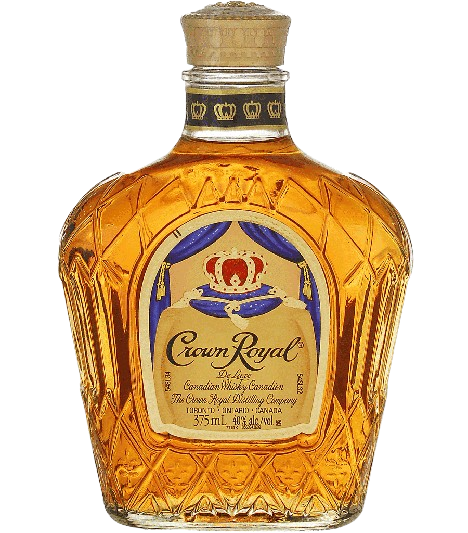
Canadian Whisky (Crown Royal)
Canadian whiskeyIt is known to have spread in the United States around the time of the American Revolutionary War in the 18th century. Production began in earnest with the establishment of companies such as Hiram Walker and Seagram in the mid-19th century, and it grew significantly by benefiting from the implementation of the U.S. Prohibition in the 1920s. During the Prohibition era, American gangs, including Al Capone, were major customers of Canadian whisky.
The most distinctive feature of Canadian whisky is the use of rye. By primarily using rye suited to Canada's short growing season, it has created a unique flavor profile. Because its rye content is higher than that of bourbon, it is also referred to as "Rye." Interestingly, Canadian whisky that does not contain rye is also conventionally called "Rye." In fact, there are no minimum rye content regulations under Canadian law for using the name "Rye Whisky.".
The production method is also unique. Base whisky and flavoring whisky are prepared separately and then blended. The base whisky has a high alcohol content and is aged in used oak barrels, while the flavoring whisky has a lower alcohol content, is distilled in a pot still, and then aged in new oak barrels or bourbon oak barrels. A balanced flavor is created by blending these two.
Canadian whisky prioritizes easy drinkability over the deep flavors and luxurious aromas found in bourbon. Most are released as blended whiskies and are characterized by their smoothness and ease of drinking. The early adoption of continuous stills established a light and clean style.
As for representative brands, Crown RoyalIt was created for British King George VI's visit to Canada in 1939 and features a unique design with a crown-shaped bottle wrapped in purple cloth. It regained attention in 2016 when whisky critic Jim Murray selected Crown Royal Northern Harvest Rye as the best whisky. The 18-year-old version features a harmonious blend of vanilla, oak, and caramel aromas.
Canadian ClubIt is also famous. Founded by Hiram Walker in the 19th century, the brand gained popularity by selling only whisky aged for over five years. It was named "Canadian Club" as it was sold exclusively at high-end gentlemen's clubs in the United States, which led to the official establishment of the "Canadian Whisky" category. It comes in 6-year and 12-year varieties and is characterized by a smooth taste resulting from a blend of rye and corn. The 12-year product has a higher barley content than other Canadian whiskies, producing a complex flavor profile.
Irish Whiskey – The Origin of Whiskey

Irish whiskeyIt is known as the origin of whisky. The word whisky itself is derived from the Irish 'Uisce Beatha,' meaning 'water of life.' There is a theory that Saint Patrick spread distillation techniques while preaching around the 4th or 5th century, and the concept of Irish whisky was established around the 12th century.
During its heyday in the 18th and 19th centuries, there were hundreds of distilleries, and it enjoyed great popularity in Britain and its colonies. Records show that there were 1,152 distilleries in Ireland in 1779. However, it faced several crises in the 20th century. A succession of events occurred, including the "What is Whisky?" controversy in 1909, the War of Independence from 1916 to 1923, the U.S. Prohibition from 1920 to 1933, and the trade war with Britain in the 1930s.
The introduction of continuous stills was a particularly significant issue. Although Irishman Enius Coffey invented the continuous still in 1830, Irish distilleries rejected it for quality reasons. In contrast, Scotland actively adopted it to produce whisky efficiently, and eventually, Irish whisky declined as it was overtaken by Scotch. By 1966, the number of distilleries had been reduced to four, and unable to withstand the pressure, Jameson, Powers, and Cork distilleries merged to establish The Irish Distillers.
Traditionally, Irish whiskey is triple distilled and does not use peat. Triple distillation is a method adopted by most Irish distilleries in the late 19th century, producing a smoother and lighter whiskey. Because peat is not used, it lacks the smoky notes of Scotch and instead features a strong sweet, smooth, and creamy flavor.
Another characteristic is the pot still whisky production method. It is made by mixing at least 301 TP3 T of malted barley, at least 301 TP3 T of unsprouted barley, and no more than 51 TP3 T of other grains. The inclusion of unsprouted barley is unique, a practice that originated in the 17th century when Irish distilleries began mixing in unsprouted barley after Britain taxed only malted barley. This method, however, resulted in a distinctive creamy and oily flavor.
The flagship brand is JamesonIt was founded in 1780 by John Jameson, who, interestingly, was of Scottish origin. As a blended whisky, it is made by mixing pot still whisky and grain whisky. Triple distillation maximizes smoothness, and it is characterized by vanilla and fruit aromas. There is a diverse lineup including Standard, Black Barrel, 12 Year, and 18 Year.
BushmillIt is a brand holding the world's oldest whisky production license. Licensed by James I in 1608, it is an icon of Ireland, even featured on national currency. Bushmills Original boasts a high malt content among blended whiskies, with 551 TP3T and Blackbush with 801 TP3T. There is also a lineup of 10, 12, 16, and 21-year single malts, characterized by prominent fruit aromas from sherry cask aging.
Irish whisky began to revive with the establishment of a new distillery in Middleton in 1975. Currently, new brands such as Cooley, Tullamore Dew, and Teeling have emerged, adding diversity. It is popular among whisky beginners due to its distinctive smoothness and accessibility.
Japanese Whisky – The Pinnacle of Delicacy

Japanese whiskeyIt began with the acceptance of Western civilization following U.S. Commodore Perry's demand for the opening of ports in 1853. In 1918, the Japanese liquor company Setsujin Yōkyō sent Masataka Taketsuru to study in Scotland, where he learned whisky manufacturing at various distilleries. He returned home in 1920 but was frustrated when the company abandoned the whisky business.
At this time, Suntory founder Shinjiro Torii envisioned a whisky business and recruited Taketsuru. The two selected Yamazaki as the site for the distillery, and in November 1924, the Suntory Yamazaki Distillery, Japan's first distillery, opened its doors. In 1929, they launched the first Japanese whisky, Shirofuda (White Label), but it failed due to its strong peat flavor. Japanese consumers preferred a smooth taste over smoky notes.
After repeated blending and tasting, Torii launched Kakubin in 1937 and achieved great success. Meanwhile, after his 10-year contract ended, Taketsuru moved to Hokkaido and established the Yoichi Distillery in 1936. He determined that the climate of Hokkaido was similar to that of Scotland. In this way, the two giants of Japanese whisky, Suntory and Nikka, were formed.
Whisky consumption surged after World War II as a yearning for Western culture grew. Around 1965, the drinking method of Mizuwari (water + ice + whisky) became popular, and it became known that it paired well with Japanese food. The Japanese whisky market continued to grow until 1983, with Suntory Old selling as many as 12.4 million cases annually. This is equivalent to the total sales volume of Johnnie Walker today.
Japanese whisky production is based on Scottish techniques but has achieved independent development. The malt uses little to no peat. The water is soft to medium hard, and the pH is close to neutral. The mashing process is similar to Scotch, but the clarity of the wort is controlled to regulate the development of flavor components such as esters and fatty acids.
Fermentation utilizes a combination of various yeasts. The stills are operated using a multi-stream system unique to Japan. Within a single distillery, multiple stills of different sizes and shapes are used to produce various styles of New Make spirits. This is a strategy to ensure diversity within a single distillery, unlike Scotland, where spirits from multiple distilleries are blended.
The unique characteristic of Japanese whisky is Mizunara oak barrel It is a use. Mizuna, a spice made from a native Japanese oak, and coconut, sandalwood It adds aroma to create a unique flavor. However, because the wood has low density, it is difficult to handle and expensive, so American and Spanish sherry oak barrels are primarily used; recently, wine, port, and Madeira barrels are also being utilized.
Japan's climate is warmer than Scotland's and experiences greater seasonal changes. The region where the Yamazaki distillery is located has higher temperatures year-round than Scotland, allowing for faster maturation. On the other hand, there are also cold regions like Yoichi, utilizing a variety of maturation environments.
SuntoryIt operates the Yamazaki and Hakushu distilleries and produces premium whiskies such as Hibiki and Yamazaki. Yamazaki 12-Year, 18-Year, and 25-Year have gained worldwide renown by winning awards at international competitions one after another. Although Hibiki is a blended whisky, it is highly regarded for its complexity and harmony.
NikkaNikka operates the Yoichi and Miyagikyo distilleries. Yoichi produces a heavy style using direct coal distillation, while Miyagikyo produces a light style using steam heating. Nikka's 'From the Barrel' is a blended whisky, but it is popular among enthusiasts for its high alcohol content of 51.41 TP3T and rich flavor. Recently, they also introduced a unique attempt called Coffee Malt, which combines the lightness of grain whisky with the flavor of malt by distilling only malt using a continuous still.
Recently, Japanese whisky has gained worldwide fame by winning awards one after another at international competitions. However, as its popularity surged, a shortage of raw materials occurred, leading to the discontinuation of some products or a sharp increase in prices. In 2012, the Japanese whisky market was approximately 90 million liters in size, with Japanese whisky accounting for more than 801 TP3T of this total. Single malts amounted to about 3.7 million liters, or 4.21 TP3T of the total, but Japanese whisky accounted for 2.81 TP3T of the global single malt market.
The Challenge of Korean Whiskey

Korea has also recently been taking on the challenge of whiskey production. 2020 Origin (Three Societies)Established in Namyangju, it launched Korea's first single malt with the Tiger Edition in September 2021. Although it received much criticism initially, it began to receive favorable reviews starting with the Eagle Edition in the fall of 2022 due to the use of Korean ingredients and the introduction of a bourbon style.
In 2023, the brand launched its regular products Batch 1 and Batch 2, and gained international recognition by winning a trophy at the 2025 IWSC with Kiwon Unicorn (a peaty whisky from 46%). This holds great significance as it was selected as the best whisky in the world, excluding Scotch, Irish, and Bourbon. Kiwon presents a diverse lineup including Tiger (using Sherry/wine casks), Eagle (using Bourbon casks), and Unicorn (using peat), and is also experimenting with domestic Mongolian oak and Korean oak barrels.
Kim Chang-soo WhiskeyIt was established in Gimpo in 2020 and launched its first product in the spring of 2022. Although there was controversy over the price of the 1-year-aged product sold for 230,000 won, the quality of the spirit was recognized. In October 2024, the 3-year-aged Gimpo The First Edition was released, and the limited edition of 2,500 bottles sold out in just one minute. Although Kim Chang-soo Distillery is a young whisky, its potential is being recognized.
Hwayo X.PremiumIt was launched in 2013 and recognized as whisky in the EU in 2020. It is a single rice whisky made from rice, and while it is classified as distilled soju domestically, it can be exported as whisky overseas.
Ilpum Jinro’s ~-year limited edition also meets the EU definition of whisky with 100% aged liquid, but in Korea it is classified as distilled soju.
| Brand | Establishment/Launch | characteristic | evaluation |
|---|---|---|---|
| genesis | Established in 2020, launched in 2021 | Korea's first single malt, domestic oak barrel experiment | 2025 IWSC Trophy Winner |
| Kim Chang-su | Established in 2020, launched in 2022 | 3-Year Aged Gimpo The First Edition | Excellent Spirit quality, limited edition sold out immediately |
| Tuesday | Released in 2013 | Single Rice Whisky, EU Certified in 2020 | Possibility of exporting to overseas whisky markets |
However, attempts such as cultivating barley in the original Yangpyeong fields and aging experiments in bokbunja and medicinal liquor barrels are continuing. With Lotte Chilsung building a distillery in Jeju and Shinsegae L&B also planning whiskey production, the future of Korean whiskey looks bright. Attempts to manufacture whiskey in Korea were made in the 1980s but failed due to high evaporation rates. However, it is now assessed that this can be overcome thanks to advancements in temperature control technology and blending know-how.
From the tradition of Scotch and the innovation of Bourbon to the smoothness of Canadian, the purity of Irish, and the delicacy of Japanese, each whisky has its own unique story. Korean whisky has now begun to write a new chapter in that narrative. I hope you, too, will experience a variety of whiskies and discover your own unique taste.


