
index
Definition of Cheongju and Yakju
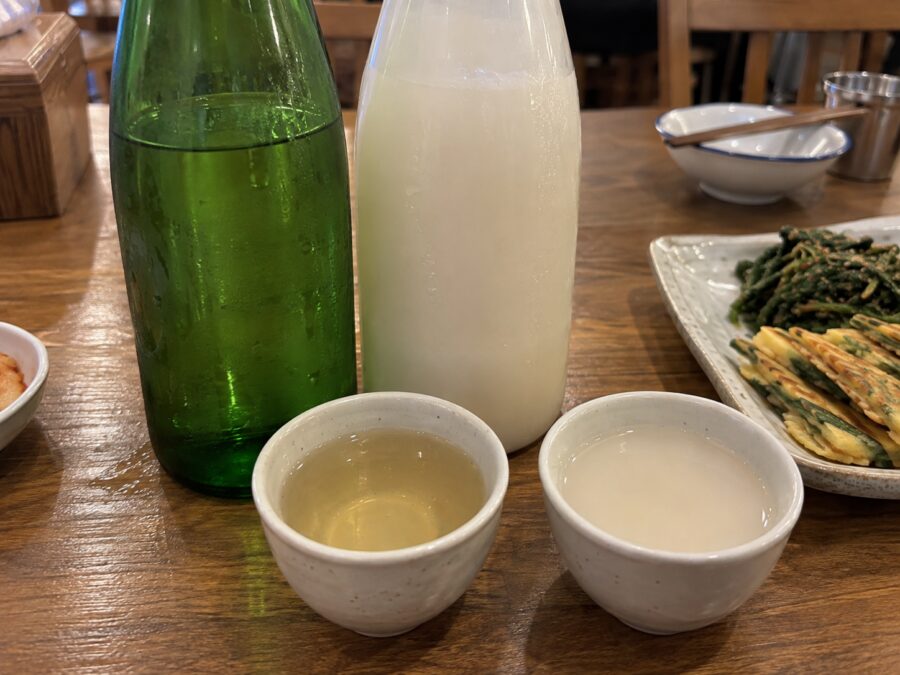

The Liquor Tax Act defines Cheongju and Yakju as follows.
medicinal liquoris starchy ingredients and soup(麴), It is a liquor made by filtering a mash fermented with water. However, sprouted grains are excluded from the ingredients.
rice wineIt is a type of alcohol produced by filtering a fermented mash made from rice, koji, and water.
Looking solely at the sentences, the only difference is the raw grain. Clear liquor brewed exclusively from rice fits both definitions.
Representative types of Cheongju and Yakju
If you apply this standard to actual products, the classification becomes clear at a glance.
Representative alcoholic beverages classified as Cheongju under the Liquor Tax Act are Cheongha and Baekhwasubok. Jeongjong, commonly consumed during holidays, also belongs to this category.
They are all brewed using koji. In terms of brewing method, they are similar to sake made in Korea.
Conversely, Hansan Sogokju, Baekseju, Gyeongju Gyodong Beopju, and Neurinmaeul Yakju are classified as yakju under the Liquor Tax Act. This is because they are brewed using nuruk.
Most of the clear liquors that come to mind when we call them traditional liquor are in this section.
Gyeongju Beopju is a bit complicated. Under the same name, it is classified differently depending on the product line.
Products bottled without additives use yeast and are similar to medicinal liquor, while One Cup and Cho Teukseon are produced as clear rice wine using koji.
국(麴), koji and yeast
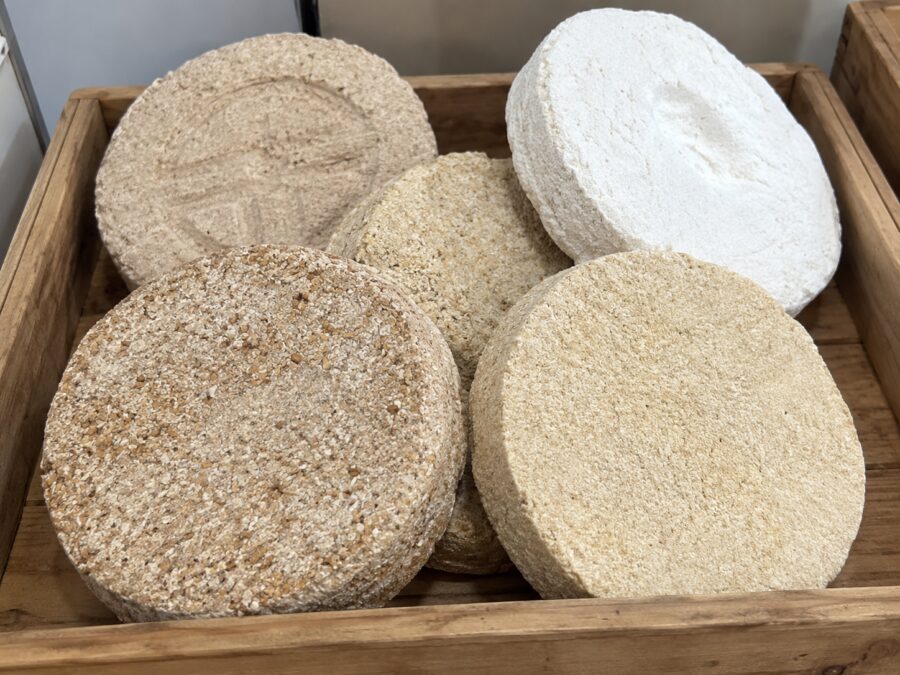
The country that appears in both definitions(Koji)"Guk" is a broader concept that does not refer solely to nuruk. According to the National Tax Service standards, "Guk" includes starter koji, nuruk, koji, crude enzyme preparations, and purified enzyme preparations.
Their common role is saccharification. It is the process of breaking down the starch in grains into sugar. It is only when yeast converts that sugar into alcohol that it becomes alcohol.
Nuruk is produced by exposing raw, uncooked grains to airborne mold, yeast, and other microorganisms to allow them to naturally multiply. It is also called Gokja.
On the other hand, koji is made by steaming grains to cook them and then artificially breeding fungi such as Aspergillus.
Judging by the difference in wording, it might seem that the difference between Cheongju and Yakju lies in the raw grains, but in reality, it is closer to the difference between using nuruk or koji for fermentation.
The decisive difference between Cheongju and Yakju
The standard is in the Enforcement Decree, not in the provisions of the Liquor Tax Act.
If less than 11 TP 3 T of koji is used based on the total weight of the rice, it becomes Cheongju. If it is 11 TP 3 T or more, it is Yakju.
Here, imports and enzyme preparations are not included in the calculation. Regardless of the amount spent, this limit does not apply.
This is where the problem arises. To brew alcohol normally, you must use about 101 TP3 T of yeast based on the weight of the rice. In the case of koji, you must use about 20 to 301 TP3 T of yeast based on the weight of the rice.
In the case of unrestricted entry, it can be classified as Cheongju under the Liquor Tax Act, but if clear liquor (Cheongju) is produced using the traditional Korean method of nuruk, it inevitably becomes Yakju.
Manufacturing licenses are also separate. If the same brewery wants to use both names, it must obtain separate licenses for each.
| item | medicinal liquor | rice wine |
|---|---|---|
| Raw grains | Starch-containing ingredients (excluding sprouted grains) | Among grains, rice (including glutinous rice) |
| Yeast usage amount | 1% or more of rice weight | Less than 1% of rice weight |
| Entry/Enzyme | No restrictions | No restrictions |
| Increase in alcohol content | Impossible | possible |
| Representative Products | Gyeongju Gyodong Beopju, Hansan Sogokju, etc. | Cheongha, Baekhwasubok, etc. |
The reason why Cheongju cannot be made using traditional methods under the current liquor tax law
Traditional nuruk made from wheat or mung beans uses approximately 101 TP3T of the weight of rice. Improved nuruk also requires just over 21 TP3T. Efficient saccharification does not occur with less than 11 TP3T.
Conversely, since koji has weak saccharification power, it is used up to 20 to 301 TP3 T by weight of rice. Although the usage amount is several times higher, there is no upper limit.
The term "Cheongju" has been used since before the Joseon Dynasty and is the name of our unique alcoholic beverage. However, the reality is that it is difficult to produce Cheongju that meets the requirements of the Liquor Tax Act using traditional methods.
The reason why the classification under the current Liquor Tax Act is problematic
The entry was not originally part of our brewing.
The method of steaming grains to cook them and then inoculating them with a single mold is a technique refined by Japan for mass production. It was introduced to the Korean Peninsula during the Japanese colonial period.
Joseon's Cheongju was not brewed in that way. Cheongju was a liquor made by fermenting it with yeast startered from raw grains and then filtering it to make it clear.
The alcohol currently referred to as Cheongju under the Liquor Tax Act is closer to Japanese sake.
The method of making Cheongju for hundreds of years now loses its status as Cheongju. All Cheongju of the Joseon Dynasty is classified as Yakju today.
To summarize, the method imported from Japan took its place in the category of Cheongju, while clear liquor brewed in our own way was pushed into a different category called Yakju.
In addition, it is permitted to increase the volume of Cheongju by adding alcohol.
Cheongju and yakju in the traditional sense
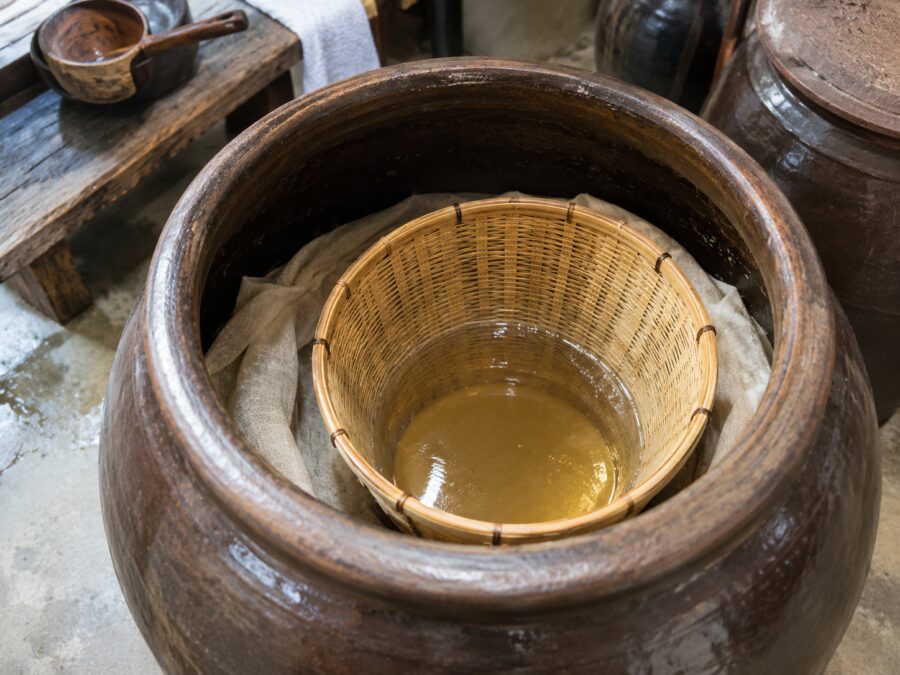
Now that we have confirmed the legal definition, let's look at its original usage.
Traditionally, Cheongju(clean wine)It was literally clear liquor. Takju(濁酒)Since it is a cloudy liquor, it is a natural counterpart placed on the opposite side.
After brewing Takju, if you insert a sieve to scoop out the clear liquid that has collected on top, or filter out the lees with a fine cloth, it becomes Cheongju.
The inclusion of the expression "offering clear wine" in the final phrase of the ancestral rite prayer is also in the same context.
There was also a method of distinguishing between pure grain cheongju, which did not contain ingredients other than grains, and medicinal cheongju, which had ingredients such as medicinal herbs or flowers added.
Three origins of the name Yakju
The first is the most intuitive explanation. It suggests that alcohol containing medicinal herbs or believed to have medicinal properties was called yakju.
The second theory is that it originated from a historical figure. The pen name of Seo Seong, a civil official during the reign of King Seonjo of Joseon, was Yakbong.(藥峰)It was, and the house was Yakhyeon(藥峴), It was located in present-day Jungnim-dong, Seoul.
Seo Yu-gu, in the Imwon Gyeongjeji, mentions Yaksanchun(藥山春)It was written that the name was given because Seo Seong enjoyed making it and his house was in Yakhyun.
The story goes that the house's liquor was called Yakbongju or Yakhyeonju, which was later shortened to Yakju. This theory was also published in the Dong-A Ilbo in 1937.
However, there is a counterargument. Medicinal liquor already appears in the records of the Annals of King Taejong in 1405. Since this predates Seoseong by more than 150 years, the chronology does not match.
The third theory is the honorifics theory. It is interpreted that the practice of drinking alcohol while calling it medicine, and the expression used to respectfully refer to the alcohol of superiors, became established.
The usage of two words as shown in the Annals
Dr. Lee Dae-hyung examined the usage of the two words in the original text of the Annals of the Joseon Dynasty. Yakju appears 52 times, and Cheongju appears 108 times.
What matters is the context, not the frequency. Medicinal liquor primarily appears in scenes where it is offered out of concern for the king's health, or as a gift.
Cheongju was frequently used in ceremonial situations such as gifts and ancestral rites.
Based on this record, it is interpreted that yakju was a term used to respectfully refer to alcohol offered to superiors.
This perspective differs from the common theory that the Japanese gave the name "yakju" to Korean liquor to disparage it.
To summarize, it is difficult to view the word "yakju" itself as having a derogatory meaning.
The problem is not the meaning of the words, but that the classification method of managing Japanese and Korean alcohol in separate compartments has become entrenched.
The limitations imposed by the name 'yakju'
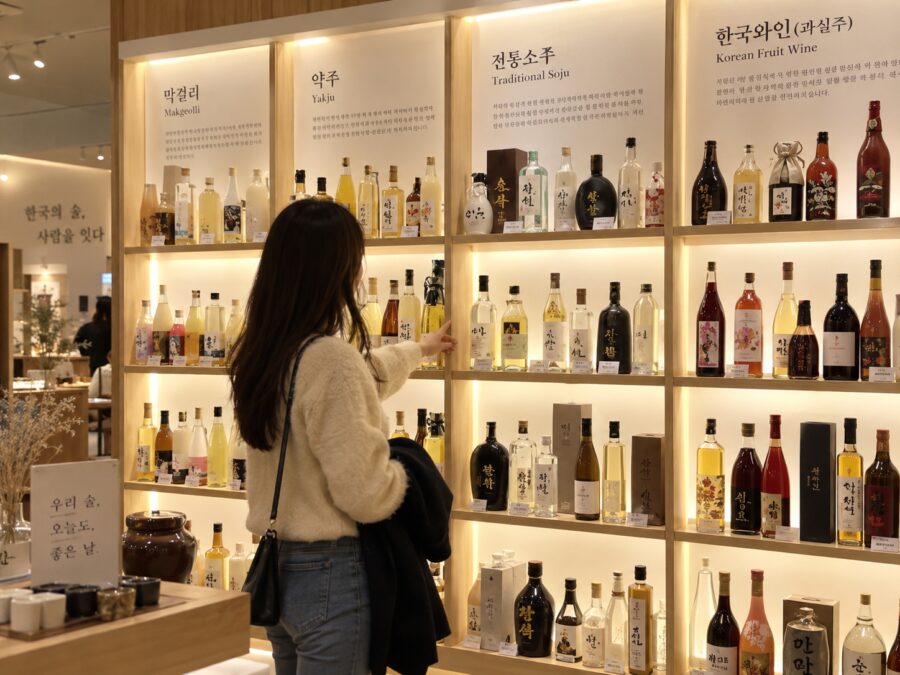
If the definition of law and the usage of tradition are at odds, the burden ultimately falls on the consumer.
Misunderstanding that it is alcohol containing medicinal herbs
People who see a bottle labeled "yakju" on a shelf usually associate it with medicinal herbs or infused liquors with health benefits.
The actual contents are clear liquor brewed from rice and yeast. Nowhere in the legal definition is there any mention of medicinal ingredients or efficacy.
What is even more ironic is that alcohol brewed with ginseng is often classified as a liqueur rather than a medicinal liquor.
Moreover, drinking alcohol for medicinal purposes is preposterous in modern times. This is because everyone knows that alcohol is strictly a beverage of choice and is entirely harmful to health.
Ultimately, due to the misunderstanding caused by the name, yakju fails to escape the image of being a homemade liquor that tastes bitter and like herbal medicine, which is favored by the elderly.
The barrier to appealing to young consumers is too high.
The partner for makgeolli has disappeared.
There is one point consistently raised in the industry: the counterpart to Takju should be Cheongju, not Yakju.
The pair of cloudy liquor and clear liquor is natural, but in the current classification, only the name of one axis is separated into a different category.
Overseas, it just becomes sake.
There are also issues in the export field. There is no suitable name to translate Korean clear rice wine.
The internationally recognized term "Cheongju" has already been taken over by "Sake," and a literal translation of "Yakju" results in "medicinal liquor.".
So, it is common for even Korean-style rice wine to be lumped together and called sake.
The fact that there is no name to describe the product's identity also means that a category cannot be created.
How should the classification of Cheongju and Yakju be improved?
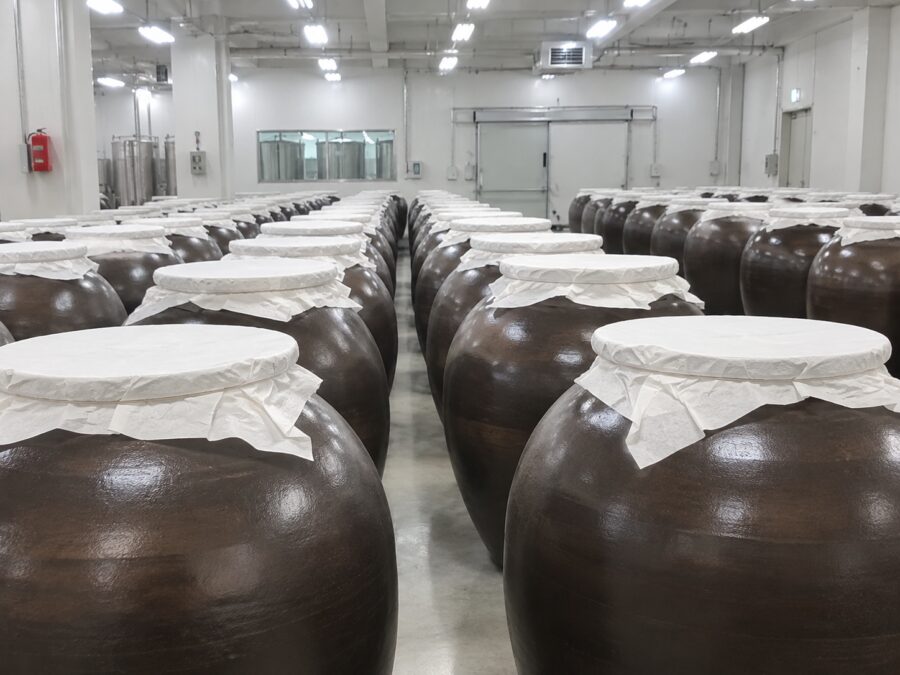
The point in time when the current classification was established is relatively clear.
The Liquor Tax Act was enacted in 1909 during the late Joseon Dynasty. It was Korea's first indirect tax and marked the beginning of state control over alcohol brewing.
The full-scale transition occurred in 1916. The Government-General of Korea enacted the Liquor Tax Ordinance in July of that year and issued it in September, reorganizing the liquor classification system.
At this time, Joseon's alcoholic beverages were grouped into Takju, Yakju, and traditional Soju, while Japanese alcohol became Cheongju. This is the point where the name Cheongju was transferred.
The Liquor Tax Act did not merely change the name. By requiring licenses even for home-brewed liquor, it put pressure on the culture itself.
The number of brewers, which stood at 90,000 in 1919, decreased to 4,000 in 1930. In 1934, the household manufacturing license system was abolished.
Even after liberation, this classification continued almost untouched. The current distinction between yakju and cheongju is its legacy.
Jeongjong (for the holiday ancestral rite table)Jeongjong)' is also on the same trajectory. Jeongjong is the name of a liquor made in Japan in 1840, Masamune (JeongjongIt is, and in 1883, a Japanese brewery in Busan first produced it in Joseon under that name.
In times when rice was scarce, Cheongju brewed from rice was perceived as a premium liquor, and that image became firmly established as a drink for ancestral rites.
Directions for improvement being discussed
The most frequently mentioned proposal is to group all clear alcoholic beverages into the category of Cheongju and then divide them into Korean Cheongju and Japanese Cheongju.
There is also a method of classifying it as a single type of Cheongju under the Liquor Tax Act, but distinguishing it only for administrative purposes. Soju is already operated in this way.
Just as there are separate categories for whiskey and brandy in the Liquor Tax Act, there have long been calls to create a new category for sake.
Of course, there is a realistic obstacle in the form of resistance from existing Cheongju manufacturers. It is also a task that requires overhauling the tax rates and licensing system as well.
However, what is clear is that the more a word is used, the more it becomes rigid, and the more rigid it becomes, the harder it is to reverse.
Because of a single name that has persisted for over a hundred years, even now, to explain our traditional liquor, we must first clarify the law.
Ultimately, what matters to those choosing alcohol is image and heritage. If it can prevent unnecessary misunderstandings, wouldn't it be better to correct the record, even if it means enduring some inconvenience?.


