
Buan, Jeonbuk, is a region that embraces the mountains, sea, and vast fields of the Byeonsan Peninsula. True to its nickname, the "Land of Mountains, Fields, and Sea," the history of this land and the lives of its people are fully infused into Buan's food.
Sweet early summer mulberryRetaining a deep fermented flavor Gomso Jeotgal, raised by the mudflats lily과 Manila clams, grown in Byeonsan Forest shiitake mushrooms, and a subtle scent Mulberry leaf teauntil.
In this article, let's explore Buan's representative specialties and local foods according to their season.
Recommended articles to read together
Places to Visit in Buan, Jeonbuk: A Comprehensive Guide to Hidden Gems on the Byeonsan Peninsula
[March 26] Jeonbuk Buan Walking Tour Plan
Jeonbuk Buan Walking Tour Itinerary: 1 Night, 2 Days [03.28.26 – 03.29.26]
Buan specialties

| food | Seasonal period | Signature taste | How to enjoy the recommendations |
|---|---|---|---|
| mulberry | Late May to mid-June | Sweet juice, slight acidity | Fresh fruit, mulberry jam, mulberry wine, mulberry syrup |
| Gomso Jeotgal | Year-round (Shrimp paste June–July, Anchovy paste spring–autumn) | Salty umami, deep fermented aroma | Salted seafood set meal, kimchi seasoning, side dishes |
| lily | March ~ May | Rich and deep ocean umami | Clam porridge, clam set meal, steamed clams |
| shiitake mushrooms | Autumn ~ Winter (Dried shiitake mushrooms year-round) | Deep umami, unique forest aroma | Stir-fry, hot pot, dried shiitake mushroom broth |
| Mulberry leaf tea | Harvest October–November, drinkable year-round | Subtle grassy scent, clean aftertaste | Steep in hot water for 2-3 minutes |
| Manila clams | February ~ April | refreshing and sweet broth | Clam Kalguksu, Mulberry Leaf Clam Porridge |
mulberry
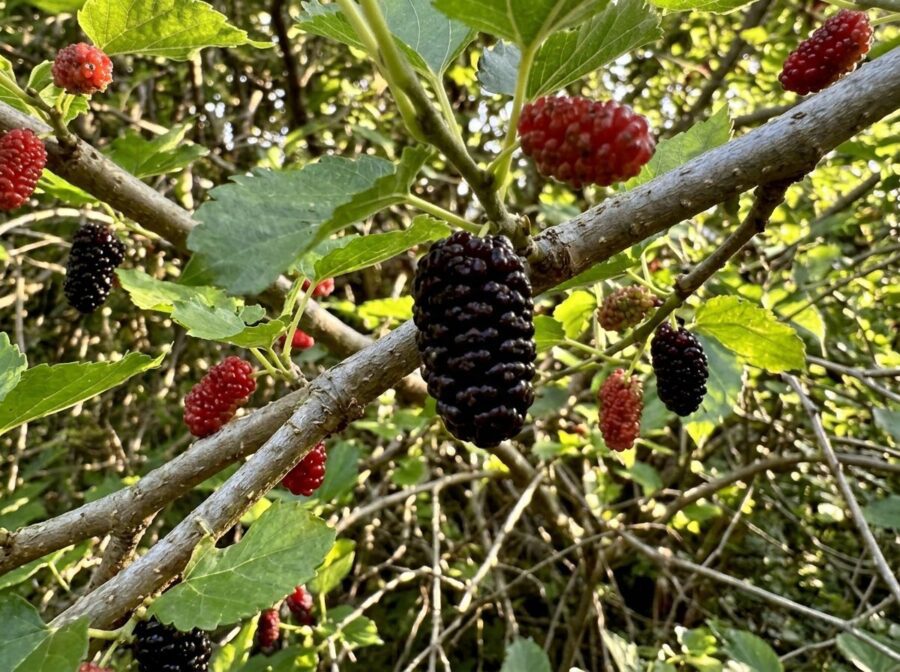
The bond between Buan and mulberry trees is deep and long-standing.
Joseon Dynasty geography book Revised Edition of the Geographical Survey of Korea과 DaedongjijiAlready in Buan-hyeon (扶安縣As evidenced by the fact that 'mulberry' is recorded as a local product of ), this region has been involved in sericulture since ancient times.養蠶It was a famous spot of ).
The terrain, adjacent to the sea yet surrounded by low mountains, maintained ideal temperature and humidity for mulberry trees to grow and provided optimal conditions for raising silkworms.
The mulberry tree has long been called the 'giving tree.' The leaves (桑葉It serves as food for silkworms, its root bark and branches are used as herbal medicine, and its fruit, the mulberry, is loved as a sweet snack and medicine.
During the Joseon Dynasty, the queen personally cut mulberry branches to feed the silkworms. Chinjamgye(親蠶禮Sericulture was a matter of national importance to the extent that it was carried out.
Yuyu Village in Mapo-ri, Byeonsan-myeon is the only place in the country that continues this tradition to this day.
The sericulture industry, which enjoyed its heyday with the number of sericulture farms reaching 5,236 in 1975, went into decline after the 1980s, and most mulberry fields across the country disappeared.
However, this region was different. Designated as a 'Silkworm Town Special Zone' in 2006, and in 2017, National Important Agricultural Heritage No. 8It was designated as such and preserved the tradition of sericulture.
Even until recently, in Yuyu Village, comforting the souls of silkworms JamryeongjeAfter raising the mulberry tree, a festival is held, and it is said that there are many farm households that give their main room to the silkworms and manage them by hanging thermometers on the wall.
The season for mulberries is Late May to mid-June, It lasts for only 2 to 3 weeks. Because the flesh is soft, long-term storage is difficult, Buan Mulberry WineIt has been made into various processed products such as fruit wine, mulberry jam, mulberry juice, and mulberry makgeolli.
Mulberry wine, brewed exclusively from mulberries harvested in June, is known as 'wine drunk by immortals'. Heartbreak(桑椹酒It is also called ).
Gomso Jeotgal — Salted seafood crafted with salt from the Gomso Salt Fields
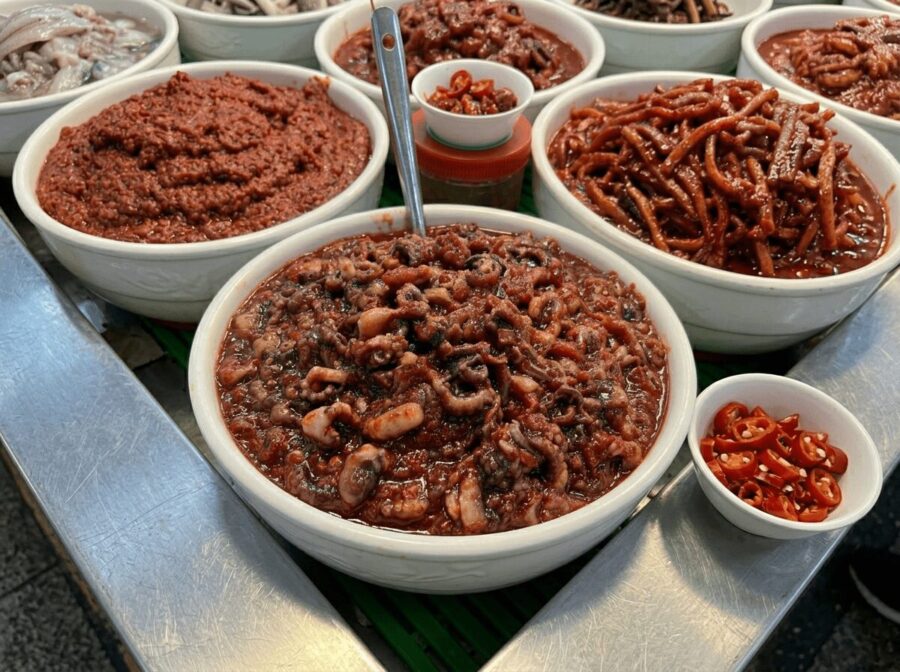
Although Gomso Port in Jinseo-myeon is small in size, it is the third largest fishing port in Jeonbuk and has served as a forward base for West Coast fisheries.
The history of salted seafood here is Goryeo DynastyIt is estimated to date back to [date], and it was a place famous for yellow croaker fishing and processed product production centered around the Chilsan fishing grounds.
The number one contributor to the reputation of Gomso Jeotgal is Solar salt from Gomso Salt FieldSalted seafood made with aged salt that has been stored for over a year and has had its brine sufficiently removed boasts a clean yet deep umami flavor without any off-flavors.
Modern production began in the 1960s when fishermen turned fresh fish by-products into salted seafood, and in the 1990s, companies gathered to form the current Gomso Salted Seafood Complex.
The salted seafood products currently produced in Gomso include anchovy fish sauce, shrimp paste, clam paste, yellowtail paste, and cutlassfish gut paste. About 20 typesIt reaches 1992. Byeonsan Peninsula Since the coastal scenic road opened, it has become a popular attraction with a constant stream of tourists.
lily

The vast mudflats around Gyehwado Island in Buan are clams (白蛤It is considered the optimal habitat for ) True to its nickname 'Queen of Shells,' it is larger and plumper than ordinary shellfish, and has a significantly deeper flavor.
Seasonal March to MayAs the weather gets warmer, lilies that have been hiding in the sand come out, and the residents dig up the ground with a 'lily rake' to catch them.
The lily was a symbol in Buan. Due to its characteristic of being difficult to open once it closes, Purity and a long and happy marriageIt is said that this shell was considered a symbol of the region and was an indispensable food at local weddings.
During the Joseon Dynasty, it was treated with such high regard that it was offered as a tribute to the king, and it was also a nourishing ingredient consumed by fishermen to soothe their weary bodies.
shiitake mushrooms
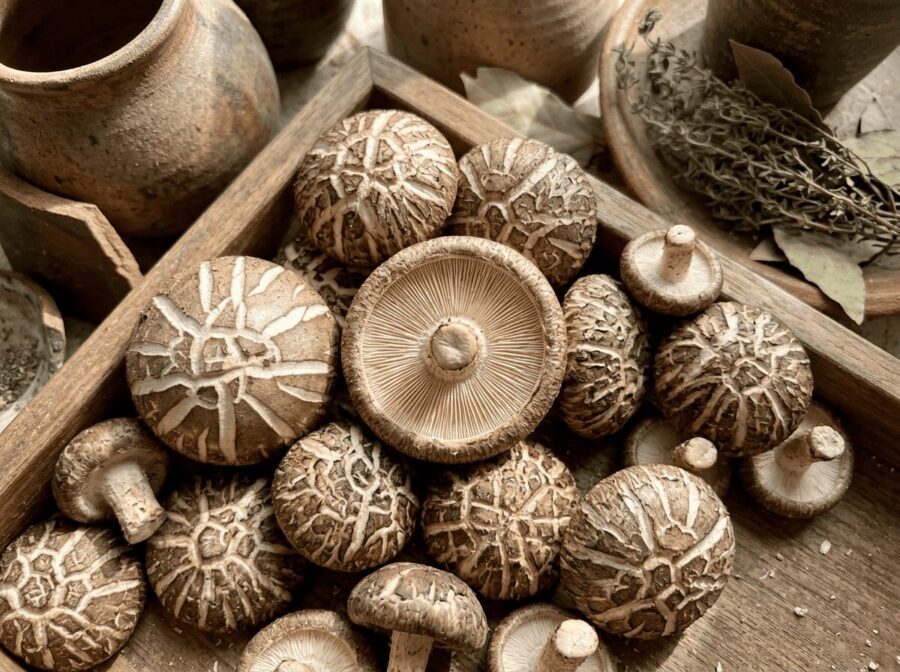
The dense forests of the Byeonsan Peninsula provide an ideal environment for shiitake mushrooms to grow. As you walk along the forest path leading to Naesosa Temple and Gaeamsa Temple, you can see shiitake mushrooms growing densely attached to oak logs.
Autumn to WinterThe mushrooms harvested in [year] have thick caps and a strong aroma, and 100g of fresh shiitake mushrooms is a low-calorie ingredient containing only about 30kcal.
The greatest appeal of shiitake mushrooms is their umami flavor. Adding water in which dried shiitake mushrooms have been soaked to kelp broth dramatically deepens the umami flavor, because different umami components create synergy when they meet.
Local farmers carefully dried shiitake mushrooms before their caps fully opened. Dried shiitake mushroomsValues it more highly.
Shiitake mushrooms grown in the clean air and abundant humidity of Byeonsan are praised for their distinct cap patterns and thick flesh when soaked, resulting in a pleasant texture.
Mulberry leaf tea and clams
Mulberry leaf tea(桑葉茶While mulberries are the fruit of the mulberry tree, leaves are another specialty product made from them. If you finely chop and dry the leaves harvested after the first frost in October or November, and then steep them in hot water for 2 to 3 minutes, you can make a cup of tea with a subtle grassy aroma and a clean aftertaste.
It is caffeine-free, so it is not burdensome even in the evening, and Yuyu Village is expanding its uses by developing mulberry leaf rice, mulberry leaf tofu, and even mulberry leaf ice cream.
Manila clamsIt is another gem of the Buan tidal flats. It is said to have been named because when you hoe the tidal flats, the clam shells collide with each other, making a 'bajirak bajirak' sound.
Jeong Yak-jeon's The Book of Fishto '‘淺蛤‘It is an ingredient that has been loved for a long time, appearing under the name 'Cheonhap' and recorded as having "plenty of flesh and good taste.".
Seasonal February to AprilAlso, caution is needed regarding shellfish toxins during the spawning season in July and August.
Buan regional food
Lily porridge
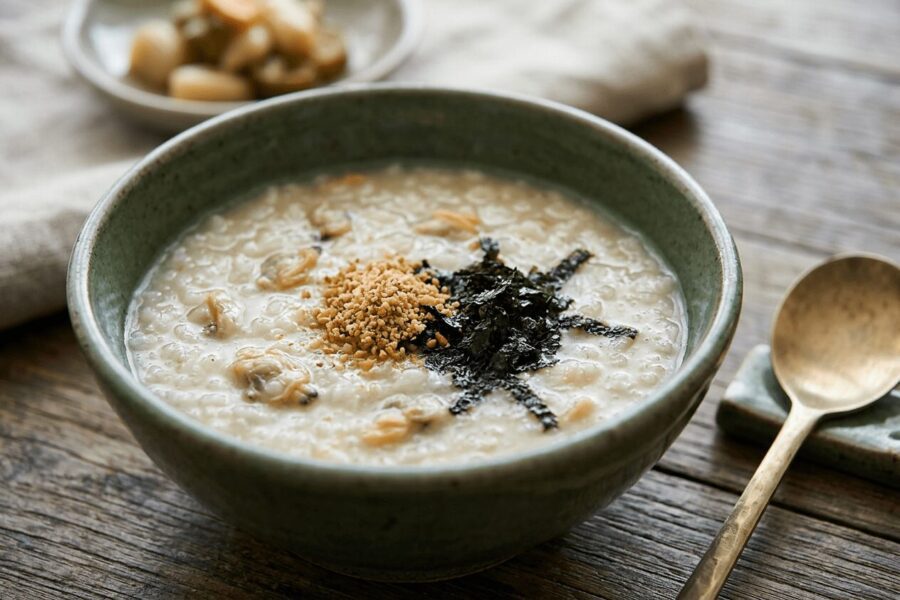 If you had to choose just one local dish that represents Buan, most locals would Lily porridgeYou will think of...
This precious porridge, made possible by the Buan tidal flats and rarely seen in other regions, is so renowned that gourmets travel from afar to visit it in person.
The history of clam porridge has been intertwined with the lives of the people of Buan. During the Joseon Dynasty, it was a precious dish served at royal banquets, and in this region, it was an essential item on the wedding feast table.
As explained earlier, serving guests porridge made from lilies, which symbolize a long and happy marriage, was essentially a wedding custom unique to Buan.
The originator of modern lily porridge is the one opened in 1980 by CEO Lee Hwa-sook, who was born and raised on Gyehwado. Gyehwa Hallam.
It started when the clam porridge, which he had eaten since childhood, was put on the restaurant's signature menu, and Buan County designated this restaurant as the first local food restaurant.
The cooking method of this place, which was also selected as a 'Centennial Store' by the Ministry of SMEs and Startups, is surprisingly simple. Rice soaked in water is stir-fried, and when it is half-cooked, clam meat that has been boiled separately and chopped is added and boiled.
Season with only salt and drizzle with sesame oil at the end to complete a nutty and smooth clam porridge.
It is said that Gyehwa Hall does not add any vegetables such as carrots or onions at all. This is because the aroma of vegetables can mask the natural flavor of the clams. Instead, the produce abundant in this region Mulberry leaf powderAdd to remove the fishy smell.
It is the mulberry tree of Buan and the lily of Buan meeting in one bowl.
Gomso Jeotgal Baekban — A table of the sea served with twenty side dishes
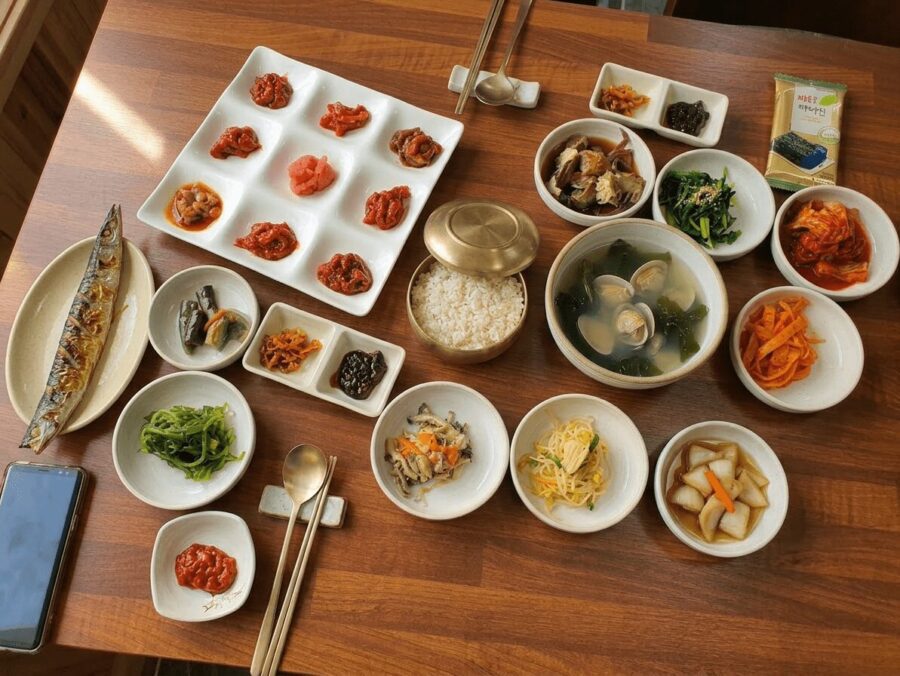 Near Gomso Port General Seafood Market, for tourists who came to buy salted seafood Salted Seafood Set Meal Specialty RestaurantThey are located.
It is said that it started when people who came to buy salted seafood after the opening of the coastal tourist road in 1992 said, “It would be nice if we could eat rice here too.”.
Jeotgal Baekban is, quite literally, a set meal featuring side dishes made with Gomsom jeotgal. More than ten different types of jeotgal side dishes are served, including shrimp jeot, anchovy jeot, cutlassfish innards jeot, and clam jeot, and in addition Braised hairtail(Braised young cutlassfish) or grilled fish is added.
The salted seafood side dishes served in a table full are salty yet deeply savory, enough to finish a bowl of rice in no time. The charm of Gomso Jeotgal Baekban is that even though they share the same 'saltiness,' each side dish has a distinct texture.
The sweet and salty taste of shrimp paste, the rich and heavy taste of cutlassfish innards paste, and the umami of vegetables seasoned with anchovy fish sauce each display their distinct character on the table.
Mulberry leaf clam porridge
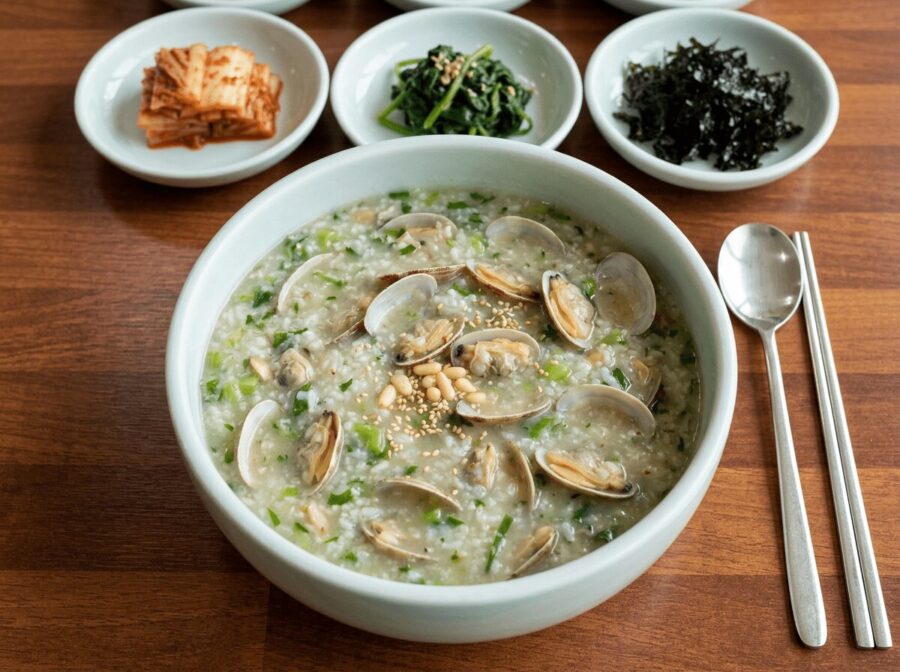 There is a dish where two of Buan's representative specialties meet in one bowl. It is... Mulberry leaf clam porridgeIt is made by adding mulberry leaf powder when boiling.
When the savory yet slightly bitter aroma of mulberry leaves blends with the refreshing umami of clams, it adds a depth that cannot be found in regular clam porridge.
If porridge made with only clams is the 'taste of the sea,' then this porridge with added mulberry leaves can be called the 'taste of Buan.'.
At this restaurant, you can enjoy not only porridge but also seasoned raw clams, Korean wheat clam pancakes, and raw clam bibimbap.


