
Hadong is located in the westernmost part of Gyeongsangnam-do, where Nam-myeon of Mt. Jirisan meets the Seomjin River. To the north, the ridges of Mt. Jirisan, with an average elevation of over 1,200 meters, stand like a folding screen, while to the south, the Seomjin River flows windingly, meeting the South Sea.
Thanks to a topography where mountains, rivers, and the sea coexist within a single region, the ingredients here are more diverse than in any other area. Situated at the border between Gyeongsang and Jeolla provinces, Hadong is also unique in that it embraces the essence of both regions' food cultures.
index
Hadong specialties
Hadong Wild Green Tea ★ (Geographical Indication No. 2)
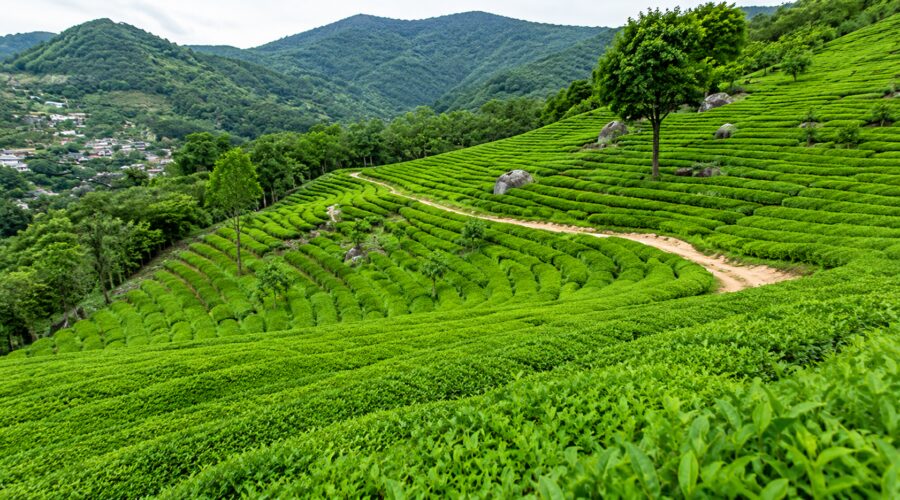
It was the year 828 AD, the third year of King Heungdeok of Silla. Daeryeom, who had gone to the Tang Dynasty as an envoy...(大廉)When he returned carrying the tea tree seeds, the King ordered them to be planted on the southern slopes of Mt. Jiri. A single line briefly recorded in the *Samguk Sagi* became the historical beginning of Korea's tea culture.
The place where the seed took root is the valley near Ssanggyesa Temple in Unsu-ri, Hwagae-myeon. Seon Master Jingam(眞鑑禪師)As tea trees were widely spread around the temple, the Hwagae Stream area transformed into a tea field.
Seon Master Cho-ui of Joseon(草衣Zen master)is 『Dongdasong(東茶頌)It was written in 』, “In Hwagae-dong, Jirisan, tea trees grow spread out for 40 to 50 ri, and there is no tea field wider than this in Korea.”.
The biggest difference between Hadong tea and green tea from other regions is WildnessWhile the tea fields of Boseong are traditional tea plantations established during the Japanese colonial period, the tea trees of Hadong are wild tea that have grown naturally in the crevices of rocks and valleys of Mt. Jirisan since the Silla Dynasty.
Since it was raised by the mountain rather than by humans, the trees grow only up to the waist, and sunlight filters through the furrows, creating deep shadows.
How to Read Green Tea Grades
Gogu(穀雨) before, april The first sprout picked around the 20th Ujeon(Before the rain)It is of the highest quality.
Ip-ha(立夏) New shoots before and after Sejak(細雀), Mid-May leads to medium-sized work, and late May leads to large-sized work.
Depending on the region, it is also called first water car, second water car, or third water car.
The season is from late April to May. Hadong tea has been known as the "King's Green Tea" since the Three Kingdoms period, having been presented to the king as tribute. The *Geographical Records of the Annals of King Sejong* also records that the land of this region is fertile and the climate is warm.
The average annual temperature of 14 to 16 degrees at the foot of Mt. Jirisan, the average annual rainfall of 1,800 mm, the large diurnal temperature range during the tea production season, and the well-drained soil based on sandy loam — these four conditions complete Hadong green tea.
The tea industry in this region is deeply rooted, with green tea cultivation covering 231 TP3 T of the national area. It is registered as the second Geographical Indication and was designated as a National Important Agricultural Heritage in 2013.
Near the entrance of Ssanggyesa Temple in Hwagae-myeon, a Wild Tea Culture Center and a walking trail to the birthplace of tea have been established, allowing visitors to experience the 1,200-year history of tea firsthand while walking.
Akyang Daebong Persimmon ★ (Registration under the Geographical Indication System)
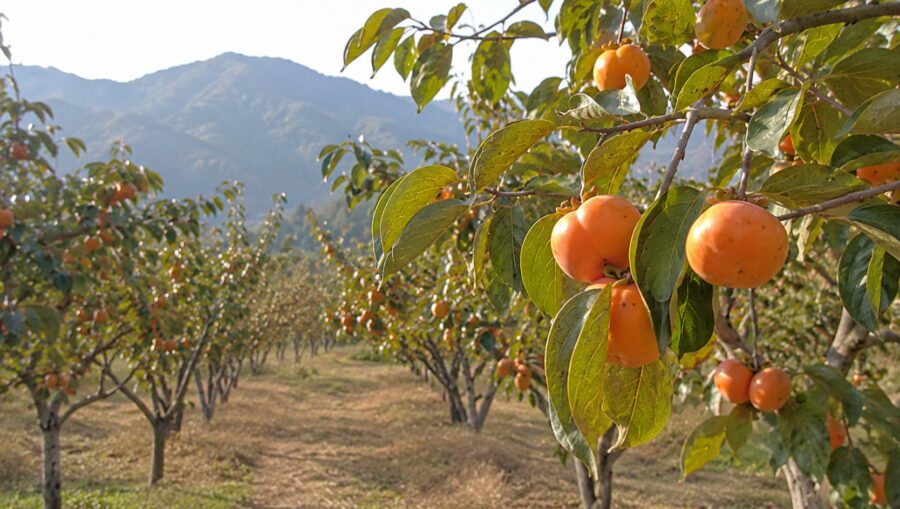
Pyeongsa-ri in Akyang-myeon is the site of the epic novel by Park Kyung-ri.landThis is the very field where he slapped his knee upon discovering “a field large enough to produce a couple of millionaires” while traveling all over Gyeongsang Province to write *The Book of Millionaires*.
Daebong persimmons grow in this fertile basin of Pyeongsa-ri, a field of about 2.74 million square meters, surrounded on three sides by the ridges of Hyungjebong and Gujaebong peaks of Mt. Jirisan and with the Seomjin River flowing to the right.
What makes Akyang's Daebong persimmons special is soilThis land, formed by sediment flowing down from the Jirisan mountain range and accumulating along the Seomjin River and Akyang Stream, is a well-drained sandy loam mixed with stones, making it suitable for persimmon trees to take deep roots.
Due to abundant sunlight and a large temperature difference between day and night, sugar accumulates densely close to the skin. Daebong persimmons have long been known as a "tribute to the King.".
Records indicate that it was served on the royal table during the Joseon Dynasty, and the Daebong Persimmon Festival is held annually in Akyang-myeon from late October to early November, featuring a direct-to-consumer market for farmers. It is firm and sweet, and is more commonly enjoyed as soft persimmons (hongsi) or dried persimmons (gotgam) rather than as fresh fruit.
How to choose Daebong persimmons
A fresh fruit has a stem that is firmly attached and a glossy skin.
Daebong persimmons, ripened into soft flesh, are best eaten with a spoon when the skin turns a deep red.
The peak season is from late October to November, and dried persimmons develop their flavor from December to the following January.
Akyang-myeon was certified as Korea's fifth Slow City in 2009. The sight of native residents farming Daebong persimmons and those who have moved to the countryside setting up a direct sales market together vividly illustrates the daily life of this region.
Visiting the Choi Champan House and the Pyeongsa-ri Literature Museum, followed by buying Daebong persimmons at a direct sales market near the fields, has established itself as the standard itinerary for a trip to Akyang.
Hadong plums
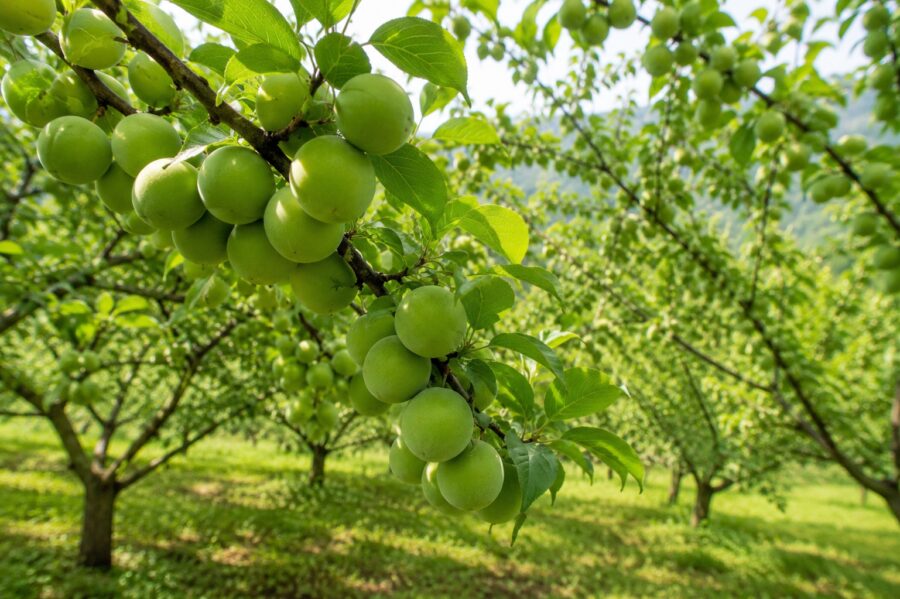
After the cherry blossoms of the Seomjin River fall, green fruit begins to form on the plum trees in Hadong.
The pristine climate created by Mt. Jirisan and the Seomjin River, the temperature difference between day and night, and well-drained soil—where these three conditions align, this region has long been called the "home of plums.".
Hadong plums green plumsIt is highly renowned. Although the fruit is small, it has an exceptionally strong aroma and firm flesh, so it has long been cherished among enthusiasts. The tradition of treating plums as a representative summer emergency medicine in folk medical texts during the Joseon Dynasty became the root of today's Hadong plum processing industry.
Early to mid-June is the peak of the green plum harvest. During this time, farms in Hadong become busy. The harvested plums are processed into various products such as plum syrup, plum extract, plum vinegar, pickled plums, and plum gochujang, and fermented plum extract, naturally aged for over three years, is considered the region's representative specialty product.
Making Plum Syrup — Seasonal Timing
Firm green plums from early June are suitable for making plum syrup.
You should choose one with no blemishes on the skin and a clean stem attached to reduce the bitterness.
Red plums (yellow plums) appear from late June to early July, and have a stronger aroma for extract.
Plum farms in Hadong are concentrated in the Hwagae-myeon and Akyang-myeon areas. Since many farmers who cultivate Daebong persimmons also grow plum trees, the fields of Akyang are filled with the scent of plum blossoms in spring and plums in summer.
Seomjin River freshwater clams

People in Hadong call the jaecheop 'gangjogae,' which means 'clam from the river.' The name perfectly captures the relationship between the Seomjin River and the jaecheop. Jaecheop thrive in brackish waters where the river meets the sea.
The Hadong section of the Seomjin River is shallow, with a depth of around 1 meter, and has clear water, providing optimal conditions for the habitat of freshwater clams. Even today, harvesting is still done by people directly entering the riverbed and scraping them out with hooks.
There is also a story that the name 'jaecheop' originated from the sound made when workers hoeed the ground as the clams collided with each other. The season when jaecheop harvesting takes place in earnest is From spring to autumnIt lasts until then. Clams caught in early spring begin to plump up, and become most abundant as summer passes.
It is the same species as Japanese shijimi, so it is an ingredient familiar to Japanese travelers, but in Hadong, the traditional way is to cook it in a clear broth without soybean paste.
The crisis of Seomjin River freshwater clams
Due to environmental changes and water pollution, the harvest of freshwater clams in the Seomjin River has recently been on a downward trend.
A restoration project is underway to transplant some of the harvested freshwater clams to less polluted upstream areas, so if you wish to taste them at the source, now is an even more precious opportunity.
While freshwater clams are most famous for their clear broth, they are also enjoyed as seasoned raw clams, clam pancakes, and clam rice bowls. Restaurants specializing in freshwater clams are concentrated along Seomjingang-daero in Hadong-eup, and it is a daily routine in this region to see locals visiting from early morning for a hangover cure.
Seomjin River Cherry Blossom Cave

There are two theories regarding the origin of the name 'Beotgul'.
The story that it was named because it tastes best around the time cherry blossoms bloom, and the story that it was named because it looks like white cherry blossoms blooming as it clings to rocks on the riverbed—both theories capture the seasonality and rarity of this oyster.
The cherry blossom oyster is a rare species that inhabits only brackish water where freshwater and seawater meet.
It can be found only in Korea and Japan worldwide, and domestically, the main production areas are the vicinity of Sinwol Port in Gojeon-myeon, Hadong-gun, on the Seomjin River, and the vicinity of Mangdeok Port in Gwangyang, South Jeolla Province.
Since farming is impossible, professional divers still go into river waters 10 to 15 meters deep to harvest cherry blossom oysters attached to rocks by hand.
The size is incomparable to ordinary sea oysters.
Small ones are 20 to 30 cm, while large ones easily exceed an adult's palm and can reach 40 cm.
The peak season is from February, when the flesh fills out, until the end of April, just before the spawning season. The taste of cherry blossom oysters during this period, filled with milky white flesh like rice water, is incomparable to that of other seasons.
It is an introductory oyster that is less salty and fishy than sea oysters, allowing even those unfamiliar with oysters to enjoy it without hesitation. While grilling is the most common way to eat it, it can also be eaten raw or prepared as a sashimi salad, porridge, or pancake.
Since it is a seasonal food that can only be enjoyed for exactly three months a year, leaving out cherry blossom oysters from a spring trip to Hadong is like having only half a trip.
Seomjin River sweetfish

The name 'Eun-eo' comes from its scales that sparkle with a silvery light. Eun-eo is famous for a characteristic even more unique than its scales: freshly caught Eun-eo smells like watermelon.
The aromatic compounds that accumulate as this freshwater fish, which lives only in pristine Class 1 water, feeds on moss on the stones on the riverbed are contained in its flesh and released in the mouth.
The Hadong area, where the Seomjin River and Hwagae Stream meet, is considered a prime habitat for sweetfish. This is because the water quality is clean and moss grows abundantly on the riverbed.
Records from the Joseon Dynasty also mention that Seomjin River sweetfish were presented as tribute to the royal court, and today, along with green tea and freshwater clams, they are known as the "Three Treasures of Hadong."(三寶)‘It is often cited as '.
The peak season for wild sweetfish is from late spring to summer, approximately May to AugustThe best time to eat it is from June to July, and during this period, restaurants around Hwagae Market that serve raw sweetfish and grilled sweetfish are bustling with customers.
Nowadays, since aquaculture has become possible, you can enjoy it all year round, but there are also places that distinguish and sell wild sweetfish locally, so the charm of traveling to the production area remains.
Seomjin River freshwater crab
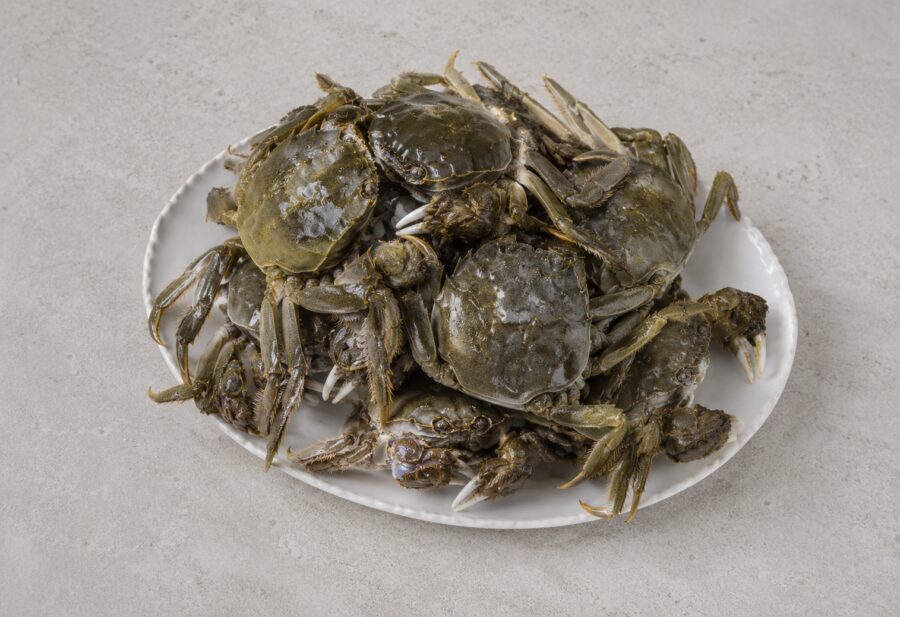
Dongguk Yeoji Seungnam(To the Eastern region)It introduced the Chinese mitten crab as a local product found throughout the country, excluding Gangwon-do. However, nowadays, it is extremely rare to find places where one can see Chinese mitten crabs, which inhabit only pristine, Class 1 rivers. The Seomjin River is one of the few rivers where these precious crabs still thrive.
The reason Hadong freshwater crabs are special lies in their habitat. Crabs raised in the estuary of the Seomjin River, where freshwater and seawater meet, lack the fishy smell of ordinary freshwater crabs; instead, the [smell] accumulated while moving between the river and the sea A deep and rich fragranceThis is a characteristic.
The reputation that Seomjin River freshwater crabs even graced the King's royal table during the Joseon Dynasty was not without reason. The crabs head to the sea to spawn. octoberThis is the plumpest and tastiest. In Hadong, the principle is to use only wild-caught fish without any farming, and currently, professional harvesting using equipment is being carried out.
Freshwater crab stew and marinated freshwater crab have established themselves as representative local dishes of Hadong, and during the season, restaurants along the Seomjin River are bustling with customers seeking freshwater crabs.
Hadong regional food
The dining table of Hadong is equally prepared by Mt. Jirisan and the Seomjin River. Bamboo, maple sap, and medicinal water from Mt. Jirisan flow down from the mountain, while freshwater clams, mud crabs, sweetfish, and cherry blossom oysters come up from the river. With the addition of a 1,200-year-old tea culture, Hadong has come to possess unique local dishes that cannot be imitated anywhere else.
clam soup

People in Hadong call clam soup 'Gangjogae.' This means soup made with 'Gangjogae,' that is, clams from the river. The more rustic the name, the older the dish is said to be. The cooking method is simple. Freshly harvested clams from the Seomjin River are placed in a pot, water is poured in, and they are boiled thoroughly.
Once the clams open, the shells are removed, and chives are added to the clear broth. It is the principle of Hadong clam soup not to add soybean paste or red chili powder. The broth is a light silver color. With the first sip, a subtle and refreshing clam aroma rises first, rather than the smell of river water.
The amino acids and sweet components released from the clams dissolve into the broth, creating a deep umami flavor without the need for much additional seasoning. Although the unique taste of the clam broth may seem unfamiliar at first glance, it possesses a distinct flavor that cannot be replaced by other clam soups. This is why it is renowned as a hangover cure.
Jaecheop-guk has expanded into Hadong’s representative meal known as the ‘Jaecheop Han Sang’ by being adapted into dishes such as raw clam salad, clam pancakes, and raw clam rice bowls. Specialty restaurants are concentrated along Seomjingang-daero in Hadong-eup and Seomjingang-daero in Hwagae-myeon, and one can see locals lining up from early morning to cure their hangovers.
freshwater crab stew
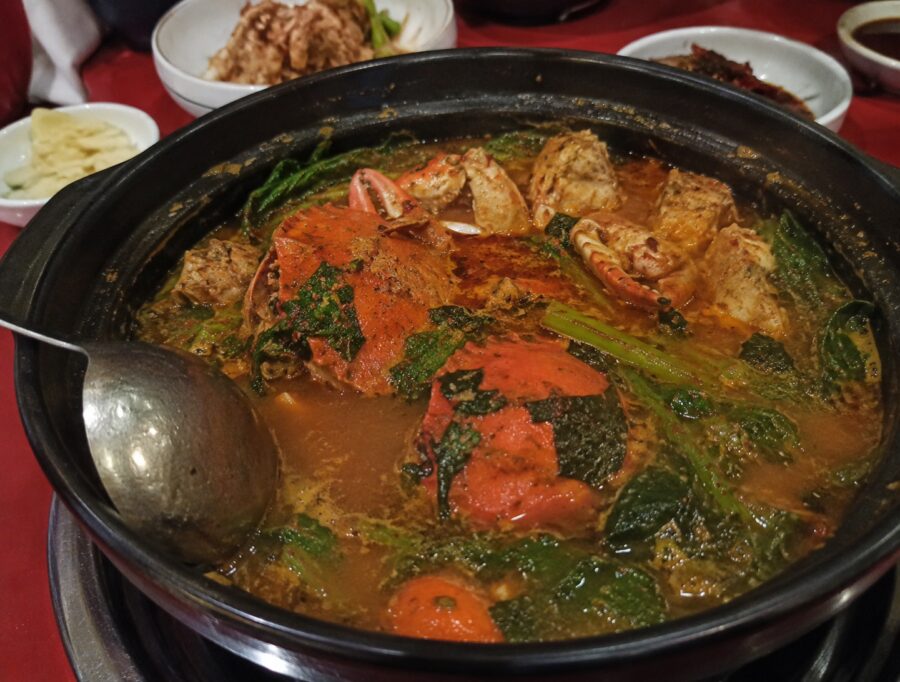
If Seomjin River freshwater crabs were served on the King's royal table during the Joseon Dynasty, the preparation method would likely not have been much different from today's freshwater crab stew. Since the ingredients in freshwater crab stew already possess a fully developed flavor, the simpler the cooking method, the more the original aroma comes alive.
The basic method involves placing freshwater crabs in a pot, adding taro stems, radish, and water parsley, and then boiling it with dissolved soybean paste. There is also a style called 'Chamgegarijangguk,' which thickens the broth by adding perilla seed powder. In this method, the rich aroma of the freshwater crabs is combined with the nutty flavor of the perilla seeds, making the broth even richer.
The unique taste of the mud crab is Scent rather than fishy smellUnlike pure freshwater crabs, Seomjin River crabs have less of a fishy smell, and a rich aroma of the river and sea is infused in their flesh.
The peak season is before spawning. octoberIt is the best, and is also enjoyed as marinated crab and steamed crab. However, since freshwater crabs can be an intermediate host for Paragonimus westermani, they must be thoroughly cooked before eating.
bamboo rice

Everyone knows that there is an abundance of bamboo at the foot of Mt. Jirisan. However, the people of Hadong also use that bamboo as a vessel. Daetongbap, or bamboo tube rice, is made by cutting bamboo into segments, filling it with rice and mixed grains, covering it with a lid, and steaming it.
Bamboo has fine pores, allowing its unique aroma to permeate the grains while steaming. When the lid is opened, moist, perfectly cooked rice is revealed along with a delicate grassy scent; even those smelling it for the first time often describe it as a scent that feels somehow like home.
Another advantage is that the heated bamboo tube itself acts as a heat retention system, allowing you to enjoy the dish warm until the very last bite. Daerongbap is a popular dish served at temples and wild vegetable restaurants near Mt. Jirisan.
It is often served with wild vegetable set meals or temple food.
Grilled sweetfish · Fried sweetfish
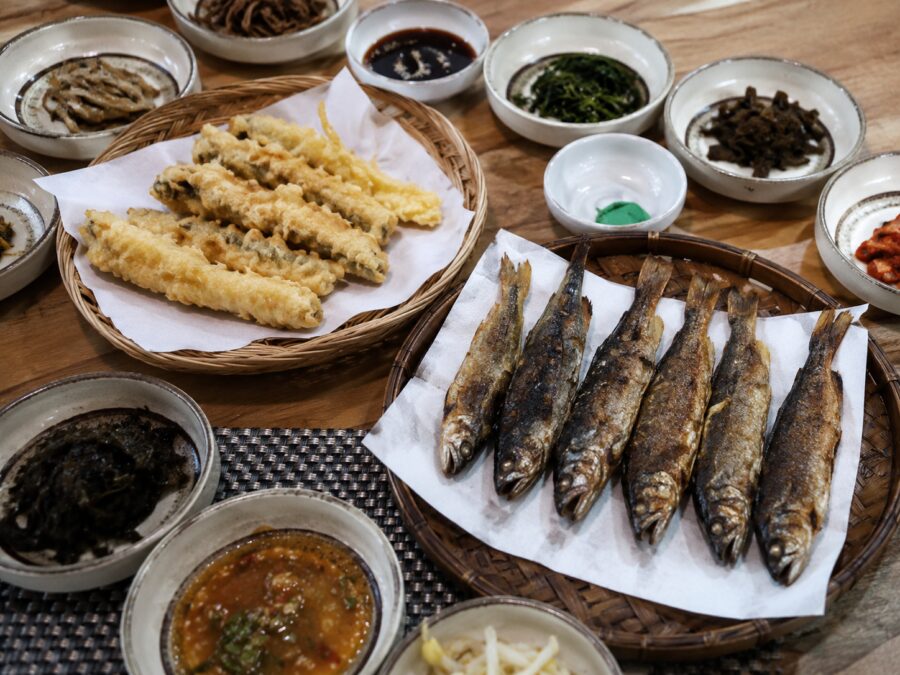
The first scent to tickle the nose at Hwagae Market is the smell of salted sweetfish cooking over a fire. The aroma of grilled sweetfish cooked at the entrance of the market alleys is like a symbol of Hwagae Market, so for anyone who remembers this scent, it automatically follows whenever they think of Hwagae.
Originally, raw sweetfish was a snack for drinkers. It was a delicacy enjoyed at riverside taverns during the summer, prepared by thinly slicing wild sweetfish caught in the Seomjin River in Hwagae.
As Hwagae Market emerges as a tourist destination, so that more people can enjoy it Fried sweetfishThis has appeared. The crispy fried sweetfish, with the bones intact, can be eaten whole from head to tail, so even travelers unfamiliar with fish dishes can enjoy it without hesitation.
The watermelon-like scent of the sweetfish does not disappear even when heated. Whether grilled or fried, a subtle, refreshing aroma lingers in the mouth.(pure scent)This remaining characteristic is the decisive feature that distinguishes the sweetfish from other freshwater fish.
How to enjoy
Takeout sales are also active at Hwagae Market. Walking with fried sweetfish wrapped in paper is the most simple pleasure of traveling to Hwagae Market.
At the restaurant Sweetfish stone pot riceYou can also enjoy it for around 30,000 won for two people, and Hyeseong Restaurant is famous for this menu.
Baedagu — Hadong’s semi-dried fish that originated on a boat

Baedagu is a local specialty unique to this region, made by cleaning fish caught in the waters off Hadong right on the boat.
It is presumed that the name was derived from the process of cutting open fresh fish, such as grouper or croaker, on the boat immediately after catching them from the net, scraping out the entrails, and then salting them in seawater to semi-dry them.
The salinity of the seawater creates a natural seasoning, and the flesh tightens and becomes chewy as moisture is removed during the semi-drying process; grilling is the most common way to eat it. When placed over a fire, the semi-dried skin cooks to a crispy texture while the flesh inside remains moist and elastic.
Although this method has been consumed for a long time by fishermen traveling between the waters off Hadong and the South Sea, it is now a precious local specialty that can be found at local fish markets and specialty direct sales outlets in Hadong.
If freshwater clams and freshwater crabs represent the Seomjin River and are the face of Hadong, then Baedagu is a dish embodying the wisdom of Hadong fishermen who have lived along the South Sea. Although it is not yet widely known to tourists, it is a unique local flavor that anyone traveling to Hadong should definitely seek out at least once.
Grilled Jirisan Black Pork
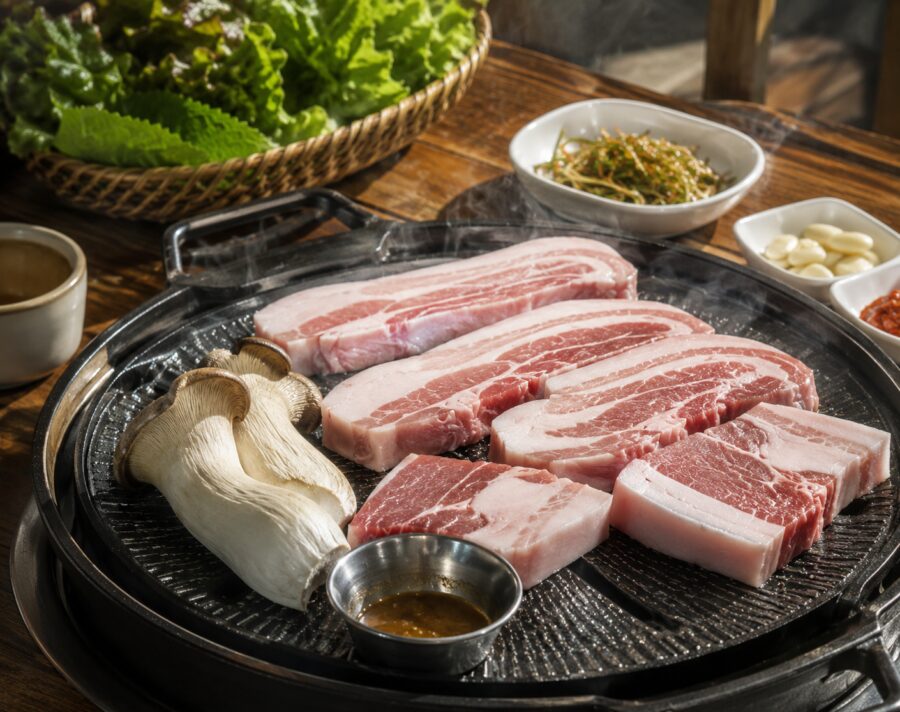
There is a sign that is never missing at any entrance to Jirisan National Park. It is a specialty black pork restaurant.
Although it has been a long time since black pigs began to be raised in the foothills of Mt. Jirisan, the Jirisan black pigs eaten in Hadong today are mainly of the Berkshire lineage, which is an improved version of the native black pig bloodline.
Pigs raised in the pristine Jirisan region at an altitude of 400 to 600 meters grow slower than ordinary pigs. During that time, muscle fibers develop, and a thick layer of fat settles in.
When placed on a grill, the fat melts, soaking the lean meat in savory and rich juices. Jirisan black pork is characterized by its firmer texture compared to regular pork, with a savory flavor that deepens the more you chew.
Hadong seasonal food
Hadong's food changes its appearance with every season.
Cherry blossom oysters and green tea in spring, sweetfish and clams in summer, Daebong persimmons and freshwater crabs in autumn, and ripe persimmons and dried persimmons in winter — if you follow this flow, you can naturally taste the four seasons of Hadong.
| food | Seasonal period | Signature taste | How to enjoy the recommendations |
|---|---|---|---|
| Hadong wild green tea | Late April ~ May | clean umami | Drinking Ujeon and Sejak, green tea cold noodles |
| Seomjin River Cherry Blossom Cave | Early February ~ Late April | A light and smooth Gang oyster flavor | Grilled cherry blossom oysters, seasoned raw fish, porridge |
| Gorosoe water chicken soup | Early to mid-March | Clear broth with a subtle sweetness | Spring nourishing food on the way down Mt. Jiri |
| Hadong plums | Early to mid-June | Strong aroma, firm acidity | Plum syrup, pickled plums, fermented concentrate |
| Seomjin River sweetfish | May ~ August (Wild) | A clear freshwater scent with a watermelon fragrance | Grilled sweetfish, fried sweetfish, sweetfish sashimi |
| Seomjin River freshwater clams | Spring ~ Autumn (Year-round) | Cool and clear umami | Clam soup, seasoned raw clams, clam pancakes |
| Seomjin River freshwater crab | october | A deep and rich scent of the river and sea | Freshwater crab stew, freshwater crab soup, freshwater crab paste |
| Akyang Daebong Persimmon | Late October ~ November | Intense sweetness, soft ripe persimmon | Direct purchase of ripe persimmons and dried persimmons |


