
The Goheung Peninsula, located at the southern tip of Jeollanam-do and accessible only by passing through Boseong, has long been rarely visited by people because it was considered 'far,' but thanks to this, it has preserved its pristine nature intact.
Thanks to its topography where mountains and the sea alternate, Goheung has accumulated a diverse array of natural wonders from both land and sea.
Goheung County [is] this folk music 8 grades, 9 delicaciesThey are organizing and fostering them as regional brands. The eight agricultural and fishery products registered under the Geographical Indication System are called "8-Pum," and the nine representative dishes served on the table using them are called "9-Mi.".
In this article, we select key specialties from the 8 specialties and explore their history and stories, and introduce must-try local dishes from the 9 delicacies. Finally, we have compiled a table that allows you to view the entire 8 specialties and 9 delicacies at a glance.
index
Goheung specialties
Yuja
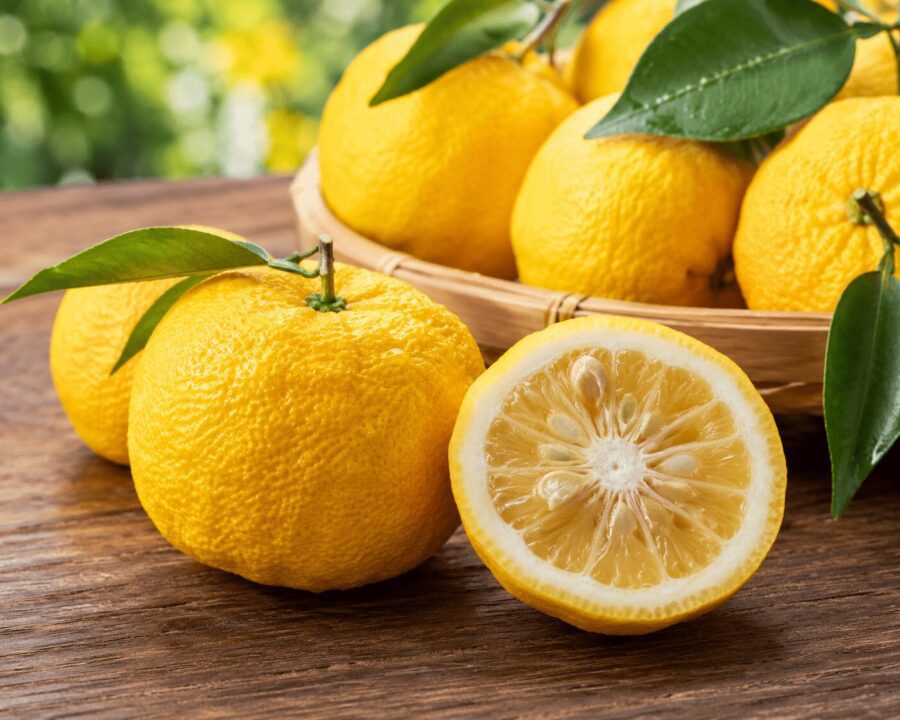
In Goheung, the yuzu tree has long been called the "university tree." This name originated from the story that one could send a child to university solely on the yuzu harvested from a single tree.
The topography was decisive in this region becoming the home of citron. A mild climate with an average annual temperature of 13–15°C and a minimum temperature rarely dropping below -9°C, abundant sunshine amounting to 2,400 hours per year, and moderate sea breezes blowing from the South Sea all coincided perfectly.
Currently, Goheung accounts for approximately 35 to 501 TP3 T of the national yuzu production. The main production areas are Pungyang-myeon and Duwon-myeon. When November arrives for the harvest season, the entire region is filled with the scent of yuzu; if you stand at the Yuzu Park in Handong-ri, Pungyang-myeon, the fragrance envelops your entire body whenever the wind blows.
Season & How to Choose
Harvest: Late October to late November. The more evenly yellow the skin is and the more bumpy the surface, the stronger the aroma.
Processed products: There is a wide variety, ranging from yuzu jam, yuzu tea, yuzu kosho (paste mixed with green chili peppers), yuzu salt, to yuzu makgeolli.
Goheung Yuja Festival: Held annually in early November around the yuja fields of Handong-ri, Pungyang-myeon
pomegranate
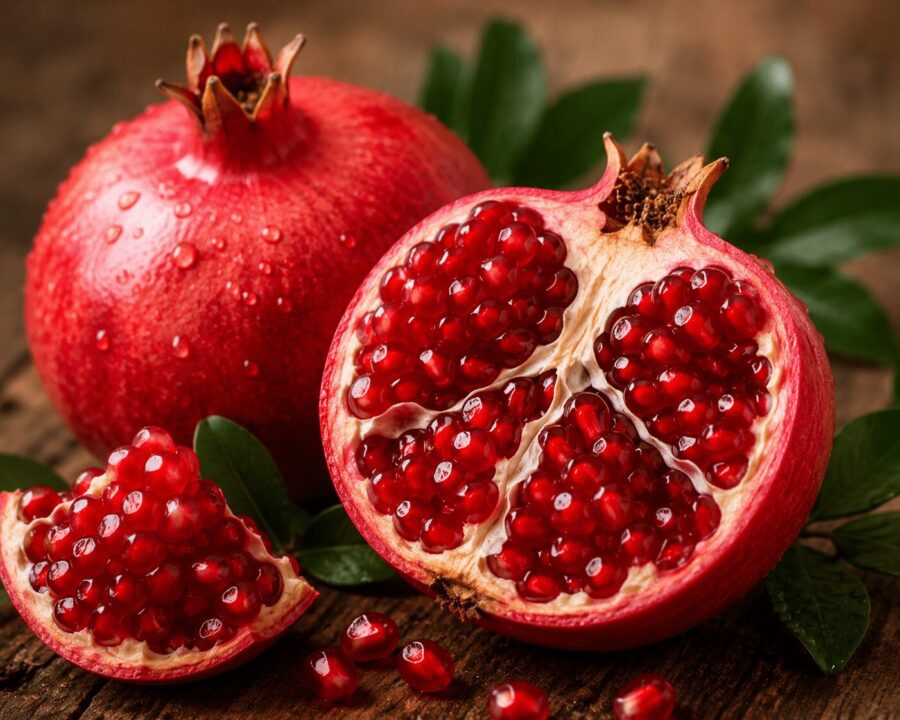
If yuzu colors Goheung yellow in November, it is pomegranates that adorn this region red in October. Goheung pomegranates are the second of Goheung's eight special products and are the representative pomegranate production area of South Jeolla Province.
Pomegranates have tough skins, so unlike the West Sea, they thrive on the southern coast where they are exposed to harsh sea winds. The clean sunshine and sea breeze of this region make the juice dense and enhance its unique sweet and sour taste.
Rather than being eaten fresh, it is often processed into juice, concentrate, or fermented liquid. Fermented pomegranate liquid, aged with oligosaccharides in traditional earthenware jars for over three months, is produced directly by local farmers using a processing method unique to this region.
Seasonal & Storage Tips
Harvest: Late September to October. Those with completely red, heavy shells are full of kernels.
Storage: It lasts a long time if stored in a cool place with the shell on, and it can also be frozen if the meat is removed.
김
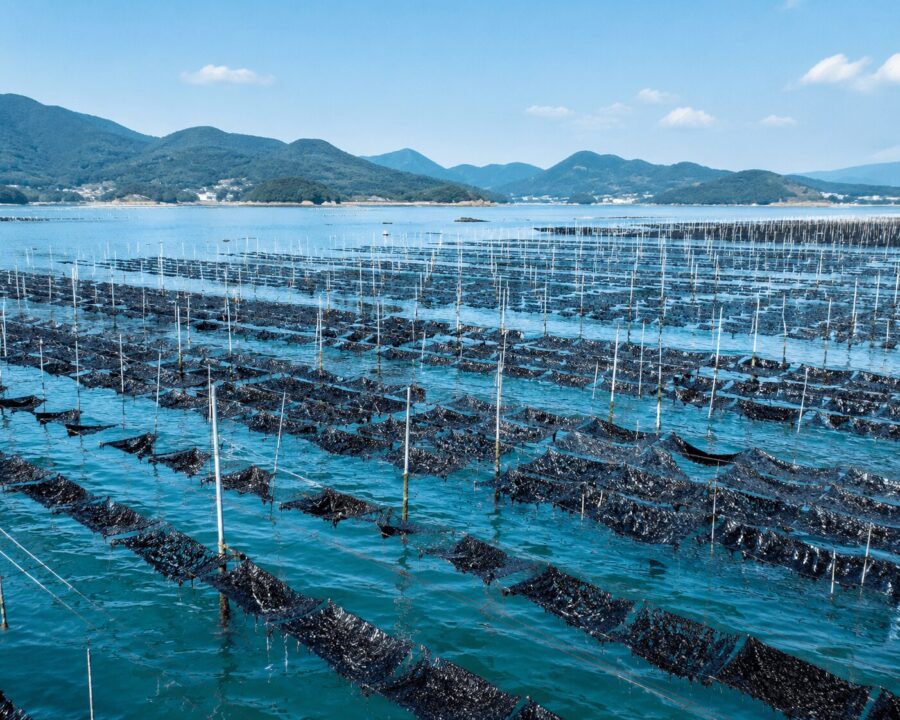
Distributed nationwide Approximately 801 TP3 T of dried laver for gimbapGoheung is a region where a lot of seaweed is produced, to the extent that it is produced there.
Deungnyang Bay and Goheung Bay have the optimal environment for seaweed farming as clean currents from the South Sea flow in and out and the water temperature is stable. The areas of Geumsan-myeon, Dohwa-myeon, Dodeok-myeon, and Pungyang-myeon are the main farming grounds.
Goheung Gim is registered under the Geographical Indication System as Goheung Grade 8 and Grade 3. Miyeok and Dasima are also designated as Grade 4 and Grade 5, respectively, so the entire seaweed industry of this region is recognized for its certified quality.
굴
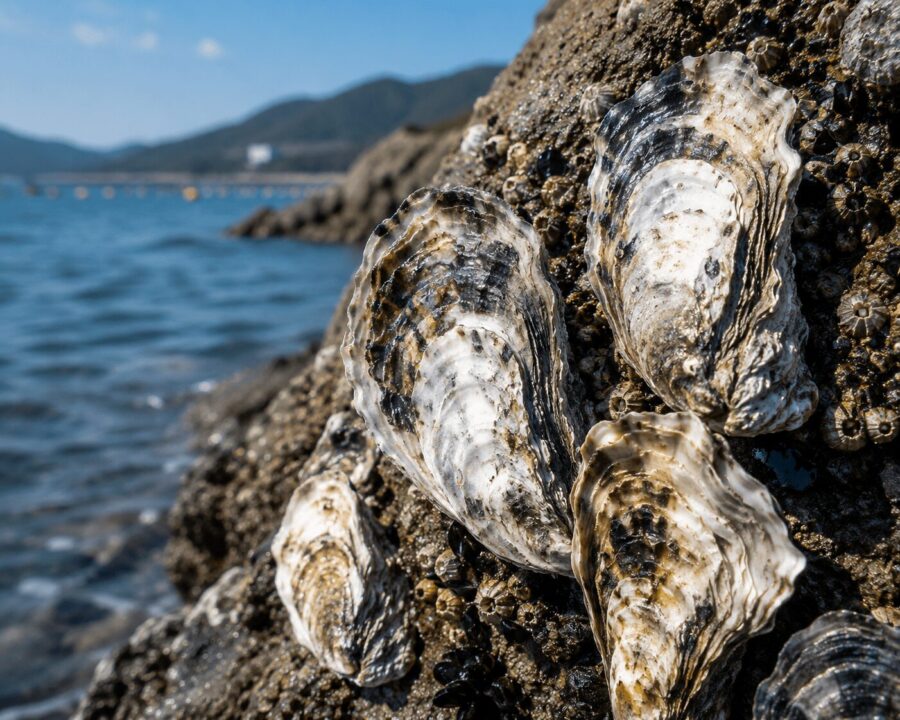
There is a large-scale oyster farm in the Oma-ri area of Doyang-eup. The oysters here are cultivated using the 'suspended cultivation' method, where ropes are suspended underwater, resulting in plump flesh and tender texture.
The real reason Goheung oysters are distinguished from those of other regions is their size. Oysters grown in the pristine waters of the South Sea are much larger and have a stronger, wilder flavor compared to those from the West Sea. Thanks to this, oyster jeotgal (fermented seafood) has also uniquely developed in this region, which is Jinseokhwajeotam.
When winter arrives and oysters grow, fishermen harvest large oysters themselves and salt them. As fermentation progresses, the oysters almost lose their shape and become drenched in dark juice; this is Jinseokhwajeot. It is even said to be "the stage right before oyster sauce.".
2. Goheung Regional Food
Jinseokhwajeot · Pigul
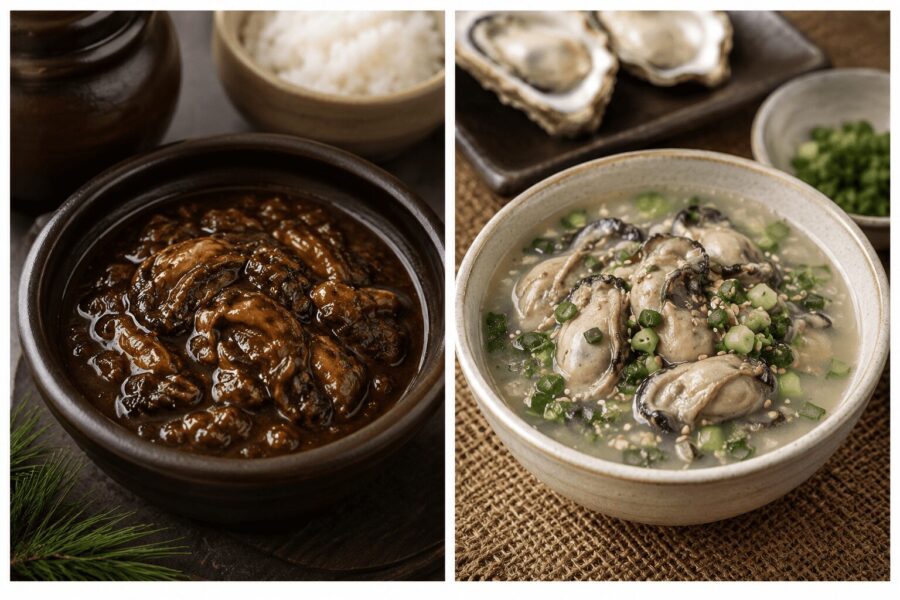
Jinseokhwa-jeot is the most authentically Goheung way to serve the previously introduced Goheung oysters on the dinner table. While West Coast Eorigul-jeot competes with its small roe and delicate sourness, Jinseokhwa-jeot competes with the dark, rich flavor produced by fermentation.
It is so intense that there is a saying that one bite of this jeotgal is enough to easily fit three spoonfuls of rice. The National Folk Museum of Korea’s food culture materials even describe Jinseokhwa-jeot as being “suitable for use in pasta instead of anchovies or as a substitute for oyster sauce in stir-fried dishes.” Locals of Goheung also serve Jinseokhwa-jeot instead of ssamjang when grilling meat.
Along with Jinseokhwajeot, what is considered the twin pillars of this region's oyster cuisine is PigulIt is a dish made by placing large oysters in a pot and simmering them gently to produce a milky broth; as it boils, the essence released from the oysters dissolves into the broth, creating a deep and savory flavor.
Jinseokhwa-jeot is prepared during the winter harvest and consumed until spring, while Pigul tastes best when winter oysters are plump. Both are foods that can only be properly enjoyed locally during their peak season.
Narodo Spanish mackerel
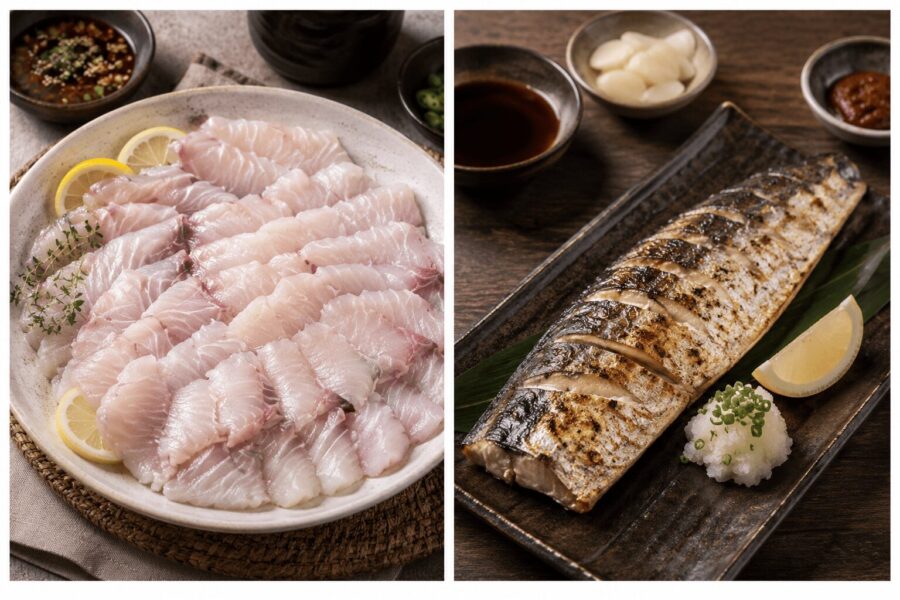
The area around Narodo Port is a zone officially designated by Goheung County as 'Mackerel Street.' It is also one of Goheung's 9 Delicacies. Spanish mackerel sashimi and grilled fishSpanish mackerel is a symbolic fish in this region, to the extent that it has been selected as one of the top five delicacies. Spanish mackerel caught in the autumn off the coasts of Narodo and Geomundo has high fat content and firm flesh, so it can be enjoyed as sashimi even when fresh.
Locals consider wrapping Spanish mackerel sashimi in Goheung seaweed and dipping it in a special soy sauce to be the best way to eat it. When the soft, fatty flesh of the Spanish mackerel meets the crispy seaweed, no additional seasoning is needed. Recently, new menu items such as sweet and sour Spanish mackerel, braised Spanish mackerel in gochujang, and grilled Spanish mackerel with yuzu have been developed one after another, expanding the range of choices.
Spanish mackerel have a closed season because they spawn in the spring, and their flavor is at its peak from autumn to early spring. If you are planning to visit Narodo, September to November is the best time.
Seasoned raw clams · Jjitgaeng
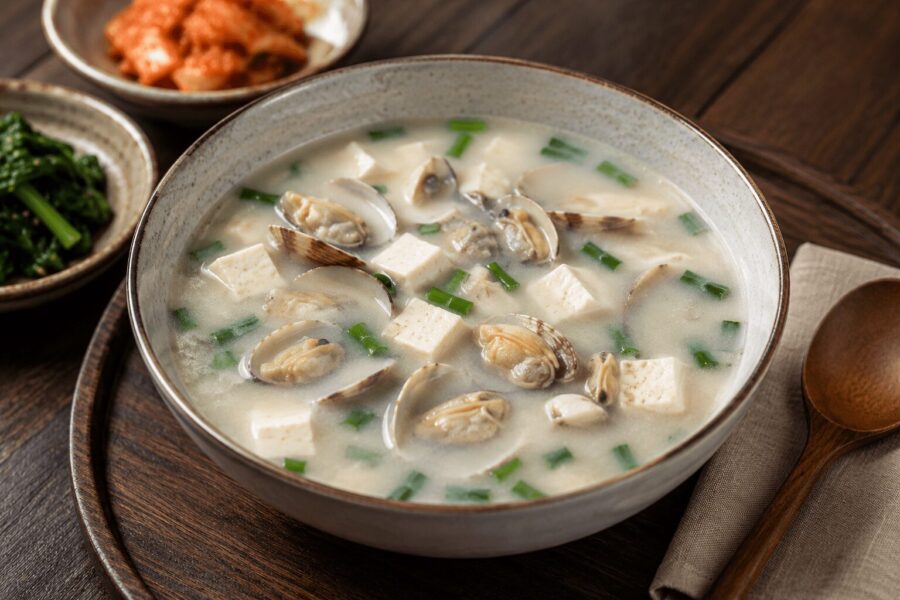
Goheung clams are a local ingredient selected as one of Goheung's "9 Delicacies" and "8 Delicacies." Grown in the mudflats between Deungnyang Bay and Yeoja Bay, the clams from this region are plump and have a strong sweet taste, making the broth flavor distinct from that of other places.
There are two ways to eat Manila clams. One is vinegar-based seasoning. If you add vinegar-based gochujang, scallions, and sesame seeds to lightly blanched clam meat and mix it by hand, you get Manila clam sashimi seasoning. The chewy texture of the meat harmonizes with the tangy sauce Makgeolli It is perfect as a snack to accompany drinks or as a special summer side dish.
The other one is 'Jitgaeng.' 'Jitgaeng' is a term that has solidified into the Jeolla dialect for 'jijimi.' Unlike pancakes that are boiled until crispy, this dish involves adding vegetables and clams to soybean paste and red chili paste and simmering them until the liquid is reduced. It is similar to Jeolla-style clam soybean paste stew, but with less broth, allowing the rich flavor extracted from the ingredients to be enjoyed as is.
On local Goheung dining tables, Jjitgaeng is not served as a standalone dish but rather occupies a spot in an earthenware pot stew on a set meal. The soybean paste balances the sharp saltiness of the clams, while the clam broth enhances the savory richness of the soybean paste; they are a perfect pair.
Eel soup and grilled eel
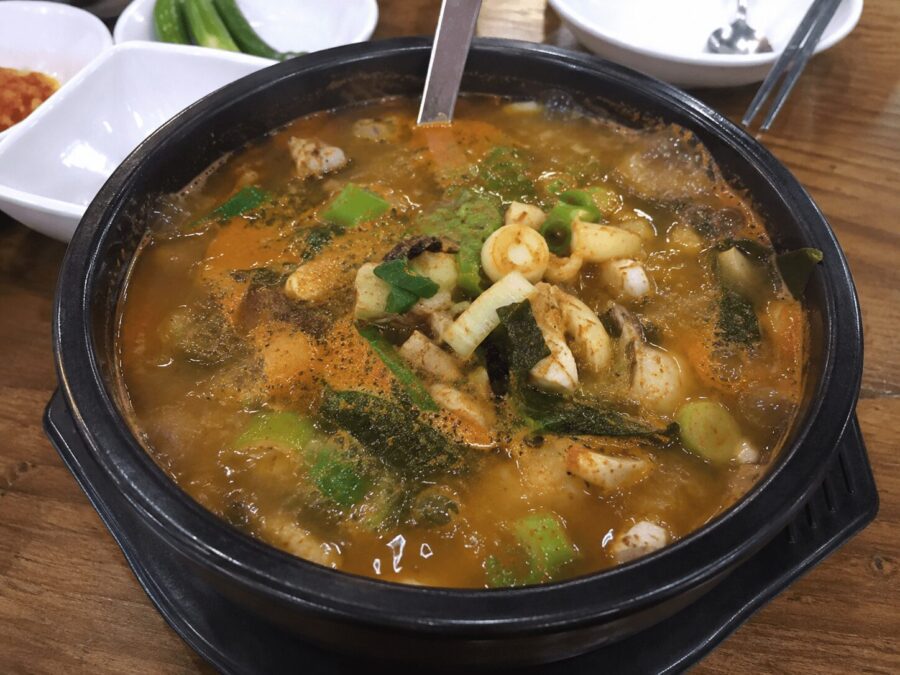
Eel soup and grilled eel hold the top spot among Goheung's nine famous delicacies. In particular, an "Eel Street" has been established in the area around Nokdong Port, where 13 specialty restaurants line the street. It is a place that travelers visiting Goheung from all over the country stop by as if it were a destination.
In this region, when it comes to eel, the conger eel is the standard. Goheung conger eels, raised in the pristine waters of the South Sea, have thick flesh and just the right amount of fat; when boiled in a soup, the broth is rich, and when grilled, the skin cooks to a crispy texture.
Conger eel is also a must-have in the summer. Conger eel sashimi, sliced with diagonal cuts including the small bones, becomes savory the more you chew, while conger eel shabu-shabu, lightly dipped in hot broth, offers a visual spectacle with its flower-like spreading appearance.
The local Goheung style of eel soup involves cutting whole eels into pieces, boiling them with radish, chili peppers, and garlic, and finishing by dissolving perilla seed powder. The aroma of perilla seeds masks the eel's characteristic fishy smell, while the rich broth warms the body. The standard way to enjoy Nokdong Eel Street is to have soup, grilled eel, and sashimi served on the same table to compare their individual flavors.
3. Goheung 8 Specialty Products & 9 Delicacies at a Glance & Goheung Seasonal Calendar
Officially selected by Goheung-gun 8th rankIt is a representative agricultural and fishery product registered under the Geographical Indication System, and, 9miIt is a representative local dish enjoyed using those ingredients.
Goheung 8-Piece
| Part number | local specialties | seasonal | Key Features |
|---|---|---|---|
| 1st rank | Yuja | Late October to late November | Nation's largest production area, citron jam, citron tea, and citron kosho |
| 2nd rank | pomegranate | Late September to October | Grown in clean sea breeze, pomegranate juice and fermented liquid |
| 3rd rank | 김 | November to March | 801 TP 3 T produced nationwide for Gimbap, clean waters of Deungnyang Bay and Goheung Bay |
| 4th rank | brown seaweed | March–May (Spring Seaweed) | National production volume 40%, soft texture |
| 5th rank | kelp | May to July | Over 500 tons of dried kelp auctioned annually, highly preferred for broth |
| 6th rank | 굴 | November to March | Suspended farming, raw materials for Jinseokhwajeot and Pigul |
| 7th rank | garlic | Harvest from May to June | Sulfur-rich soil, high allicin content |
| 8th rank | Yujagol Hanwoo | year-round | HACCP certified slaughter, fed with Yujagol's exclusive feed |
Goheung 9 Delicacies
| Untranslated | food | seasonal | point |
|---|---|---|---|
| 1 mi | Eel soup and grilled eel | Summer to early autumn | Clean South Sea Conger Eels, Nokdong Eel Street Concentration |
| 2 mi | Seasoned raw flatfish and braised flatfish | Spring (Narodo Sea Area) | Raw fish salad seasoned with makgeolli vinegar and braised potatoes in gochujang are traditional methods. |
| 3 mi | Citron wine | Year-round (soaked after yuzu harvest in November) | Traditional medicinal liquor fermented with citron and herbal medicines, Yeosu World Expo toast drink |
| 4mi | Maesaengi soup | December to February | Geumgeumdo Wolpo is famous for maesaengi, also known for maesaengi tteokguk and maesaengi hotteok. |
| 5 mi | Spanish mackerel sashimi and grilled fish | September to November | Narodo Spanish Mackerel Street; the way of eating it wrapped in Goheung seaweed is the local style. |
| 6 mi | raw and grilled gizzard shad | September to October | Enjoying it as 'bone-in sashimi' sliced with the bone makes it savory the more you chew. |
| 7mi | Assorted grilled fish | year-round | A specialty of Goheung Traditional Market, characterized by its crispy and moist texture and charcoal-grilled flavor. |
| 8mi | Seasoned raw clams · Jjitgaeng | Spring and Autumn | Jitgaeng is a Goheung-style stew made by boiling clams with soybean paste and vegetables. |
| 9mi | Korean beef barbecue | year-round | Yujagol Hanwoo brand, tender texture and deep flavor |
Seasonal calendar
| food | Seasonal period | Signature taste | How to enjoy the recommendations |
|---|---|---|---|
| Maesaengi soup | December to February | Soft and savory sea scent | Maesaengi soup with oysters, Maesaengi rice cake soup |
| Oysters, Jinseokhwajeot, Blood Oysters | November to March | Rich and salty fermented aroma | Side dishes for rice, accompaniments to meat |
| 김 | November to March | Savory and crispy | Wrapping Spanish mackerel sashimi, Gimbap |
| Yuja | Late October to late November | Fresh and fragrant | Yuja jam, yuja tea, grilled yuja mackerel |
| pomegranate | Late September to October | Sweet and sour with rich juice | Fresh fruit, pomegranate juice, fermented liquid |
| Spanish mackerel sashimi and grilled fish | September to November | Oily and tender fresh fish taste | Spanish mackerel sashimi, sweet and sour Spanish mackerel, grilled Spanish mackerel with yuzu |
| gizzard shad | September to October | The more you chew, the savory | Bone-in sashimi, grilled gizzard shad |
| garlic | May–June (Harvest) | A sharp and strong scent | Raw garlic, black garlic, garlic juice |
| Spring seaweed and flatfish | March to May | Soft and fresh | Seaweed soup, seasoned raw flatfish, and braised flatfish |
| octopus | Year-round (peak in spring and autumn) | Chewy and rich ocean flavor | Tangtangyi octopus, Yeonpotang, stir-fried on a hot plate |


