
Hadong-gunIt is a region located at the western end of Gyeongsangnam-do, where Mt. Jirisan meets the Seomjin River. To the north lies Jirisan National Park, and to the south, Hallyeohaesang National Park stretches out, with the Seomjin River flowing leisurely between them and bordering Jeolla-do.
It is the site of Korea's first tea cultivation, the setting of Park Kyung-ri's novel *Toji*, and a place where the most beautiful cherry blossom tunnel in the country blooms in spring.
The major tourist attractions in Hadong are largely concentrated in three areas: Hwagae-myeon, Akyang-myeon, and Hadong-eup. Let's explore the places worth visiting in these regions.
index
Hwagae-myeon
Hwagae Market


Hwagae MarketIt is a traditional market located at the confluence of the Hwagae Stream, which originates in Mt. Jirisan, and the Seomjin River. Situated on the border between Yeongnam and Honam, this place has been a strategic logistics hub since the mid-Joseon Dynasty, where seafood and salt from the southern coast, grains from the Honam Plain, and wild vegetables and woodenware from Mt. Jirisan were gathered.
It is also well known as the setting for Cho Young-nam's song "Hwagae Market" and Kim Dong-ri's novel "The Post Horse." It currently operates as a permanent market where you can browse and taste Hadong green tea, freshwater clam soup, wild herbs, and medicinal herbs.
Although there is criticism that it has transformed significantly into a tourist market recently, making it difficult to find the unique characteristics of Hwagae Market, it is not a bad idea to stop by and take a look while visiting Hadong.
The Hwagae Intercity Bus Terminal is located right next to Hwagae Market, making it convenient to access by public transportation.
Hwagae Market
Tap-ri, Hwagae-myeon, Hadong-gun, Gyeongsangnam-do
Ssanggyesa Temple
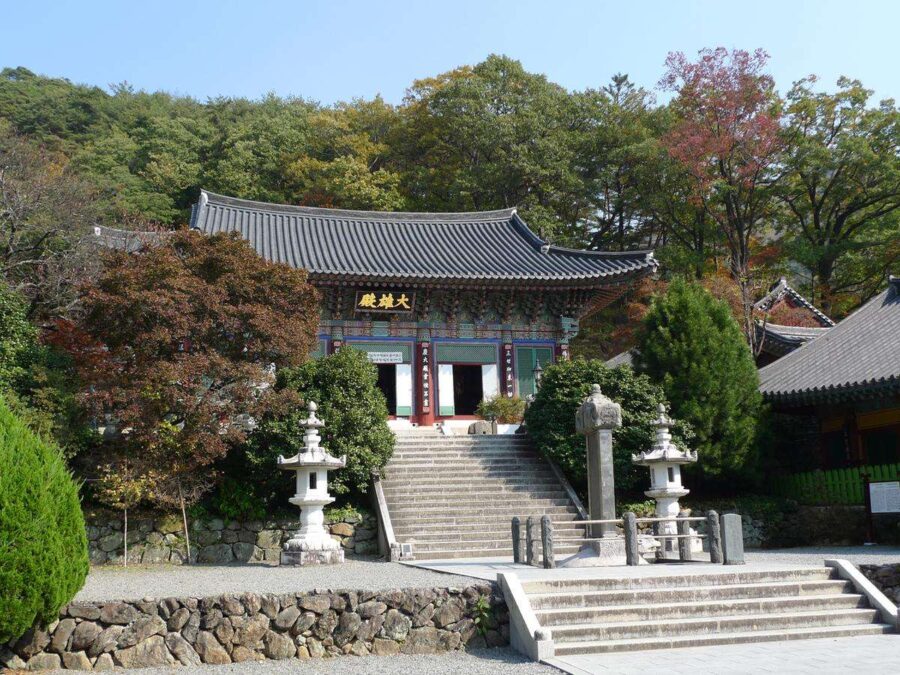
Ssanggyesa TempleIt is an ancient temple located on the southern side of Mt. Jirisan, founded in 722 (the 21st year of King Seongdeok of Silla), and is the head temple of the 13th diocese of the Korean Buddhist Jogye Order. The temple's name originates from the confluence of two streams: Hwagaecheon and Ssanggyesa Valley.
Within the grounds National Treasure No. 47 Jingam Seonsa Daegong Pagoda Stele, Treasure No. 500 Daeungjeon Hall, Treasure No. 380 National designated cultural properties, such as stupas, are concentrated here.
One cannot leave out the trekking course leading to Ssanggyeseokmun, personally carved by the renowned scholar Choi Chi-won, and Bulil Falls in Mt. Jirisan.
In spring, the path from Hwagae Market to Ssanggyesa Ten-mile cherry blossom roadWhen in full bloom, it is considered the most beautiful cherry blossom tunnel in Korea. Admission is free, and it is about a 10-minute drive from Hwagae Market.
Ssanggyesa Temple
59, Ssanggyesa-gil, Hwagae-myeon, Hadong-gun, Gyeongsangnam-do
Hadong Wild Tea Museum

Located below Ssanggyesa Temple Hadong Wild Tea MuseumIt is a specialized tea museum located in Hwagae-myeon, the birthplace of tea cultivation in Korea. It started as the Tea Culture Exhibition Hall in 2003 and reopened in its current form in 2017.
It introduces the 1,200-year history of Hadong wild tea, the tea-making process, and world tea culture through interactive exhibits, and also operates a special exhibition hall honoring Goun Choe Chi-won.
At the attached experience center, visitors can try roasted tea and tea ceremony firsthand, and also sample Hadong green tea. The route naturally connects when coming down from Ssanggyesa Temple along the Hwagaecheon walking path.
Hadong Wild Tea Museum
571-25, Ssanggye-ro, Hwagae-myeon, Hadong-gun, Gyeongsangnam-do
Akyang-myeon
Choi Champan's House

Choi Champan's HouseIt is a space recreating a grand house from the late Joseon Dynasty, set against the backdrop of Pyeongsa-ri, the setting of Park Kyung-ri's epic novel *Toji*.
"Toji" is a novel set from 1897 to 1945 that depicts the rise and fall of the Choi family and the lives of ordinary people, and it is a work that author Park Kyung-ri completed over 26 years.
A grand Hanok mansion with 99 rooms, a main gate, and a village of thatched-roof houses harmonize to vividly recreate the atmosphere of a Joseon Dynasty village. It has also been used multiple times as a filming location for dramas and movies. The Park Kyung-ni Literary Museum, dedicated to the author of *Toji*, is also a must-visit attraction.
The field below the village is right Pyeongsa-ri fieldsIt is also a filming location for the drama *Mr. Sunshine*. A famous attraction here is taking a photo with the two pine trees (the "Couple Pine") standing alone in the middle of a field.
Choi Champan's House
66-7, Pyeongsa-ri-gil, Akyang-myeon, Hadong-gun, Gyeongsangnam-do
Cheongam-myeon
Samseonggung


SamseonggungThe official name is 'Baedal Seongjeon Samseonggung'.The Three Holy Palaces‘The name ‘Samsung’ refers to Hwanin, Hwanung, and Dangun, the progenitors of our nation, and is located at an altitude of 850m in Cheonghak-dong, Mt. Jiri.
Since Master Hanpul established the site in 1983 to inherit the nation's unique Seondo and restore 'Sodo,' the sacred space of Gojoseon, over 1,500 stone pagodas built by practitioners' own hands over the course of 40 years are densely packed in the forest.
You have to walk about 1.5 km along a mountain path from the ticket office to the palace entrance, and this process itself becomes a kind of pilgrimage experience.
The scenery of red-tinged forests and stone pagodas harmonizing during the autumn foliage season (mid-October) is particularly breathtaking. On weekends, visitors can watch martial arts performances by practitioners such as Cheonjiin, Gitbalmu, and Taekkyon, and crowds of visitors gather during the Gaecheon Grand Festival in October every year.
Samseonggung
13 Samseonggung-gil, Cheongam-myeon, Hadong-gun, Gyeongsangnam-do
Hadong-eup
Hadong Songnim Park


Hadong Songnim ParkIt is a walking trail through a forest of centuries-old pine trees along the Seomjin River.
It is said that the planting of pine trees along the riverbank to prevent flood damage during the reign of King Yeongjo of Joseon led to the forest we see today.
The Harmony Railway Bridge, an old railway bridge repurposed into a pedestrian walkway, is located in the south of the park, offering a panoramic view of the Seomjin River below.
In spring, cherry blossoms and plum blossoms bloom on both banks of the Seomjin River, making it one of the top spring driving courses in the country. Since it is close to downtown Hadong-eup, the route leading to the freshwater clam soup restaurant district after a walk is also natural.
Hadong Songnim Park
440-5, Gwangpyeong-ri, Hadong-eup, Hadong-gun, Gyeongsangnam-do
10 Scenic Spots of Hadong Tea Plantation
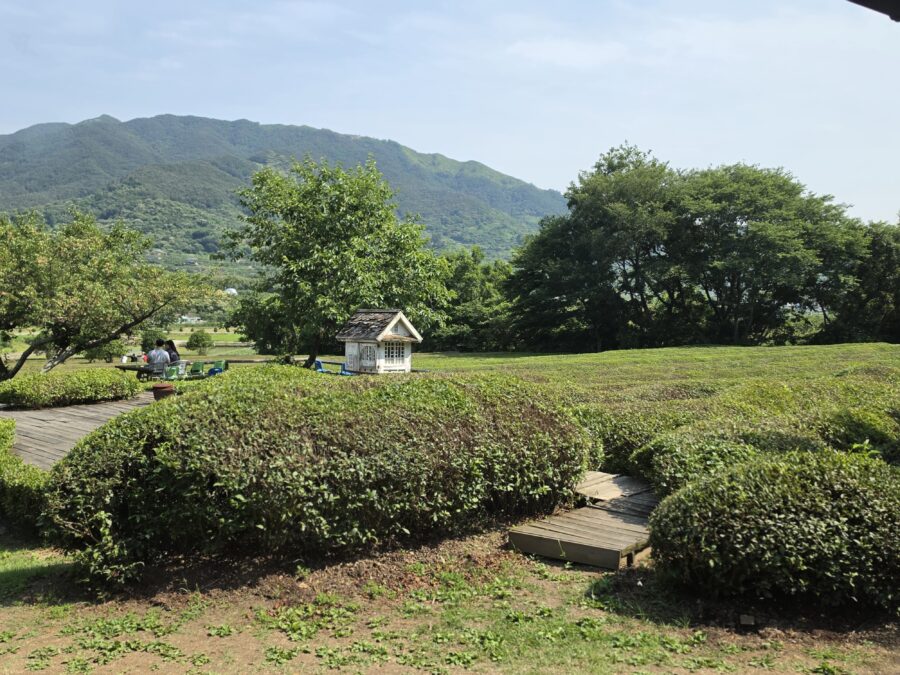

Hadong County [selects] 10 representative tea plantations in the Hwagae-myeon and Akyang-myeon areas 10 Scenic Views of DawonSelected and introduced as follows: Ssanggyesa Tea Plantation, Myeongwon Tea Plantation, Goryeo Tea Plantation, Dosim Tea Plantation, Ssanggye Wild Tea Plantation, Hanbal Tea Plantation, Maeam Tea Plantation, Jeonggeum Tea Field, Hyerim Farm, and Cheongseokgol Gamro Tea Plantation.
Each tea garden has a distinct atmosphere and approach, so selecting just a few allows you to enjoy the true essence of a tea trip in Hadong. Below are some of the representative tea gardens with numerous visitor reviews.
Maeamje Tea Plantation — Located in Akyang-myeon, this outdoor tea house allows you to drink green tea brewed right in the middle of the tea fields. It holds the largest amount of visitor data among the 10 scenic tea gardens.
Urban tea plantation — Located in the valley of Sinchon Village in Hwagae-myeon, it operates as an outdoor hourly tea service (reservations required). There are many reviews praising the impressive scenery of the foggy tea fields.
Jeonggeum Tea Plantation — This is a tea plantation with an observation deck located halfway up the mountain in Hwagae-myeon. In spring, cherry blossoms and the Seomjin River can be seen simultaneously beyond the tea fields, and it creates a dreamlike atmosphere even on foggy days. The road leading up is narrow, so caution is required when vehicles pass each other.
Ssanggye Wild Tea Plantation — It is a tea plantation with wild tea trees aged 700 to 800 years, located near the Wild Tea Museum. Although it is operated on a small scale, it is characterized by a quiet environment where the sound of the valley can be heard.
Ssanggyesa Temple tea tree birthplace — This is the place where tea seeds brought from the Tang Dynasty were first planted in the 3rd year of King Heungdeok of Unified Silla (828), Gyeongsangnam-do Monument No. 61It is a designated historical site. It can be visited in conjunction with a visit to Ssanggyesa Temple.


