
Now that we have examined Korean and Japanese tofu, it is time to move on to the diverse varieties of Chinese tofu, befitting its status as the home of the dish. True to its reputation as the birthplace of tofu, China is a country that has experimented with almost every form that can be made from the same soybean.
If Korean tofu is distinguished by the degree of pressing and Japanese tofu by coagulation and processing methods, Chinese tofu offers a diverse range of fermented and processed forms. With the addition of coagulants, pressing, drying, and fermentation, the variety of types becomes the widest.
In China, even the by-products generated during the tofu-making process had their own distinct names. Ancient literature Supplement to the Compendium of Materia MedicaIn... tofu residue... (stomach, now known as soybean pulp), the outermost membrane of tofu (豆腐衣), pickled tofu with sake lees or soy sauce added (buyu)stomachIt is said that it was recorded as ).
Starting with the most basic difference regarding coagulants, and progressing through pressing, drying, freezing, and fermentation, let's explore how each type of tofu differs from Korean tofu, and also identify the ingredients familiar from dishes like Mala Tang and Mala Xiang Guo.
The Story of Delicious Tofu: Differences Between Korean, Chinese, and Japanese Tofu
index
Classification of tofu according to coagulant: Northern tofu and Southern tofu

The biggest criterion for classifying Chinese tofu is North Tofu.(北豆腐)Wow, Namdubu(南豆腐)C. As the name suggests, they are also geographically separated, and the key difference lies in the coagulant.
Northern tofu is solidified using brine (magnesium chloride). Because the reaction is quick and it sets to a firm consistency, the finished tofu is firm and has a rich soybean flavor. It is a style of food commonly enjoyed in northern regions.
Namdubu is solidified with gypsum (calcium sulfate). Because the reaction is slow, it retains more moisture, resulting in a much softer and smoother texture. It is a style that developed in the warm southern regions with many rivers.
The same difference in coagulants actually exists in Korea as well. Most regular tofu in supermarkets is solidified with calcium sulfate, whereas tofu sold in traditional markets often uses brine, which is the same reason why it tastes richer.
Tofu Born from Compression and Drying: Dried Tofu and Tofu Seasoning

dried tofu(豆腐)It is often misunderstood due to its name. Unlike the Chinese characters meaning "dried tofu," it is actually tofu made by pressing it as thin as paper from the molding stage. It does not undergo a drying process.
Although the ingredients are almost the same as regular tofu, it is pressed strongly into a thin sheet shape from the start to remove as much moisture as possible. It is also called Podubu because its shape resembles a scroll, and Dubupi because its texture feels like leather.
As it is thin, it has a chewy texture, and if you chew it for a long time, a concentrated bean flavor permeates. Because it has low moisture content, it pairs particularly well with stir-fried dishes, so it has established itself as a daily food ingredient in China.
The nickname 'tofu skin' might be confusing here, but the Chinese characters are different. stomachReal tofu skin, known as (bu-pi), is a completely different food from dried tofu. These two will be discussed separately later.
In fact, there is no perfect match among Korean tofu for paper-thin and chewy tofu like dried tofu. Since Korean tofu, from soft tofu to firm tofu, is all in a somewhat thick block shape, this thin, pressed sheet itself is essentially the texture unique to Chinese tofu.
There is also real dried tofu. Tofu seasoning(豆腐干)As the name suggests, it is made by drying whole tofu, and it is a different type from dried tofu. It is a form in which tofu that has been firmly compressed is dried again to increase its shelf life.
These dried, diced tofu cubes are what you commonly see in the ingredients section of Mala Tang or Mala Xiang Guo. They are much firmer and chewier than regular tofu, so they do not fall apart easily and maintain their shape even when boiled in hot broth for a long time.
Tofu skin and dried tofu skin

All the tofu we have seen so far is made by coagulating the entire soybean milk. However, there is also tofu made by skimming off only the thin film that forms on the surface when boiling the soybean milk. It is based on the same principle as the film that forms when heating milk.
If you spread this film out and let it dry, the volume(腐皮), ...in other words, it becomes tofu skin. If the same membrane is rolled into a long strip, compressed into a stick shape, and dried, it becomes fuzhu.(腐竹), becomes bamboo. Only the shape is different; the raw materials and principles are the same.
Since it starts from a different point than tofu solidified with a coagulant, it has a much higher protein content and a different texture. When soaked in water, the broth seeps deeply between the layers, creating a unique texture where the broth seems to burst with every chew.
You probably remember seeing these wrinkled sticks in the ingredients section of Mala Tang or Mala Xiang Guo. That is Fu Zhu. It is easy to confuse it with dried tofu or liver cubes, but Fu Zhu is not solidified with a coagulant; instead, it is made by drying the membrane of the soybean milk, resulting in a much lighter and fluffier texture. It is the Japanese equivalent of Yuba.(湯葉)It is the same food made using the same principle.
This is a style not commonly found in Korean tofu, as it is uncommon to remove and dry the membrane separately when making tofu, but it is an ingredient that has become familiar these days as it can be commonly found in Chinese restaurants or mala tang shops.
Dongdubu — tofu that changes as it freezes and thaws
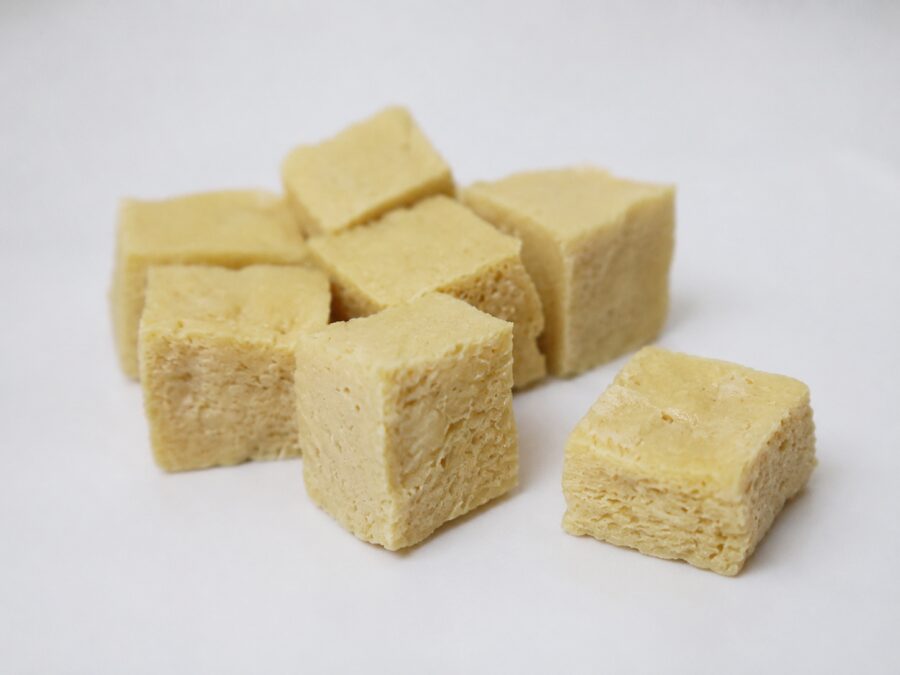
Dongdubu(凍豆腐)It is a type made by freezing tofu. During the process of freezing and thawing, the moisture inside is lost, and it changes into a texture full of holes like a sponge.
Thanks to this hole, its ability to absorb broth improves significantly. When placed in and removed from a soup dish like hot pot, the flavor of the tofu itself becomes richer and the texture becomes much chewier.
As moisture is removed, protein density increases. Since the protein content of frozen tofu is significantly higher than that of regular tofu of the same weight, it undergoes a substantial transformation in terms of nutrition as well.
In terms of principle, it is essentially the same family as Korean frozen tofu and Japanese bitter tofu. It is as if the three countries discovered the same freezing principle under different names, transforming tofu into a new texture.
The frozen and solid tofu readily available at Korean supermarkets are made using the same principle. The difference lies mainly in culinary culture; in Korea, they are often added to stews or hot pots, whereas in China, they are more frequently used as a key ingredient in soup dishes such as hot pot or mala tang. It is highly likely that you have already experienced that texture—how it absorbs seasonings like a sponge when placed in broth—in a bowl of mala tang.
Previously, we examined Chinese tofu categorized by coagulants, pressing, and freezing. This time, we will look into tofu that originates from the surface of the soybean milk, and fermented tofu, which is considered the pinnacle of the Chinese tofu world.
fermented tofu
While Korea has many fermented foods, the culture of consuming tofu that has been fermented itself is relatively weak. In contrast, China has various types of tofu that are aged with mold or fermentation liquids, transforming them into completely different flavors.
This is the process in which mold enzymes break down the protein in tofu. The sulfur compounds and molecules like indole produced during this decomposition create a distinctive, intense aroma. It is essentially the same principle as how cheese is made by fermenting milk protein.
Stinky tofu
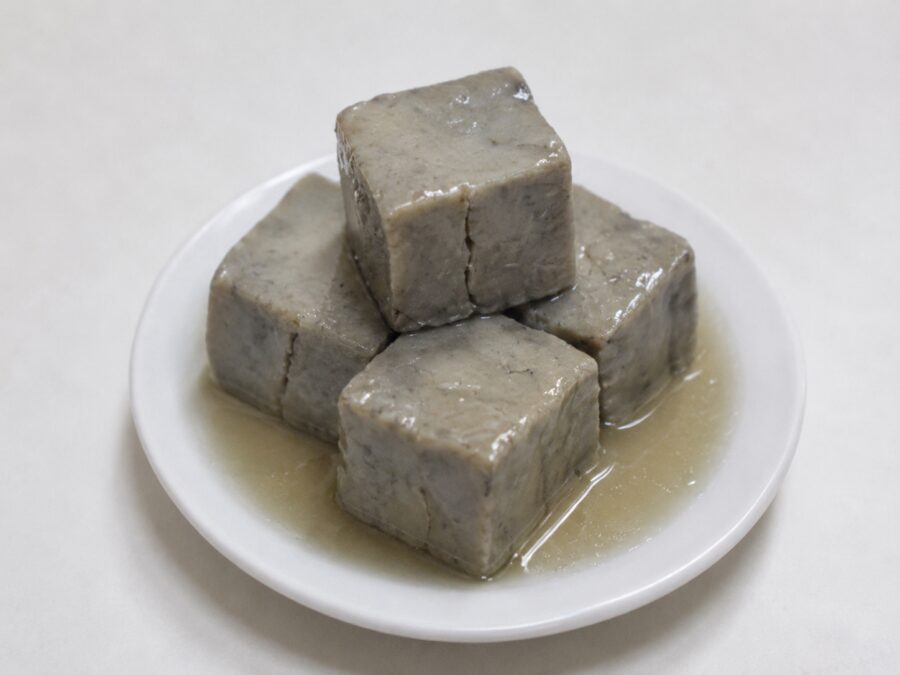
The most famous and infamous fermented tofu is stinky tofu.(臭豆腐)True to its name, 'smelly tofu,' it is a street food easily found in Taiwanese night markets or on the streets of China.
Contrary to common misconceptions, stinky tofu is not made by fermenting the tofu itself. It is a method in which tofu is soaked in a salty fermented liquid made by fermenting vegetables, herbs, and shrimp for a long time, allowing the tofu to absorb the smell of the liquid.
Inside the fermentation liquid, microorganisms that thrive in oxygen-deficient environments break down proteins, producing molecules such as sulfur compounds, indole, and cadaverine, the quintessential odor associated with decay. These molecules combine to complete that distinctive, intense scent.
When you actually taste it, contrary to its smell, it is salty and has a strong umami flavor; although it is said that those who enjoy fermented seafood or aged kimchi might surprisingly adapt to it, it is a dish that is difficult to readily reach for due to its strong odor.
Modubu — fermented tofu in which mold has been grown on the tofu itself
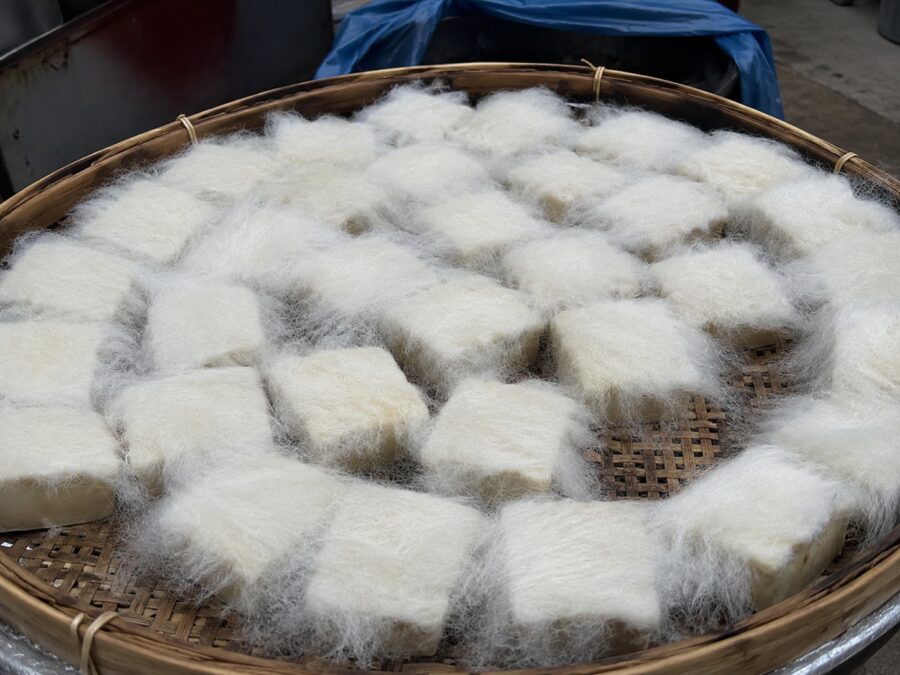
All of them(毛豆腐)It is often confused with stinky tofu, but it is a different food. It is a popular dish in the Huizhou region of Huangshan City, Anhui Province, and as the name suggests, thin white mold grows on the surface of the tofu, giving it a hairy appearance.
While stinky tofu is made by soaking tofu in a fermented liquid to infuse it with a odor, plain tofu is made by fermenting the tofu itself. For this reason, it is considered to be closer to 'real' fermented tofu.
The smell is much weaker than that of stinky tofu. It is said that if you grill and eat the areas where the mold has grown, it has an aroma and texture similar to soft cheese, especially Brie cheese made with white mold. When cooking, there are two methods: removing the mold before use, or frying or grilling it as is to preserve the mold like a crispy batter.
Buyu — Cheese made from beans
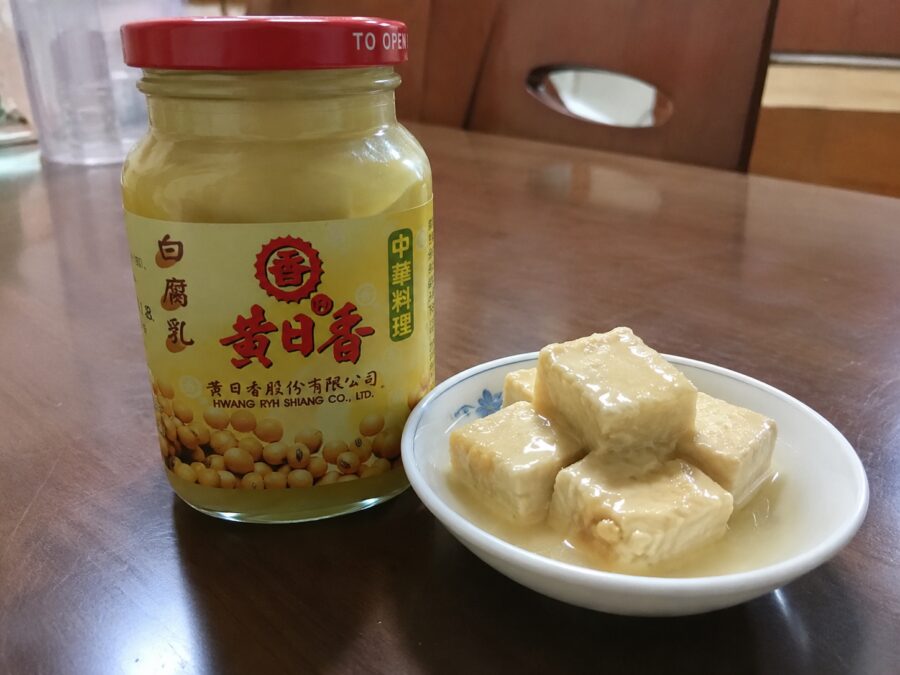
floating(腐乳)It is the flavor that Koreans are most easily approachable among fermented tofu. It is a preserved food made by fermenting tofu, and in China, it is considered a representative side dish for rice.
The method involves cultivating mold on tofu, adding strong alcohol and salt, and aging it for several months. During this process, mold enzymes slowly break down the protein, creating a deep umami flavor.
They are classified by color, with the Cheongbang being white or yellowish.(靑方)Hongbang has a relatively mild taste and takes on a reddish color due to fermentation with red koji mold.(紅方)It is even richer and tends to have an alcoholic or fruity scent.
While fuyu is grouped with stinky tofu based solely on its aroma, its smell is much milder and closer to pickled vegetables or gochujang, making it more accessible. It is easy to understand if you think of it as following the same principle as Korean cheonggukjang or doenjang, where soybean protein is fermented to bring out umami flavor. The difference lies in the fact that Korea ferments the soybeans themselves, whereas China ferments the finished product known as tofu.
If Korean tofu is distinguished by its softness and Japanese tofu by coagulation and processing, Chinese tofu creates diversity by adding the time axis of fermentation to these elements.
![[충남 / 부여] 시골통닭 – 과자처럼 두꺼운 크런치한 튀김옷이 매력적인 부여 시장통닭](https://drunkencapybara.com/wp-content/uploads/2026/05/부여-시장통닭-768x576.jpg)
![[충남 / 부여] 순원식당 – 3월,4월 봄 제철 웅어회(우여회,우어회) 한상 부여 읍 내 맛집](https://drunkencapybara.com/wp-content/uploads/2026/05/부여-순원식당-웅어회-768x576.jpg)
![[제주 / 협재] 기영상회 – 현지 로컬 수제 크래프트 맥주 맛집 바틀샵 성지](https://drunkencapybara.com/wp-content/uploads/2026/04/기영상회-제주-수제-맥주-맛집-768x768.jpg)


