
Japan tofu Standing in the corner, the tofu varieties are confusing, as they differ from those found in Korean tofu corners. From Kinugoshi and Momen to Aburaage and Koya Tofu, there is a wide variety of tofu with different textures, all made from the same beans.
The unique character of Japanese tofu stems from a different axis than that of Korean tofu. Rather than the degree of pressing Solidification method and processingThis is a larger criterion that distinguishes this type.
Japanese tofu is traditionally nigari (suffering), that is, it is solidified with brine obtained from seawater, like Gangneung's Chodang soft tofu. Even with the same tofu, solidifying it with calcium sulfate makes it soft and mild in flavor, while solidifying it with magnesium chloride makes it firm and gives it a rich soybean flavor. The clean and subtle sweetness characteristic of Japanese tofu is also closely related to this brine coagulation method.
Go to the post about the delicious tofu story
index
Kinugoshi and Moment
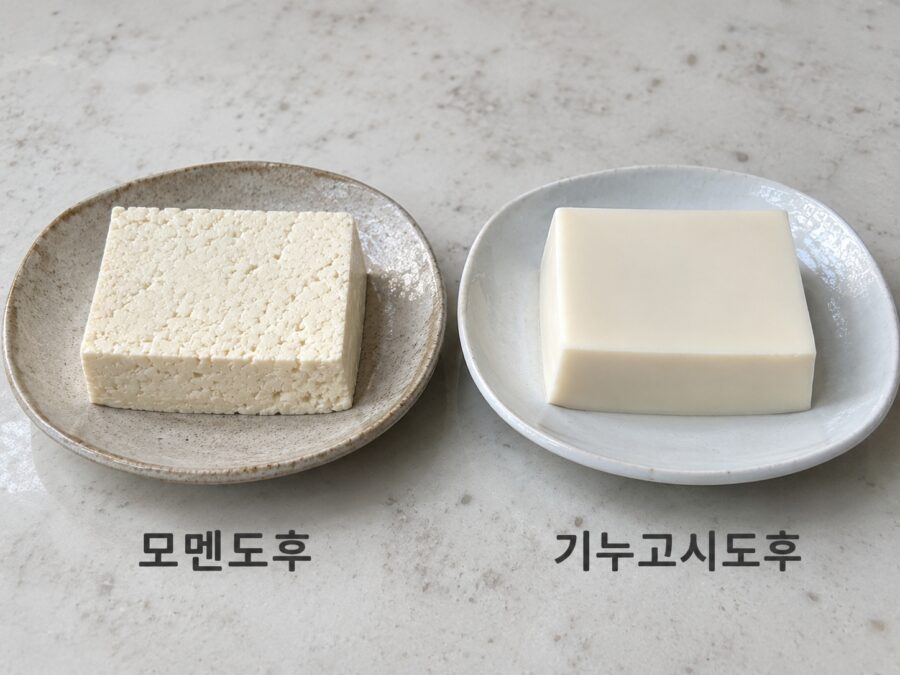
The two most basic categories for Japanese tofu are momen dofu.(木綿豆腐)And Kinugoshidofu(絹漉し豆腐)The name literally means 'tofu woven with cotton' and 'tofu filtered with silk,' but it does not mean that cotton cloth and silk are actually used, but rather refers to the texture of the food.
Momen means plain cotton, and Kinu means silk in Japanese. It is a name that likens the texture of tofu to the texture of fabric, and if you actually touch it, that analogy is quite plausible.
Momendofu is made by pouring coagulated soybean milk into a mold, wrapping it in a cloth, and pressing it to remove moisture. At this time, the sarashi (which wraps the tofu)晒しThe rough texture of the cotton cloth is imprinted directly on the surface of the tofu, and this grid pattern is the mark of Momentofu.
Kinugoshi Tofu takes a completely different path. Thick soybean milk is mixed with a coagulant, poured into a small mold all at once, and allowed to solidify inside without any pressing or filtering. Since there is no pressing, the surface is as smooth as silk, and the moisture remains intact, making it even softer.
Therefore, thick soy milk and a coagulant with good water retention are essential for Kinugoshi. This is because, lacking the safety mechanism of compression, materials that solidify well and hold up well must be used from the start.
In terms of manufacturing principles alone, Kinugoshi resembles Korean soft tofu, while Momendofu is similar to firm tofu. Kinugoshi, which is solidified directly in a mold without pressing, follows the same manufacturing method as soft tofu, whereas Momendofu, which is wrapped in cloth and pressed to remove moisture, is made using the same method as firm tofu. However, since Japanese tofu is generally a shade softer, it may feel like it has a slightly softer texture than Korean tofu, despite sharing the same name.
The firmer tofu, commonly referred to as "extra firm" overseas, is classified in Japan as being one step firmer than Momen Tofu and closer to Chinese-style tofu. In other words, even within Japan, the same "firm tofu" is categorized into different types. When choosing tofu at a Japanese supermarket, you can gauge the texture in advance by looking at the Momen or Kinugoshi markings on the packaging.
Fried tofu and Atsuage — Deep-fried tofu
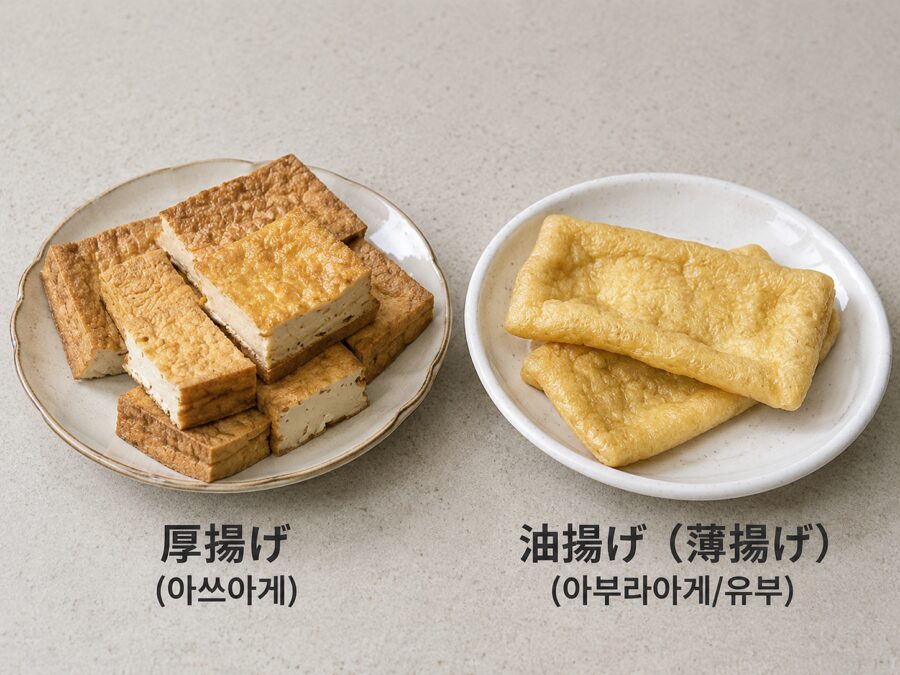
In Japan, fried tofu is also named differently depending on its thickness. Aburaage(油揚げ)refers to fried tofu made from thinly sliced tofu, and atsuage(厚揚げ)It refers to deep-fried tofu whole.
Both start from the same point. Firm tofu, pressed to remove sufficient moisture, is deep-fried in oil; however, for Aburaage, the tofu is thinly sliced before frying, while for Atsuage, it is deep-fried whole without being cut.
Thinly fried Aburaage develops air pockets inside during frying, resulting in a hollow center and a crispy, brown finish on the outside. On the other hand, Atsuage, which is fried whole, has a golden-brown exterior while the inside remains pure white tofu.
If you cut a piece of translucent Atsuage, the cross-section is clearly divided. The inside of the brown rim still retains the pure white color of raw tofu, and this contrast is a unique characteristic of Atsuage.
Since both have oil remaining on the surface immediately after frying, it is common practice to blanch them briefly in boiling water or press them once with a paper towel to drain the oil before cooking. Preparing them in this way allows their original savory flavor to come through cleanly.
Ganmodoki — Tofu dough filled with vegetables
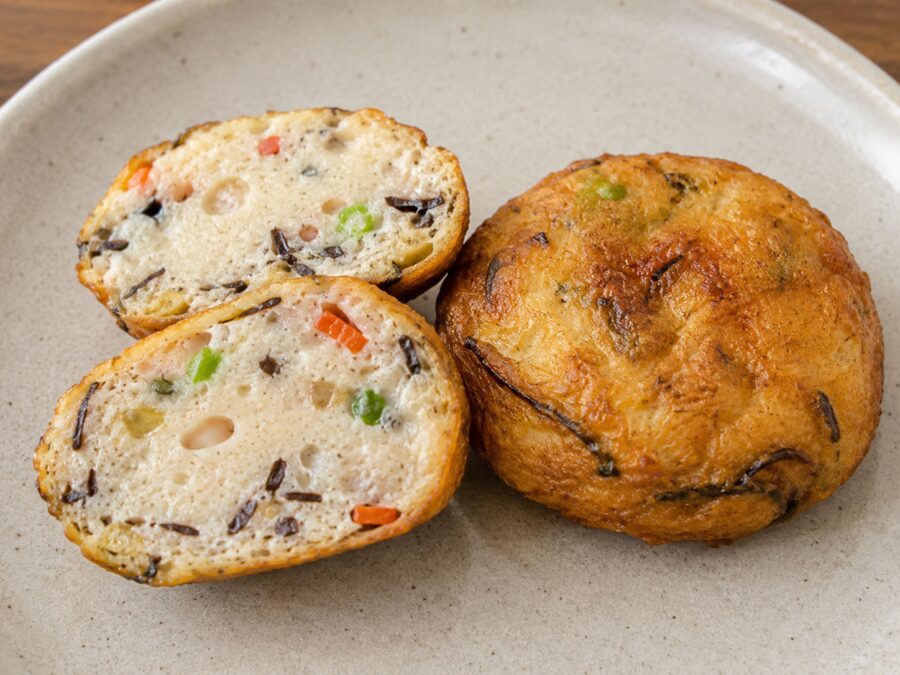
Ganmodoki(雁もどき)It is distinct from the two types seen earlier. It is a processed tofu made by mashing tofu, mixing it with chopped vegetables and black sesame seeds, shaping it into a ball, and frying it. It is also called Ganmo for short.
The origin of the name is also interesting. 'Gan' means wild goose, and there is a theory that it came from the fact that the taste of mashed tofu with added vegetables imitated the taste of wild goose meat ('Modoki' means imitation or copying).
In the Kyoto and Kansai regions, the same food is called Hiryoz.(飛龍頭)It is also called [name]. Literally, the Chinese characters mean "flying dragon's head," but there is a theory that the characters were attached as the Portuguese word "filhó," meaning fried snack, was changed to a Japanese pronunciation.
The outside is crispy as expected of fried food, yet the natural softness of the tofu remains intact on the inside, with the popping texture of minced vegetables coming through with every bite. It stands apart from other tofu products in that it is a processed food that adds various textures to the single ingredient of tofu.
Yakidofu — Tofu infused with a smoky flavor
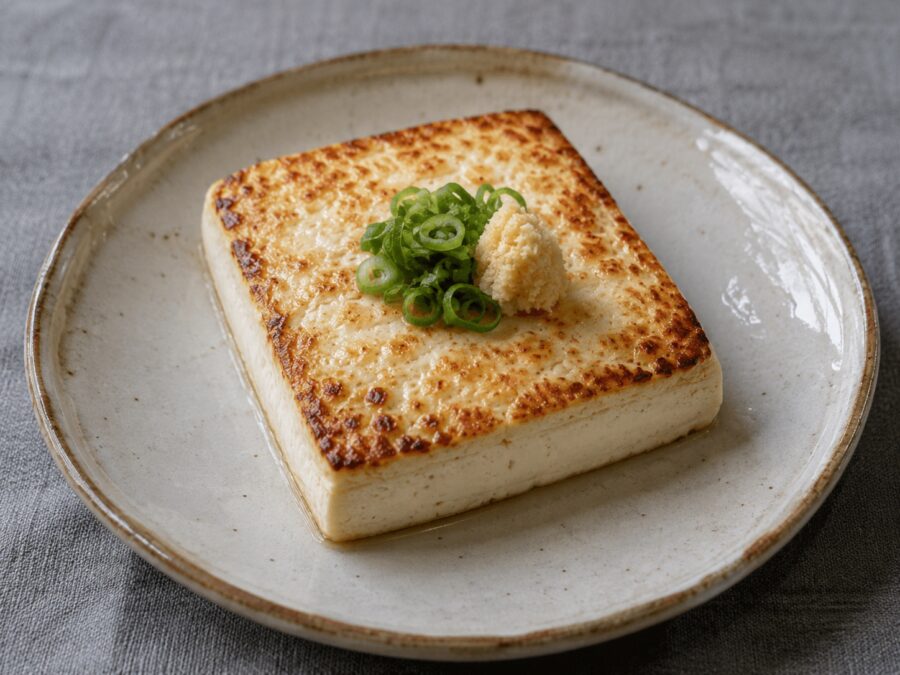
Yakidofu(焼き豆腐)It is tofu made by pressing momendofu to slightly remove moisture and then grilling the surface. This is where the difference between frying and grilling lies.
It is characterized by distinct grill marks on both sides of the tofu, and the nutty flavor of the soybeans themselves is enhanced during the grilling process. In a sense, the flavor becomes deeper without absorbing as much oil as fried food.
It is interesting that while it is based on Momentofu, the moment a baking process is added, it is classified as a tofu with a distinct name. In essence, even though it is the same tofu, a single processing step creates a new type.
Goya Tofu — Frozen tofu from a mountain temple
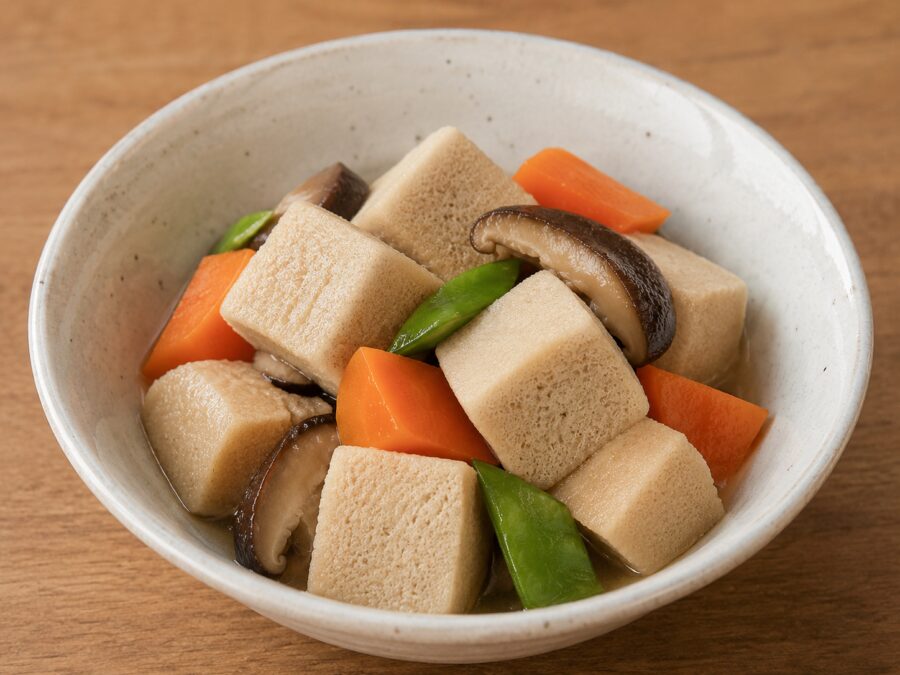
The tofu with the most unique processing method is Goya Tofu.(高野豆腐)C. The official name according to the Japanese Agricultural and Forestry Standards (JAS) is "frozen tofu," which is made by freezing firm tofu and then drying it as is.
This food has been passed down since the Kamakura period (12th–14th centuries), and it is widely known that its name originated from a vegetarian dish made by freezing tofu at a temple on Mt. Koya in Wakayama Prefecture. In the past, it was made by hanging it under the eaves during the cold winter months to naturally freeze and dry it.
During the freezing and drying process, moisture is drawn out of the tofu, creating countless holes. Thanks to this porous structure, a sponge-like yet chewy texture is created that is completely different from regular tofu.
As it is dried and concentrated, its nutritional density also increases. With around 50g of protein per 100g, it is much richer than regular tofu of the same weight.
The climate of mountainous regions, characterized by long winters and low humidity, is perfectly suited to this natural drying method, and even today, over 901 TP3 T of Koya Tofu is produced in Nagano Prefecture. This means that the production area has barely changed, even now that freezing and drying technology has become commonplace.
As it is made by drying, it has excellent shelf life. It does not spoil even when left at room temperature for a long time, so Japanese households often keep it in their cupboards as an emergency food supply. When soaked in water, it returns to a texture similar to original tofu.
From the smoothness of Kinugoshi to the porous texture of Koya Tofu, Japanese tofu presents a different classification system distinguished by coagulation and processing methods rather than pressing. This is a distinct character from the spectrum of softness found in Korean tofu.
For reference, there are some foods with 'Dohu' in their name that are not real tofu. Gomadohu(胡麻豆腐)It is a dish made by grinding sesame seeds instead of soybeans and solidifying them with kudzu starch, originating from temple cuisine in Mt. Koya. Mochiri-dofu, commonly seen in izakayas, is also made by adding milk or cream cheese to starch rather than soybean milk, and there is a theory that its name was derived from Gomadofu. In both cases, they essentially borrowed the name because of their texture resembling tofu.


