When it comes to Japanese whisky, there is a name that comes to mind first: Suntory. Since establishing Japan's first malt whisky distillery in 1923, Suntory has become the very history of Japanese whisky for over a century. By reinterpreting techniques learned in Scotland to suit the refined palates of the Japanese people, it has grown into a brand loved by whisky enthusiasts around the world today.
In this article, let’s take a detailed look at everything from the origins of Suntory whisky to Kakubin Highball, which has become Japan’s national drink, and the Yamazaki, Hakushu, and Chita distilleries, as well as their diverse blended lineup.
The Birth of Suntory Whisky: Shinjiro Torii and the Yamazaki Distillery
The history of Suntory began in Osaka in 1899. The founder, Shinjiro Torii (
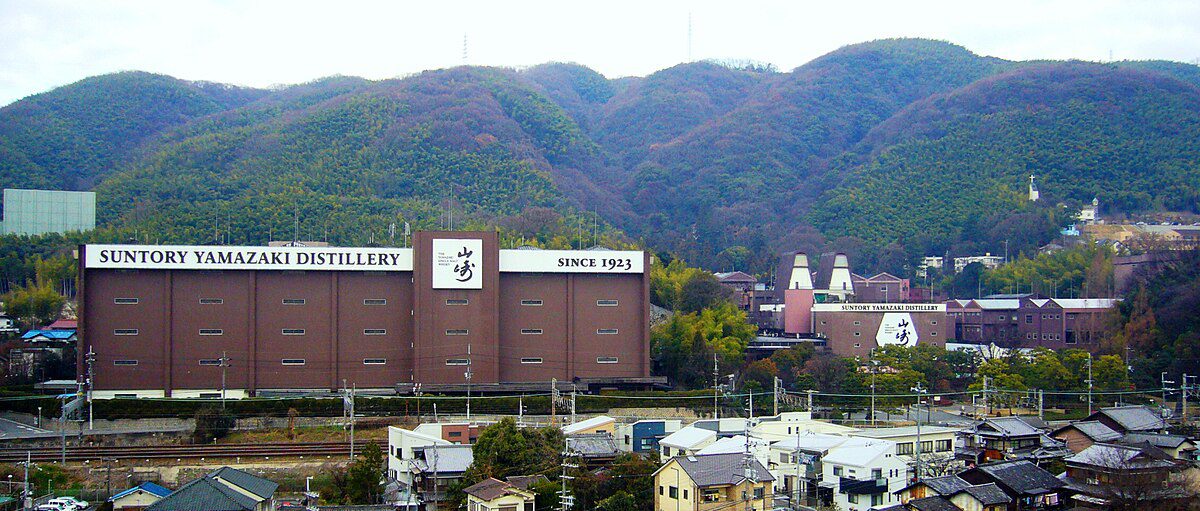
Torii's dream was to make authentic whisky in Japan. Rather than simply imitating Scottish whisky, he sought to create a unique whisky suited to Japan's nature and the Japanese palate. Despite the dissuasion of those around him, he invested his entire fortune to build Japan's first malt whisky distillery in Yamazaki, on the outskirts of Kyoto, in 1923. Located at the confluence of three rivers, this site offered an ideal environment for whisky aging due to its high humidity and abundance of high-quality water.
The reason Yamazaki was selected as the site for the distillery was the quality of the water. This region is the birthplace of the Japanese tea ceremony and a historical site where Sen no Rikyu built his tea room. The water used for distillation is soft water with a neutral pH, providing optimal conditions for fermentation and aging.
To run the distillery, Torii recruits an important figure. That is Masataka Taketsuru (
When the company that had originally sent him to Scotland abandoned the whisky business, Torii hired him. The two joined forces to complete the Yamazaki Distillery in 1924, marking the beginning of the history of Japanese whisky.
In 1929, Torii launched Japan's first whisky, Shirofuda (White Label). However, Japanese people at the time did not like the strong smoky flavor of the Scottish style, and the product failed. Torii learned an important lesson from this experience.
He realized that satisfying the delicate palates of the Japanese was the key to success. After countless blendings and tastings, he developed a new blend that preserved the flavor while reducing the smokiness. That was Kakubin, released in 1937.
Kakubin and Highball: Symbols of Japanese Whisky Culture

Gakubin
The design of the Kakubin bottle holds deep meaning. Its easy-to-store square shape is engraved with a tortoise shell pattern, which symbolizes good fortune, longevity, and strength in Japan. Additionally, the bottle bears the handwritten signature of Shinjiro Torii, demonstrating the immense pride the founder took in this product. Kakubin is produced by blending whiskies from three distilleries: Yamazaki, Hakushu, and Chita, and is characterized by subtle fruit aromas, a rich flavor, and a clean finish.
When discussing Kakubin, the Highball is an indispensable topic. Although the Highball is a simple cocktail made by mixing whiskey with sparkling water, it holds special significance in Japan. Drinking whiskey straight is not easy during Japan's humid summers. Therefore, the Japanese developed a culture of enjoying whiskey chilled by diluting it with ice, water, or sparkling water. In the 1950s, Suntory opened Tory's Bars nationwide, actively spreading the Highball culture.
In addition to the highball, Japan has a diverse whiskey drinking culture. Highballs were drunk in the summer and oyuwari (diluted with hot water) in the winter, and since around 1965, mizuwari (
The Highball campaign, launched in 2008, breathed new life into the stagnant Japanese whisky market. In an era when the younger generation drank shochu instead of whisky—the drink of their fathers' generation—Highball lowered the barrier to entry for whisky. The Kakubin Highball, made with Kakubin, became the most beloved cocktail in Japan and became easily available in cans at convenience stores. Today, Kakubin is the best-selling whisky in Japan and has maintained its status as a long-selling brand for over 80 years.
Suntory's three distilleries: Yamazaki, Hakushu, and Chita

To understand the quality of Suntory whisky, one must know the three distilleries. Each distillery possesses its own unique environment and production method, and the diverse spirits produced by them are blended to complete Suntory whisky. One of the characteristics of the Japanese whisky industry is that a single distillery produces multiple styles of spirit; this is because, unlike Scotland, spirits are not exchanged between distilleries in Japan.
Yamazaki Distillery (established in 1923)
Yamazaki is Japan's first and oldest malt whisky distillery. Located on the outskirts of Kyoto, it enjoys a climate warmer year-round than Scotland, allowing for rapid maturation. Here, various styles of spirit are produced using pot stills of different shapes and sizes. Some stills utilize a direct-fire method, and the angles of the line arms are adjusted in various ways.
American for aging Orcs, Spanish oak, and Japan's native Mizunara (
The characteristic of Yamazaki whisky is its multi-layered fruit flavor and depth. It combines the richness from sherry casks with unique aromas such as those from mizunara casks.
Whisky critics describe Yamazaki as having a moment where fruit flavors burst forth after lingering on the center of the tongue. While Yamazaki is released as a single malt, it is also used as the core spirit for Suntory Blended Whisky.
Hakushu Distillery (established in 1973)
Established to commemorate the 50th anniversary of Japanese whisky, the Hakushu Distillery is nestled deep in the forests of the Southern Japanese Alps. Situated at an altitude of 700 meters, it utilizes soft spring water from Mt. Kaikomagatake.
This water is of such high quality that Suntory even sells it as bottled water. It is aged in a cooler climate (4–22°C) than Yamazaki, which gives the whisky fresh and refreshing characteristics.
Hakushu uses four types of barley, ranging from unpeated to heavily peated. Long fermentation is carried out in wooden fermenters using both brewing yeast and distilling yeast, which promotes the activity of lactic acid bacteria to produce esters and creamy characteristics.
Hakushu whisky is characterized by aromas of green plants such as bamboo, moss, and green apple, with a subtle smokiness layered in the background. It has a clear and straightforward character that contrasts with the depth of Yamazaki.
Chita Distillery (established in 1972)
Chita is Suntory's grain whisky distillery, located on the Chita Peninsula near Nagoya. Grain whisky is the base spirit for blended whisky and possesses lighter and smoother characteristics than malt whisky. Chita uses corn as its primary ingredient and adds six-row malt, which has strong enzymatic activity, for saccharification.
A defining feature of Chita is that it produces various styles of grain whisky by combining four continuous stills (column stills). By combining two, three, or four columns, it creates spirits ranging from light to heavy types. In 2015, Chita was also released as a single grain whisky and has been well-received. It is characterized by a buttery and sweet flavor with aromas of orange peel, crème brûlée, and green banana.
| distillery | Year of establishment | location | Key Features | Representative flavor |
|---|---|---|---|---|
| Yamazaki | 1923 | Kyoto outskirts | Japan's first malt distillery, warm climate | Multilayered fruit, Sherry, Mizunara |
| Hakushu | 1973 | Southern Alps mountain range | Cool high-altitude climate, forest environment | Green apple, herbs, subtle smoke |
| cheetah | 1972 | Chita Peninsula | Grain whisky specialist, Column Still | Buttery, sweetness, vanilla |
Suntory's Main Blended Lineup

Suntory offers a diverse range of products by blending spirits from three distilleries. While each single malt is excellent, Suntory’s true strength lies in its blending technology. Head blenders sift through spirits from tens of thousands of casks and harmoniously blend them to create whiskies of consistent quality and unique character. Here, we introduce the major blended lineup, in addition to the distilleries' single malts.
Hibiki
Hibiki is a premium blended whisky released in 1989 to commemorate the 90th anniversary of Suntory's founding. Its name means resonance or harmony in Japanese, and it is created by blending over 30 types of malt and grain whiskies. It is said that then-chief blender Keizo Saji (son of founder Torii) and chief blender Koichi Inatomi completed the blend after tasting and selecting from one million casks.
The Hibiki bottle is the epitome of Japanese aesthetics. The bottle, carved into 24 facets, symbolizes the 24 solar terms of the traditional Japanese lunar calendar, and the label features washi paper from the Echizen region (
Suntory Old
It is no exaggeration to say that Suntory Old is the most successful product in the history of Japanese whisky. Production was announced in 1940 but was postponed due to the war and released in 1950. It is characterized by its unique bottle shape, nicknamed "Daruma" or "Raccoon." In the 1970s, Suntory distributed Old to izakayas and restaurants that traditionally served only sake through a marketing campaign called Operation Nihonbashi, which was a huge success.
At that time, there was a whisky pyramid in Japanese society. Entry-level employees drank Kakubin, managers drank Special Reserve, and executives drank Royal. Old established itself as an accessible premium whisky in between. Today, Old is one of the few genuine Japanese whiskies available for under 2,000 yen, characterized by sweet flavors such as honey vanilla, candied orange, and cherry and apple candy.
In the 1980s, 12.4 million cases of Suntory Old were sold annually in the Japanese domestic market alone. This figure is equivalent to the total sales volume of all Johnnie Walker products sold worldwide today. This demonstrates just how massive the Japanese whisky market was at the time.
Suntory Royal
Suntory Royal is a premium blended whisky launched in 1960 to commemorate the 60th anniversary of Suntory's founding. It was created with the goal of achieving a quality one step above the Old Series, using aged spirits from Yamazaki and Hakushu. It was Suntory's top-tier blended whisky until the introduction of Hibiki.
Royal is characterized by floral aromas, smooth fruit flavors, and complex notes such as butterscotch and plum. The 15-year-old version features creamy aromas of apple custard, stewed pear, canned peach, banana, and sawdust, along with the sweetness of Demerara sugar. It is regarded as a high-quality blended whisky available at a reasonable price in Japan.
Special Reserve
Special Reserve was launched in 1969 to commemorate Suntory's 70th anniversary. Blended by the second president at the time, Keizo Saji, it was positioned as a whisky for middle management. In the current version, Hakushu aged in white oak casks is used as the core spirit, and Yamazaki is also blended in.
Special Reserve features sherry influences of fudge, berries, and chocolate, along with aromas of dried fruits such as raisins, dates, and apricots. It also contains nuances of coffee and leather, blending notes of oak, green tea, and orange. The design was changed from the dumpy-style bottle to its current form, and there was previously a 10-year-old version.
Toki
Toki is a relatively new blended whisky launched in 2016 targeting the U.S. and Canadian markets. Its name means "time" in Japanese and embodies Suntory's spirit of meeting tradition and innovation. It is a product in which the 4th Chief Blender, Shinji Fukuyo, broke with conventional blending practices and attempted a new approach.
Generally, Yamazaki malt plays a key role in Suntory blends, but in Toki, Hakushu malt aged in American white oak casks meets Chita grain whisky on equal footing. Here, two types of Yamazaki malt add depth and complexity. The result features aromas of basil, green apple, and honey, along with flavors of grapefruit, green grape, peppermint, and thyme, followed by a subtle finish of vanilla oak, white pepper, and ginger. It is a whisky optimized for enjoying as a highball.
| Product Name | Release year | characteristic | Main flavors | Recommended way to drink |
|---|---|---|---|---|
| Hibiki | 1989 | Blending over 30 types, premium | Harmonious fruits, flowers, and spices | Knits, On the Rocks |
| Suntory Old | 1950 | Dharma bottle shape, popular | Honey, vanilla, orange | Mizuwari, Highball |
| Suntory Royal | 1960 | 60th Anniversary Premium Blend | Floral, Butterscotch, Plum | Knits, On the Rocks |
| Special Reserve | 1969 | 70th Anniversary Commemoration, Hakushu Centered | Dried fruit, chocolate, oak | On the rocks, water waft |
| Toki | 2016 | Modern Blend, Export Focus | Green apple, grapefruit, ginger | Highball, cocktail |
What Shinjiro Torii, the father of Japanese whisky, dreamed of was a whisky born from Japan's nature that suited the Japanese palate. One hundred years later, Suntory Whisky has surpassed that dream and is loved by people all over the world. From a glass of Kakubin Highball to the deep harmony of Hibiki, the world of Suntory is boundless. How about a glass of Suntory Whisky this evening?.