

Figs are the fruit of the fig tree, which belongs to the genus Fig in the family Moraceae. The season runs from late August to the end of October, with the highest volume of supply occurring in early autumn.
| classification | fig treeNo flower) · Fig tree |
|---|---|
| scientific name | Ficus carica L., 1753 |
| 계 | Plant Kingdom (Plantae) |
| 목 | Rosewood (Rosales) |
| 과 | Moraceae |
| 속 | fig tree genusFicus) |
| 종 | fig treeF. carica) |
Fruits that belong to the same mulberry family include mulberries, jackfruit, and breadfruit.
If you narrow it down to the same category, the story changes. Ficus There are over 800 species of plants in the genus, but virtually only the fig is eaten as fruit.
When you cut a ripe one in half, the deep pink flesh comes into view, and when you take a bite, a thick, jam-like sweetness comes first. This is followed by a light strawberry-like acidity and a honey-like aroma.
Based on 100g of fresh figs, approximately 57 kcal
Carbohydrates 14.3g · Protein 0.6g · Fat 0.1g
The three main types distributed domestically are red figs, green figs, and traditional varieties, with red figs having the highest distribution volume.
| division | detail |
|---|---|
| origin | West Asia and the Eastern Mediterranean coast |
| Major producing countries | Turkey (approximately 281 TP3 T of world production), Egypt, Morocco |
| Representative famous production areas | Turkey's Aydın (dried fruit), France's Solies (fresh fruit) |
| Domestic production area | Yeongam, Jeonnam (approximately 601 TP3 T of the national cultivated area), the coasts of Jeonnam and Gyeongnam, and Jeju |
| seasonal | Late August to late October (from mid-July for greenhouses) |
| Major domestic varieties | Seungjeongdohuin, Bongnaesi, Banane |
Its native habitat is West Asia and the eastern Mediterranean coast. It is so closely associated with this region that the species name carica itself comes from Caria, an ancient place name in southwestern Asia Minor.
Currently, Turkey ranks first in the world in terms of volume, accounting for approximately 281 TP3 T of the total. Among them, the Aydın region is known as the top producer of dried figs.
The finest fresh scallions come from Soliers in southern France. They use the Violette variety, which is protected by Appellation d'Origine Protégé (AOP), but only a small amount—less than 20,000 tons—is produced annually.
In Korea, Yeongam is considered the largest production area, accounting for approximately 601 TP3 T of the total national cultivation area. Since cultivation began here in 1973, it is also the birthplace of figs in Korea.
index
Fig varieties
The three main varieties of figs distributed domestically are Seungjeongdohuin, Banane, and Bongnaesi. In the market, they are commonly referred to as red figs, green figs, and traditional figs.
The three varieties have one thing in common: according to the Rural Development Administration's classification, they all belong to the 'ordinary type'.
The common type contains only female flowers inside the calyx and produces fruit on its own without the process of pollination or fertilization. The process in which bees enter and exit the fig flower to produce fruit does not apply to the common type.
The 'Smyrna type,' used for drying in the Mediterranean or California, is different. The fruit ripens only when it receives pollen from wild figs.
Another unique aspect is that the part we eat is not the 'flesh'. What looks like a fruit is actually a thick, swollen structure of the calyx.
Around 2,000 small flowers are densely attached to the inner wall. Just because the flowers are not visible, the figNo flowerIt is called that, but in reality, it is like eating the flower whole.
The crunchy granules that pop when you chew are the small fruits that each of those flowers has produced.
Hongmuhwagwa, Seungjeongdohuin
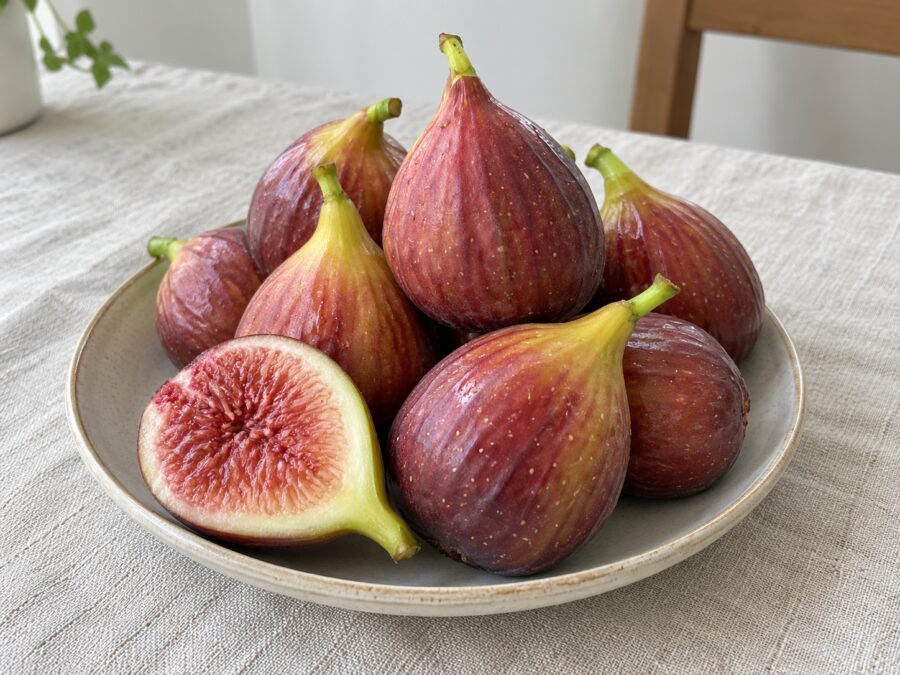
This is the variety referred to as the red fig. Various spellings are used interchangeably, but Matsui Dofuin, Seijou Doupin, and Dopin all refer to the same thing.
Matsui, the grower's surname, given as it was improved in Hiroshima, Japan桝井'Seungjeong' is the Korean pronunciation of the Hanja. The latter part, Dohuin, comes from the French variety name Dauphine.
Based on local farms in Yeongam, this variety accounts for approximately 851 TP3 T of the total production. You can assume that almost all figs sold simply as "figs" in supermarkets or online are this variety.
Each fruit weighs 80 to 100g, making it the largest of the three varieties. The skin is reddish-brown, and the flesh is light reddish.
In open fields, it begins to ripen in late August, peaks in September, and continues until late October. However, with the increase in greenhouse cultivation, the first shipments are now available starting in mid-July.
The taste is predominantly sweet with a faint acidity. When fully ripe, the flesh becomes sticky and soft, developing a jam-like texture.
Since the navel opposite the stem splits open when ripe, farmers harvest them a day or two before they split. This is because it is difficult to distribute them while they are already split open.
Traditional figs, Bongnaesi
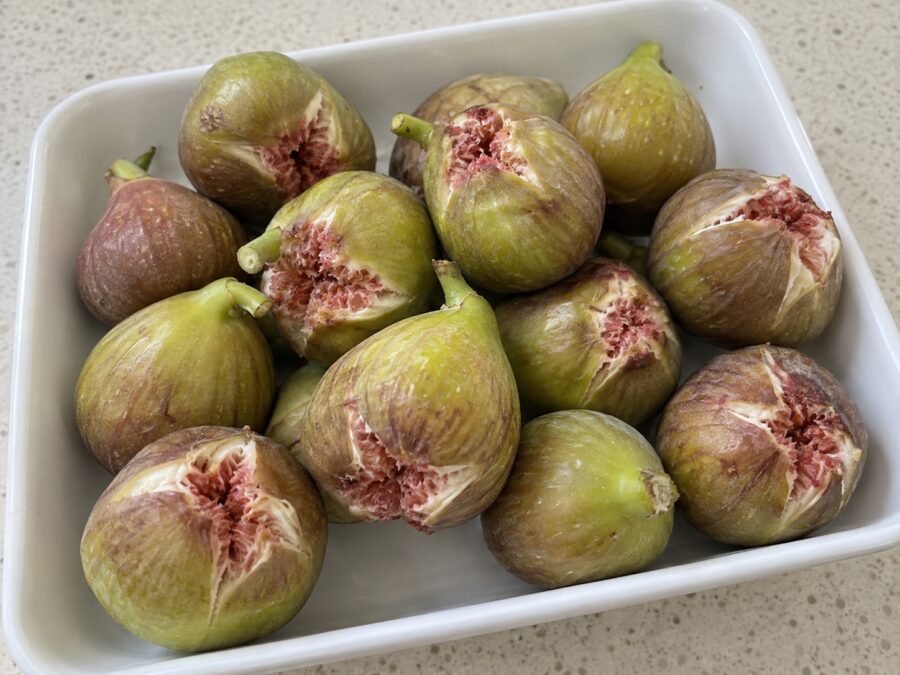
The ones distributed as heirloom figs Bongnae City(蓬萊柿It is necessary to clarify the term "traditional variety.".
It does not mean that it is our native variety. Since it is a lineage that was first introduced and established in Japan around the 17th century, it is considered a local Japanese native variety.在来種The name that was called ) has been carried over as is.
Anyway, it is true that it was the earliest of the three in terms of the order of domestic introduction. Dauphin, Banane, and Brunswick were introduced via Japan after the 1900s.
The fruit weighs around 60g, is distinctly smaller than Dohuin, and is round. The skin is thick, the scales are red, and the flesh is bright red.
As it is the most cold-resistant variety, it is grown exclusively for autumn fruit. It ripens from early September, with the harvest concentrated in October and continuing until early November.
The flavor combines sweetness and sourness. Unlike red figs, which are simply softly sweet, this one leaves a lingering acidity, making it a good fit for those who dislike blandness.
Green figs, Banane
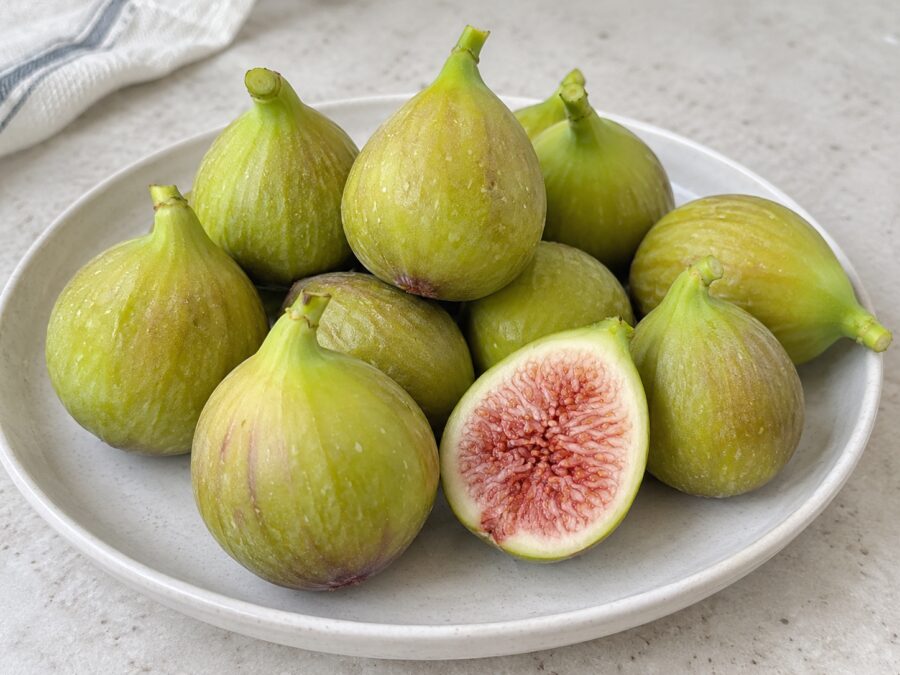
Banane is sold as a green fig. A characteristic of this variety is that the skin remains light green even when fully ripe.
Although the fruit is smaller than the red fig, it is considered to have the highest sugar content among the three. While the skin color is light, the sweetness is intensely concentrated. It is a highly productive variety that bears fruit well from low nodes and is resistant to cold, so its cultivation area has been steadily increasing over the past few years.
The harvest season is described slightly differently in various sources, but generally, it starts later than red figs and continues until after October. There is no official data yet that standardizes the harvest season for each variety.
Comparison of differences between red figs, green figs, and traditional figs
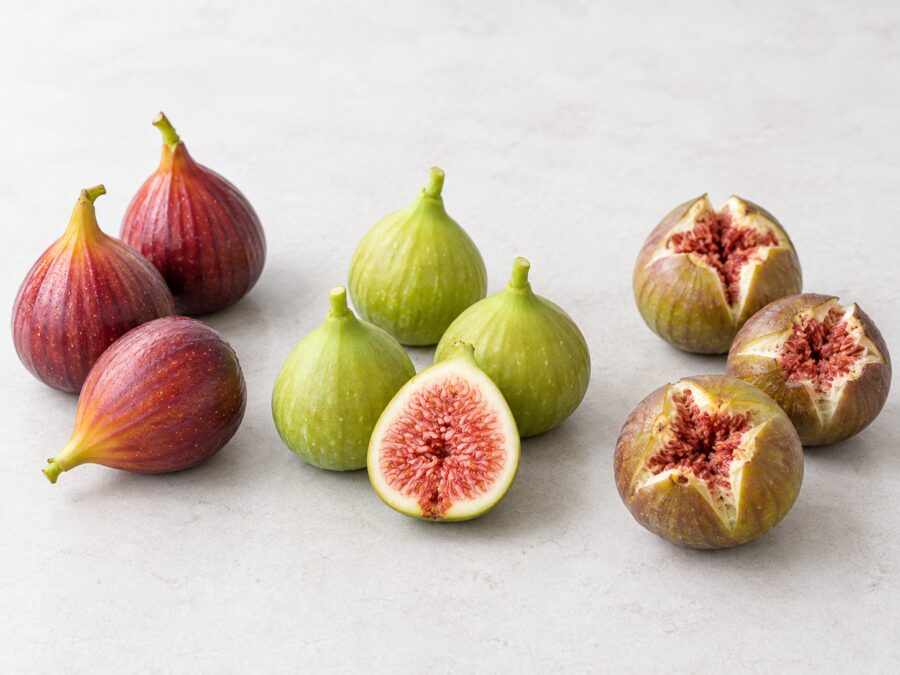
| division | Seungjeongdohuin | Bongnae City | Banane |
|---|---|---|---|
| Distribution name | red fig | Traditional fig | green figs |
| Peel color | Grape brown/reddish-purple | dark reddish-brown | Even when fully ripe, it remains light green. |
| size | 80~100g | Around 60g | on the smaller side |
| Open-field harvest season | Late August to late October | Early September to early November | Starting late and until after October |
| 맛 | Mainly sweet, jam-like texture | Acidity follows the sweetness | The sweetest |
| Distribution share | Overwhelming majority | handful | Increasing trend |
The growing regions for all three varieties overlap. Since the trees freeze to death when the winter minimum temperature drops below minus 9 degrees, the cultivation areas are limited to the southern coast.
The coastal areas of Jeonnam and Gyeongnam, as well as Jeju, are safe cultivation zones. You can roughly consider the area south of the line connecting Gyeongju and Naju.
Among them, Yeongam County is dominant. 1,596 farms cultivate crops on 500.25 hectares, producing 9,641 tons last year and recording the largest scale in the country.
Yeongam County is laying the foundation for the development of new varieties and the production of processed products by establishing the nation's first fig research institute and processing facilities. This implies that there is potential for the landscape of distributed varieties to change in the future.
Other varieties
Of course, these three varieties are not the only ones. The Rural Development Administration's guidelines for open-field cultivation also list Brown Turkey and Brunswick as major varieties. In addition, names such as Cadota, White Genoa, Celeste, and Negro are circulating in the seedling market and for home cultivation.
However, these varieties are rarely distributed in box units. It is safe to say that the probability of consumers encountering them on store shelves is effectively narrowed down to the aforementioned three types.
How to choose good figs
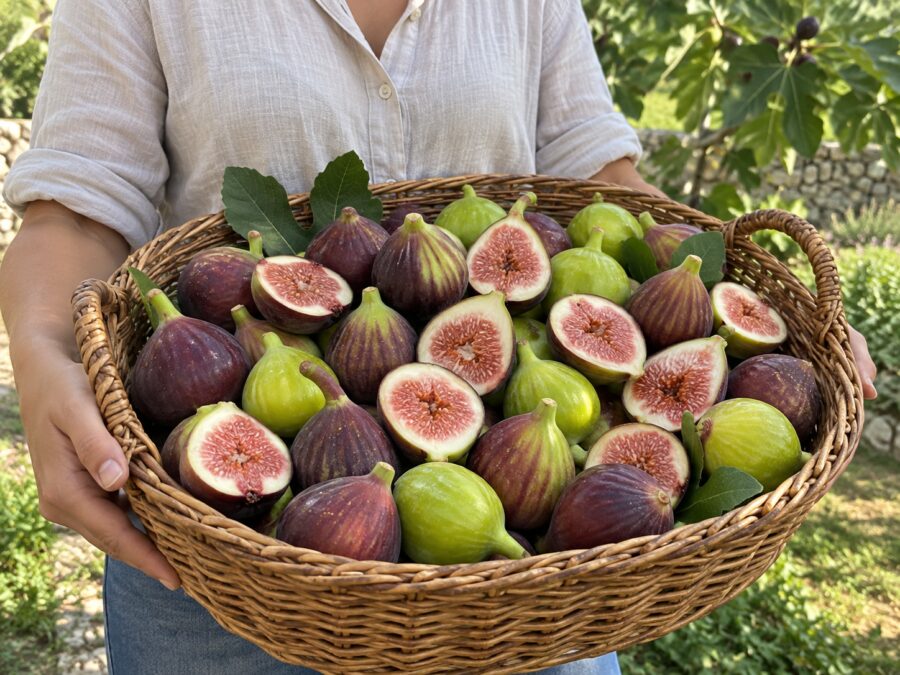
The most important thing when choosing is to check the variety first. For red varieties, select those with even color and a distinct split near the navel that resembles a flower petal.
On the other hand, green figs are normally green, so you should not judge them by their color. Press with your fingertips to see if they are slightly soft and if there is elasticity near the stem.
This fruit has a thin skin and delicate flesh, so its shelf life is extremely poor. Its limit is 1 to 2 days at room temperature and 3 to 4 days in the refrigerator.
It is best to eat it on the day you buy it, and if there is any left over, you can separate it layer by layer without washing it, put it in a container, and freeze it to use as jam or smoothies.
When leaves or branches are cut, a white sap comes out, which contains enzymes that break down protein. It can sting and turn red if it comes into contact with the skin, so harvesters wear gloves.
The tingling sensation on the tip of the tongue when eating unripe fruit is also due to the same component. As the fruit ripens, the amount of this component decreases.
This is also why eating too much at once can easily cause stomach discomfort. Since it is high in dietary fiber and contains overlapping enzymes, about three or four pieces at a time is appropriate.


